



The Story of Vrat Achaar PHALHARI AAMRA
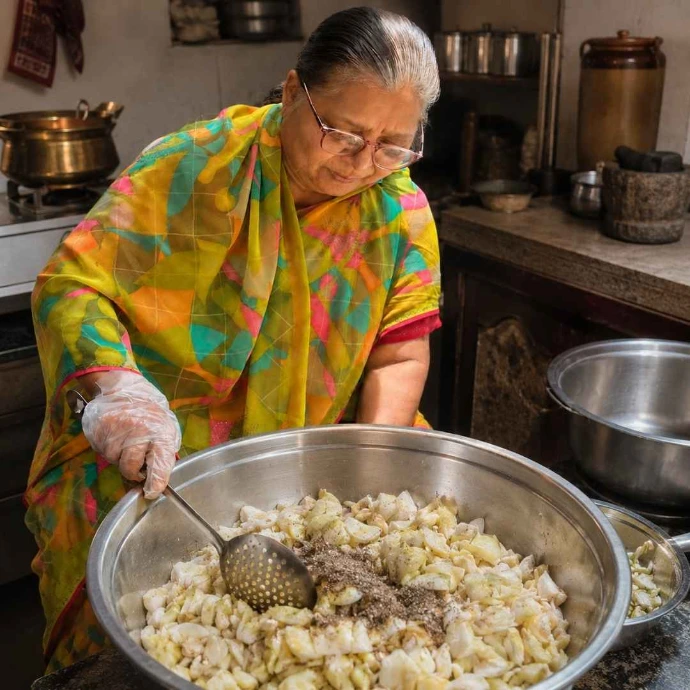
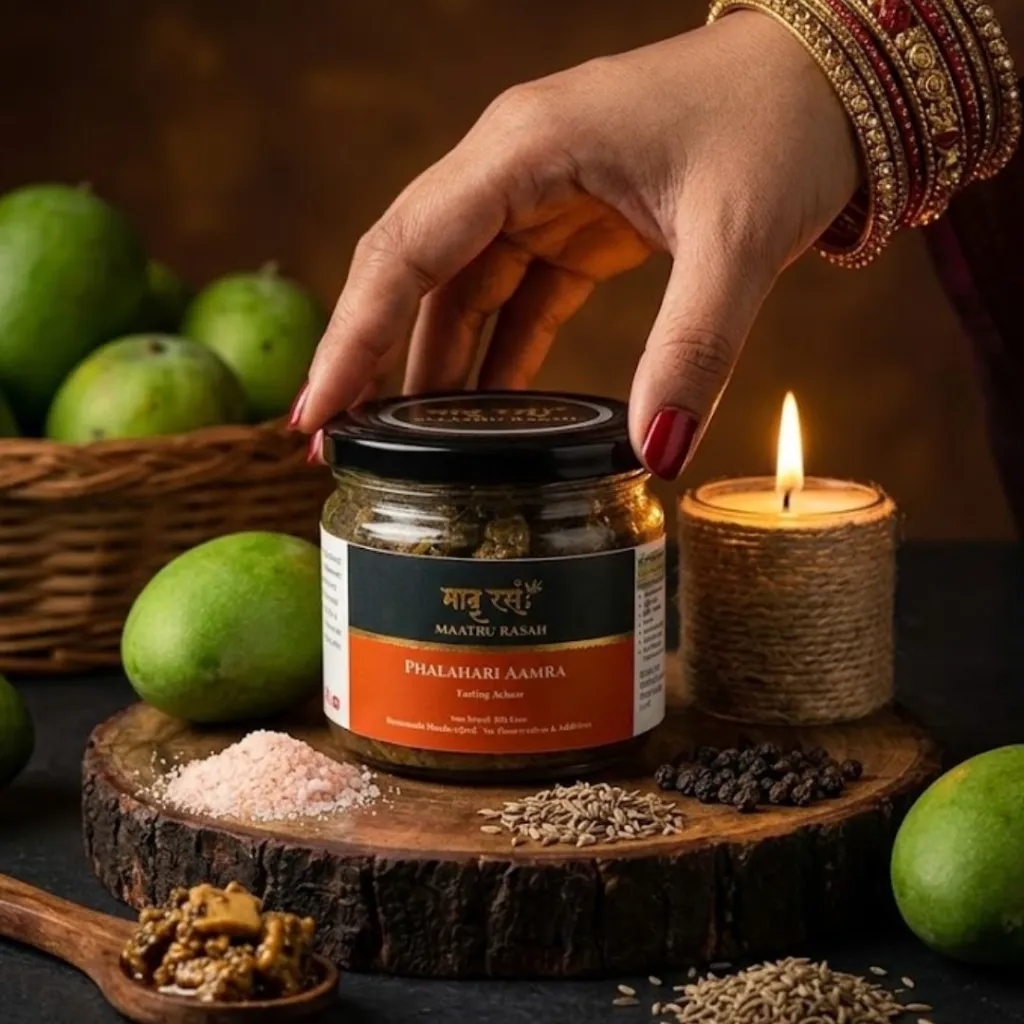
Therefore, every jar of Phalahari Aamra Achaar starts with a memory, not a formula. Uma Agarwal, who makes every batch by hand in Delhi NCR, grew up watching this pickle cure in clay barnis in her family's courtyard in Prayagraj. The sharp-sweet aroma of raw mango meeting rock salt in summer heat — that smell is what she set out to recreate, and what you will find when you first open the jar.
Moreover, this recipe is not a modern creation. The family has made this exact fasting pickle since 1890. Five generations have eaten it during Navratri, Sawan, Ekadashi, and every upvas day in between. Not one ingredient has changed. Not one step has been skipped.
However, what changed is how most pickle brands now work. Factory lines replaced hand-peeling. Chemical preservatives replaced rock salt. Plastic jars replaced clay and glass. As a result, the homemade taste disappeared — even from products that call themselves homemade. Furthermore, most 'vrat-safe' pickles on the market today contain refined oil, onion-based spice mixes, or preservatives that break the rules of Hindu fasting.
Because of this, Maatru Rasah exists. We make one fasting pickle, we make it right, and we are honest about every single ingredient.
What is Phalahari Achaar / Vrat Achaar
Phalahari Achaar — also called falahari achar, upvas achaar, vrat achaar, or fasting pickle — is a condiment made entirely from ingredients allowed during Hindu fasting (vrat or upvas). It contains no garlic, no onion, no refined oil, and no chemical preservatives. Every ingredient in a genuine phalahari achaar must be sattvic — meaning pure, grounding, and acceptable as per the rules of fasting observed in traditions such as Navratri, Sawan Somvar, Ekadashi, and Janmashtami.
However, most commercial pickles sold today — even those labelled 'vrat achar' or 'upvas achar' — contain sodium benzoate or potassium sorbate as preservatives. Furthermore, they use refined oil or mustard oil, both of which are not allowed during many forms of Hindu fasting. As a result, buyers who want a genuine fasting pickle are left with very few clean options.
Therefore, what makes a real phalahari achaar is what it does NOT contain. No garlic. No onion. No refined oil. No chemical preservatives. No artificial colour. No plastic packaging that leaches into acidic food. What it must contain is equally specific: rock salt (sendha namak) instead of common salt, spices permitted during fasting, and a mango base that is tangy, clean, and preservative-free.
What Most Competitors Get Wrong
- They use common salt (iodised) — not sendha namak. Common salt breaks the fast.
- They use refined oil or mustard oil — not allowed in most upvas traditions.
- They add sodium benzoate to extend shelf life — a chemical additive that has no place in fasting food.
- They use plastic jars — which leach compounds into acidic pickle, especially in Delhi heat above 44°C.
- They claim 'homemade' on the label but make in factories with machines and artificial flavours.
Key Features — What makes this Phalahari Achaar different
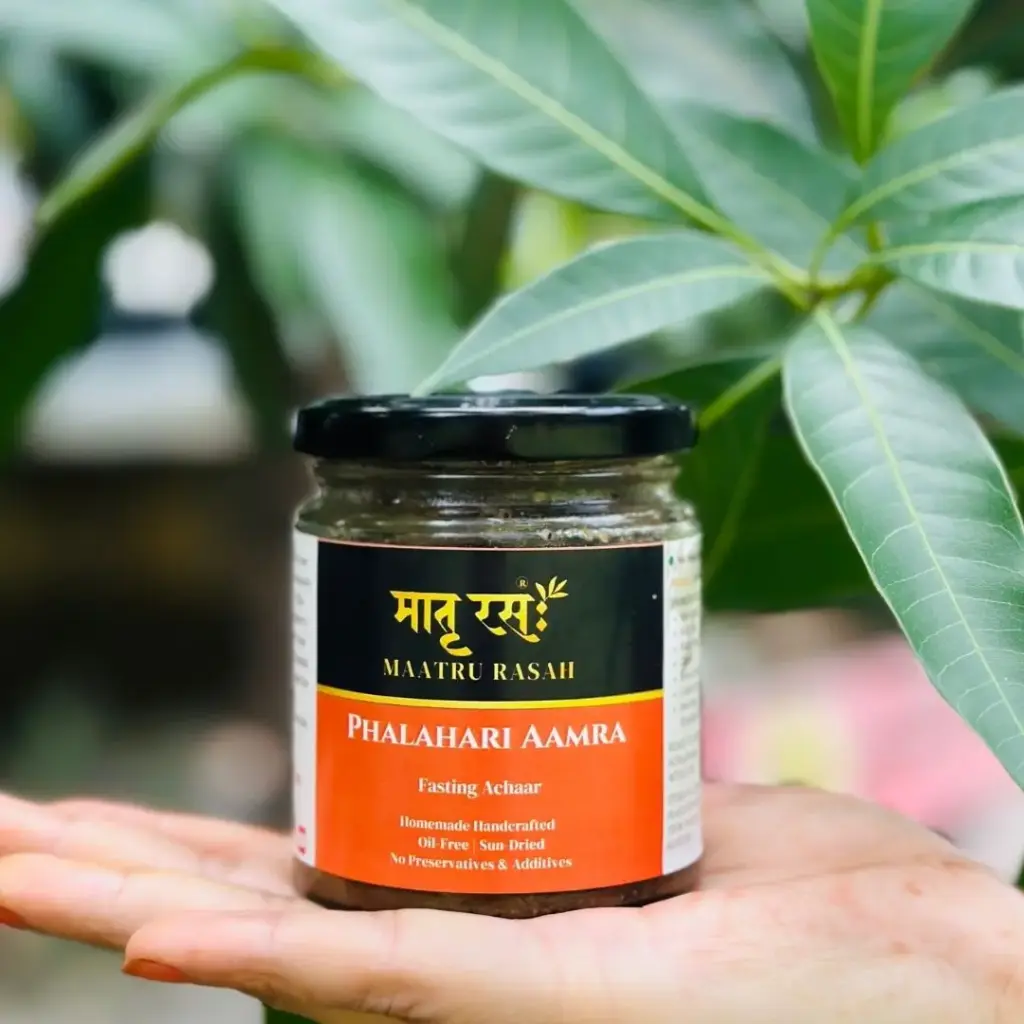
100% Oil-Free — The Only Safe Choice for Upvas
Therefore, this is one of very few mango pickles in India that uses zero oil. Most commercial vrat achar use refined or mustard oil — both of which break the rules of strict Hindu fasting. We achieve full preservation without any oil by combining rock salt, natural sun-drying, and slow fermentation in clay barnis. The result is a clean, tangy pickle that is genuinely fasting-safe.
Rock Salt (Sendha Namak) — Not Iodised Table Salt
Moreover, we use only sendha namak — Himalayan rock salt — in every jar. Common table salt is processed with iodine and anti-caking agents. It is not allowed during Hindu upvas. Rock salt is the traditional fasting salt, used in Indian homes for hundreds of years. Furthermore, its mineral content makes it more nutritious than refined table salt.
Zero Preservatives — No Sodium Benzoate, No Potassium Sorbate
Consequently, we preserve this achaar using only the ingredients inside it — rock salt, sun-drying, and natural fermentation. Sodium benzoate is the most common preservative in commercial Indian pickles. Studies in the field of food toxicology link it to cell damage when eaten regularly. We have never used it. We will never use it.
Glass Jar Packaging — Because Plastic Leaches at 44°C
Furthermore, Delhi summer heat regularly exceeds 44°C. At that temperature, chemical compounds from plastic jars migrate into acidic food — a process called leaching. We seal every jar in eco-friendly glass. Glass is inert. It does not react with acidic mango pickle. It is fully recyclable. This is not a marketing choice — it is the only honest choice.
Small-Batch Handcraft — Quality Cannot Be Manufactured
In addition, Uma Agarwal oversees every single batch personally. We make small batches only — never more than we can quality-check by hand. Each jar is filled, sealed, and labelled individually. As a result, you get consistent quality in every jar — not the diluted version that factory scaling inevitably produces.
1890 Heirloom Recipe — 135 Years of Refinement
However, the most important feature of this pickle is one no competitor can copy: the recipe. This exact formula — the spice ratios, the sun-drying time, the fermentation duration — has been used, tested, and refined by five generations of one family since 1890. No commercial version of this recipe exists because it was never sold until now.
Health Benefits — Why This Vrat Achar Is Good For You
Supports Gut Health Through Natural Fermentation
Therefore, natural fermentation of raw mango in clay barnis produces beneficial Lactobacillus bacteria. These are the same probiotic bacteria documented in gut microbiome research as supporting digestion, immunity, and even mood regulation. Commercial pickles made with sodium benzoate contain zero live bacteria — the preservative kills them. Our oil-free falahari achar delivers genuine probiotic benefit.
Stimulates Digestive Fire (Agni) — Documented in Charaka Samhita
Moreover, Charaka Samhita — one of Ayurveda's two foundational texts — describes sour and pungent tastes as stimulants of Agni, the digestive fire. The tang of raw mango combined with black pepper and cumin does exactly this. It increases gastric juice production and enzyme activity. As a result, your body digests fasting food — sabudana, kuttu, singhara — more efficiently when eaten with this achaar.
Piperine in Malabar Black Pepper Boosts Nutrient Absorption
Furthermore, piperine — the active compound in Malabar black pepper — is one of the most studied bioavailability enhancers in nutritional research. It increases the absorption of curcumin, beta-carotene, and other nutrients by up to 20 percent. Because fasting limits your food intake, maximising what your body absorbs from each bite matters more than usual. This pickle actively helps with that.
Eugenol in Cloves — Natural Antimicrobial and Cell Protector
Cloves contain eugenol — a natural phenol documented in multiple food science studies as antimicrobial and anti-inflammatory. In Ayurvedic practice, cloves have protected gut health for over 3,000 years. In this pickle, they serve a double role: they preserve the achaar naturally, and they protect your digestive lining with every serving.
Rock Salt Provides Minerals Without Chemical Processing
In addition, sendha namak — unlike iodised table salt — is unprocessed. It retains natural mineral traces including potassium, magnesium, calcium, and iron. These are essential electrolytes that the body loses during fasting and light eating. Consequently, a small serving of this achaar during upvas provides both flavour and light mineral replenishment.
Desi Khand Supports Steady Energy — Unlike Refined Sugar
Finally, desi khand (unrefined cane sugar) metabolises more slowly than refined white sugar. It contains natural molasses and mineral traces. Therefore, the small amount used in this recipe contributes a brief, clean energy lift without the spike-and-crash cycle of refined sugar. This makes it ideal for fasting days when energy must be steady and sustained.
How To Use — Serving Suggestions For Vrat Meal
With Kuttu Ki Puri or Singhara Chilla
Therefore, the most natural pairing is one spoonful of Phalahari Achaar alongside kuttu ki puri or singhara atta chilla. The tangy punch of raw mango cuts through the earthy density of buckwheat and water chestnut flour. It makes a plain vrat bread taste like a complete meal. Use half a teaspoon per serving.
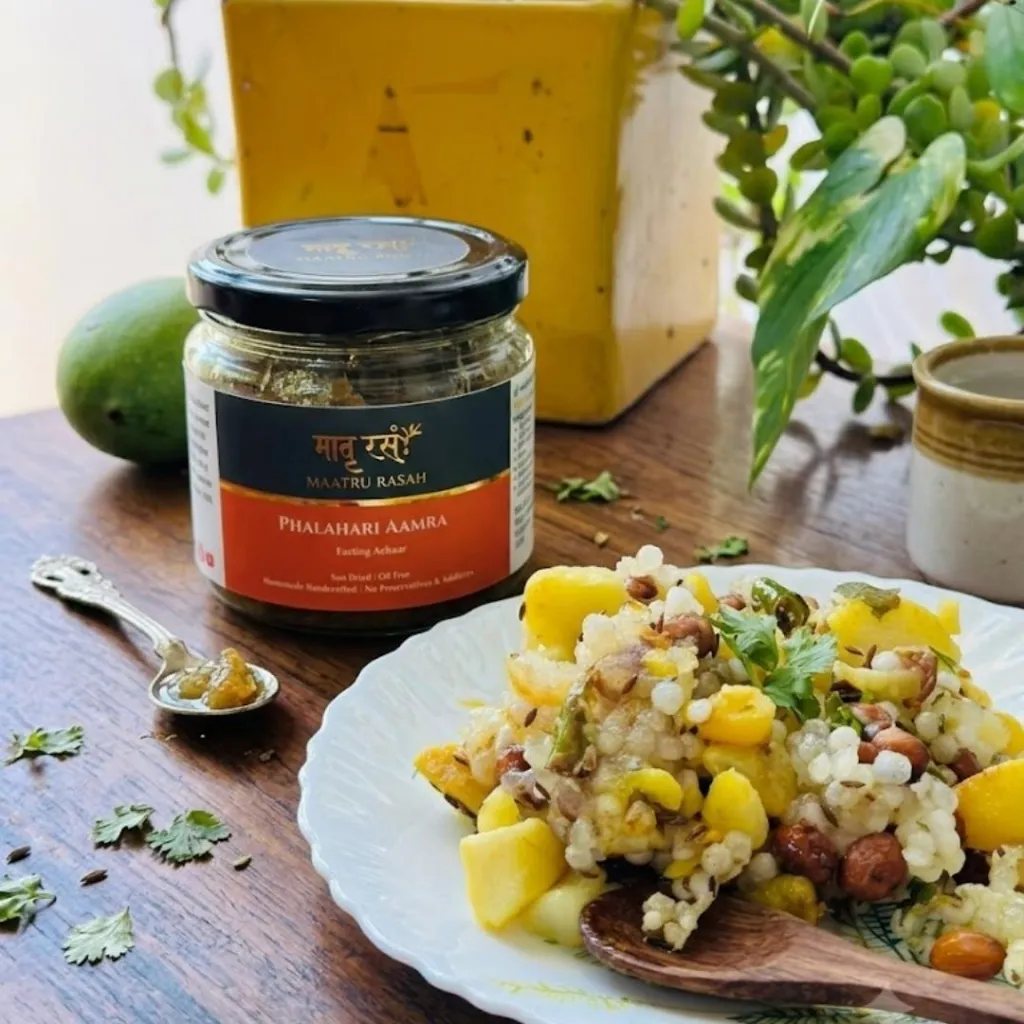
With Sabudana Khichdi or Sabudana Vada
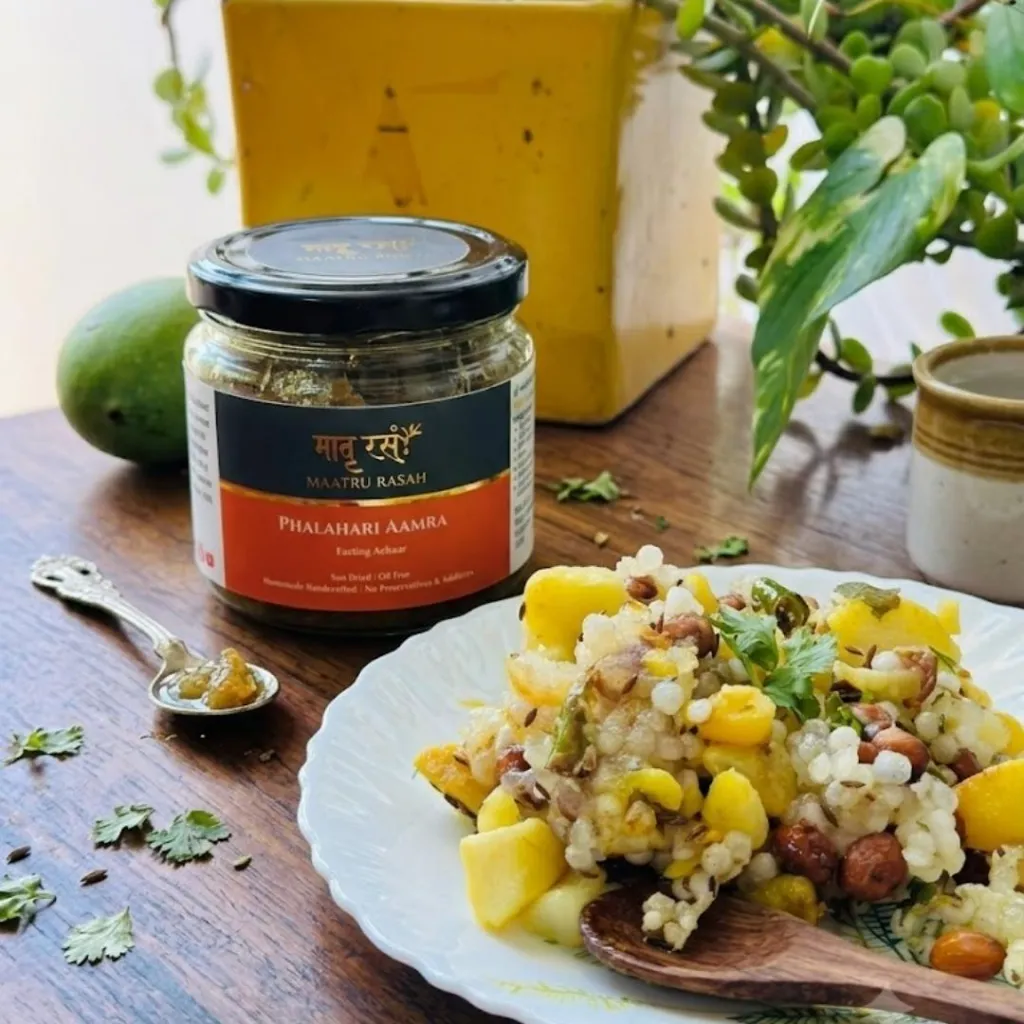
Moreover, sabudana is mild and starchy — it needs something sharp. A small amount of this falahari achar alongside sabudana khichdi adds a bright, zesty layer that makes the dish satisfying. The warm bite of black pepper and cloves complements the mild tapioca beautifully.
Stirred Into Dahi (Curd)
Furthermore, you can stir a small pinch of this achaar into plain dahi. The acidity of the pickle activates the probiotic cultures in fresh curd, creating a sharp, invigorating raita-like accompaniment. This is especially good on Delhi summer days when a cooling but tangy side dish makes fasting feel less restrictive.
With Lauki Ki Sabzi or Arbi Ki Sabzi
In addition, light vrat vegetables like lauki and arbi can taste flat without contrast. A half-spoon of phalahari achaar on the side of a sabzi thali provides the sharp note that balances the subtle earthiness of these vegetables. The deep aroma of black cardamom in the pickle ties the whole plate together.
As a Quick Upvas Snack with Curd
Finally, on days when time is short, a bowl of dahi with a small spoonful of this vrat achaar is a complete, fast, and filling fasting snack. It takes 30 seconds to prepare, requires no cooking, and delivers tang, minerals, and probiotic support in one small bowl. This is what homemade fasting food tastes like.
Why Consume Maatru Rasah
Your Fast Deserves Clean Food
Therefore, fasting is not just about skipping meals. In Hindu tradition, upvas means purification — eating only what is sattvic, clean, and free of anything that disturbs the body or the fast. Most commercial pickles sold as 'vrat achar' contain sodium benzoate, iodised salt, or refined oil. Any one of these breaks a strict fast. Our Phalahari Achaar contains none of them. Every ingredient is on the approved list for Hindu fasting.
Fermented Food Actively Helps During Fasting
Moreover, when you eat less, your gut needs more support — not less. Naturally fermented foods produce beneficial Lactobacillus bacteria. Research in the field of gut microbiome science links these bacteria directly to stronger immunity, better digestion, and improved mood. As a result, a small serving of this achaar during your upvas meal actively supports your body during a period when processed foods would harm it.
The Problem With Most Vrat Pickles is the Label, Not the Jar
Furthermore, 'no preservatives' on a pickle label in India means nothing unless you check the full ingredient list. Sodium benzoate and potassium sorbate are listed as 'INS 211' and 'INS 202' in ingredient lists — names most buyers do not recognise. We use neither. Our ingredient list has seven items. Each one has a name you know. Nothing is hidden behind an INS code.
Glass Matters More Than You Think in Delhi Heat
Consequently, Delhi summers regularly reach 44°C and above. At that temperature, a process called leaching occurs in plastic containers — chemical compounds from the plastic migrate into acidic foods like pickle. This is not a fringe concern. It is documented in food packaging research. However, glass is inert. It does not react. It does not leach. By choosing a glass-jarred fasting pickle, you eliminate one food safety risk that most buyers do not even know exists.
Why Choose Maatru Rasah — Brand Promise
We Are the Only Delhi NCR Brand Making an Oil-Free Vrat Achaar in Glass Jars
Therefore, this is a verifiable claim. Search for 'oil-free vrat achaar glass jar Delhi' — you will find no comparable product from a local Delhi NCR maker. Most fasting pickles use oil as a preservative because it is easier. We remove that shortcut and replace it with sun-drying and natural fermentation. Furthermore, we are the only brand combining oil-free preservation with glass packaging in this category.
Our Ingredient List Has Seven Items — Every Competitor Has More
Moreover, a short ingredient list is the hardest thing to achieve in commercial food. Every item we leave out is a compromise we refused to make. Seven ingredients: raw mango, rock salt, Malabar black pepper, cloves, black cardamom, cumin, desi khand. No fillers. No flavour enhancers. No hidden INS codes. Count the ingredients on any competitor's label and compare.
A Named Maker With a Verifiable 135-Year Recipe
Furthermore, Uma Agarwal's name is on this product because her family's recipe is in this product. This is not an anonymous factory item. The 1890 recipe is documented in the specific spice combination, the hand-preparation process, and the flavour profile that five generations refined through actual daily cooking — not through a food science lab.
Ingredients
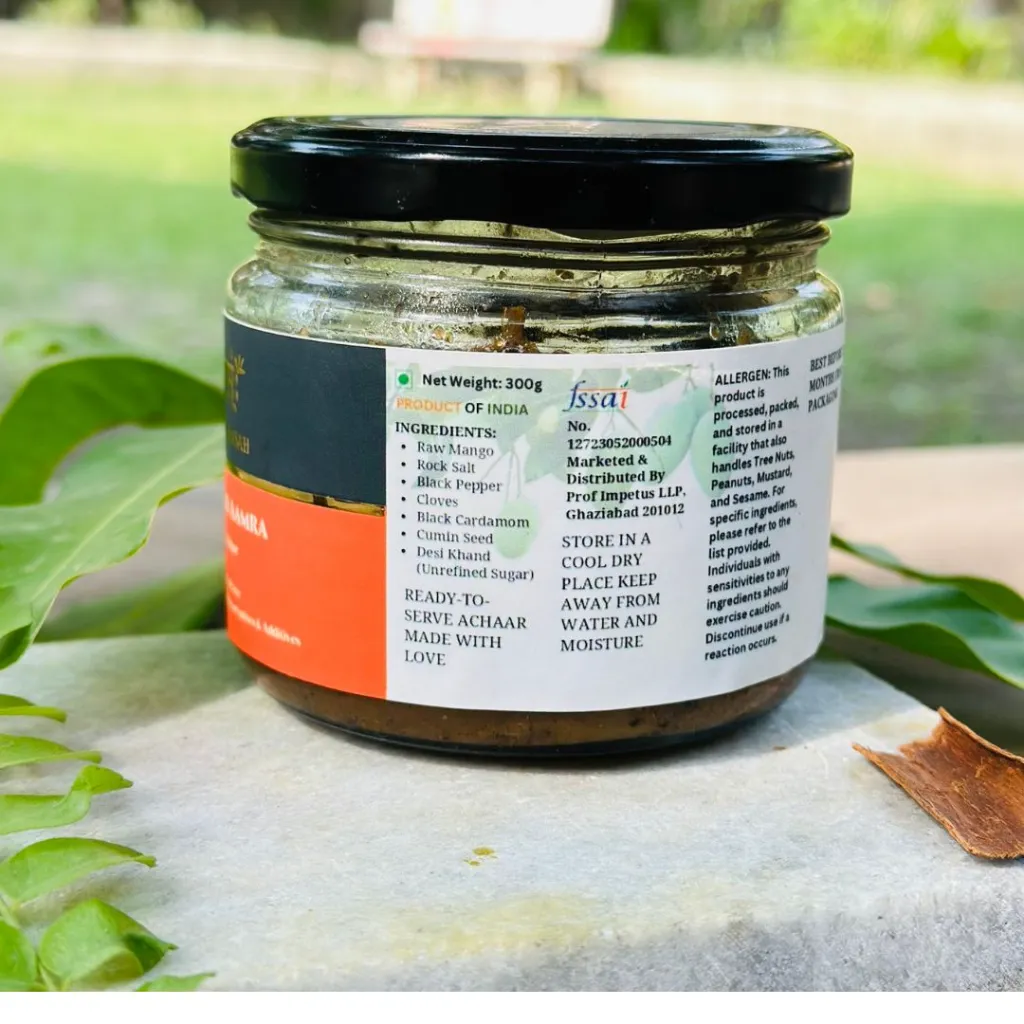
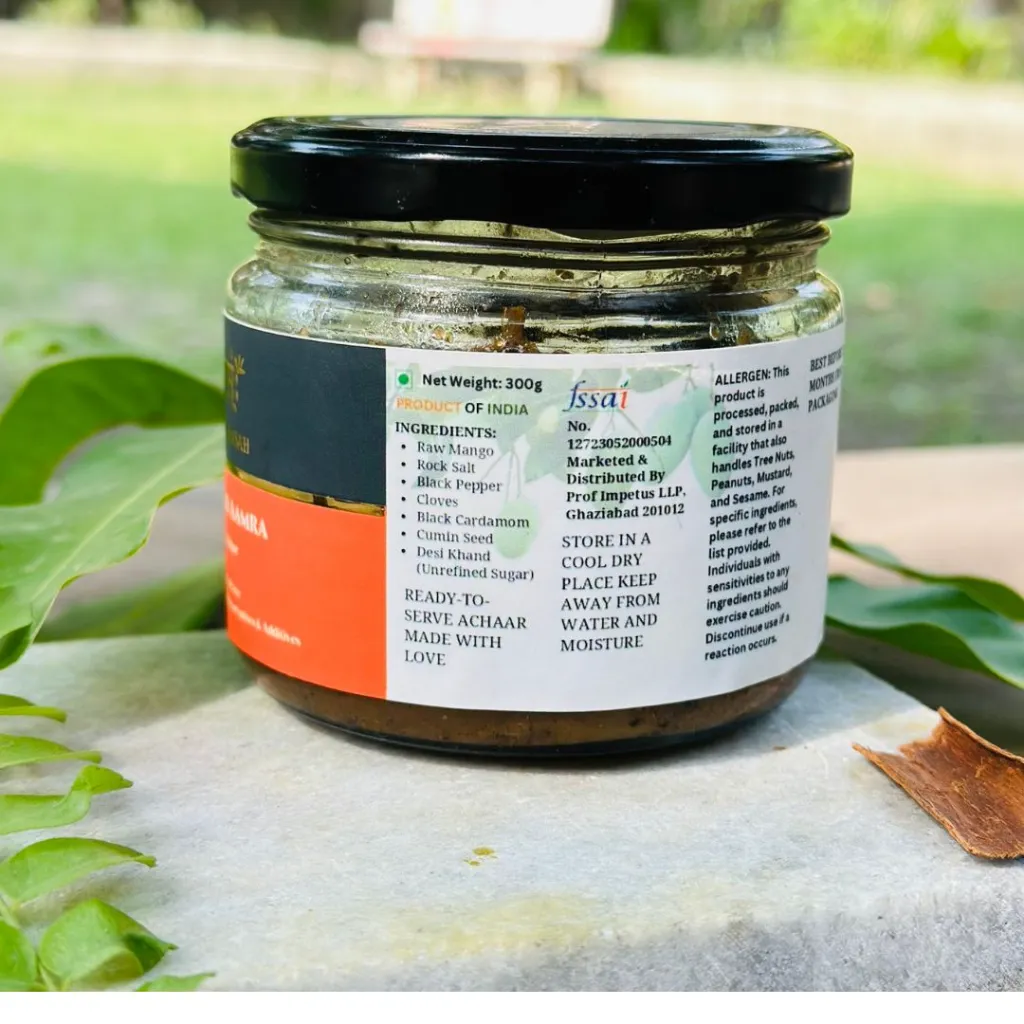
Our Phalahari Achaar contains exactly seven ingredients: Raw Mangoes, Rock Salt (Sendha Namak), Malabar Black Pepper, Cloves, Black Cardamom, Cumin Seeds, and Desi Khand (Unrefined Sugar). Every single ingredient is allowed during Hindu vrat and upvas.
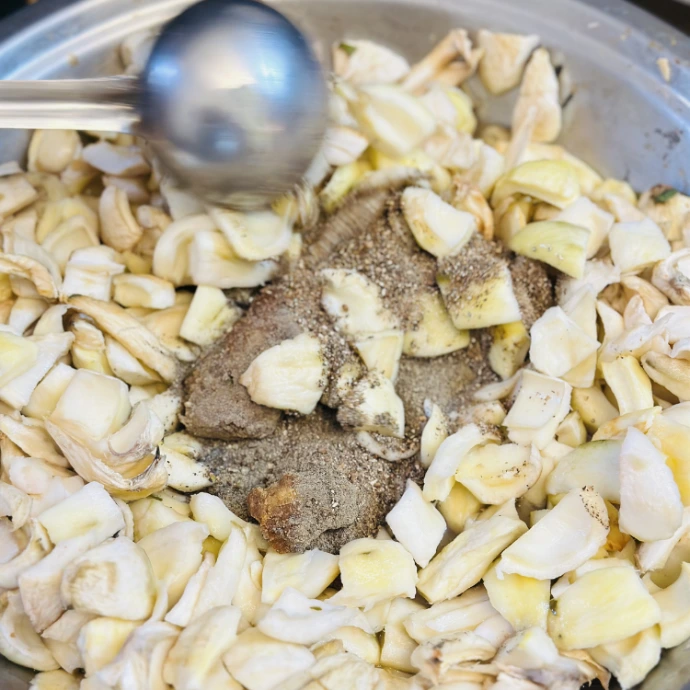
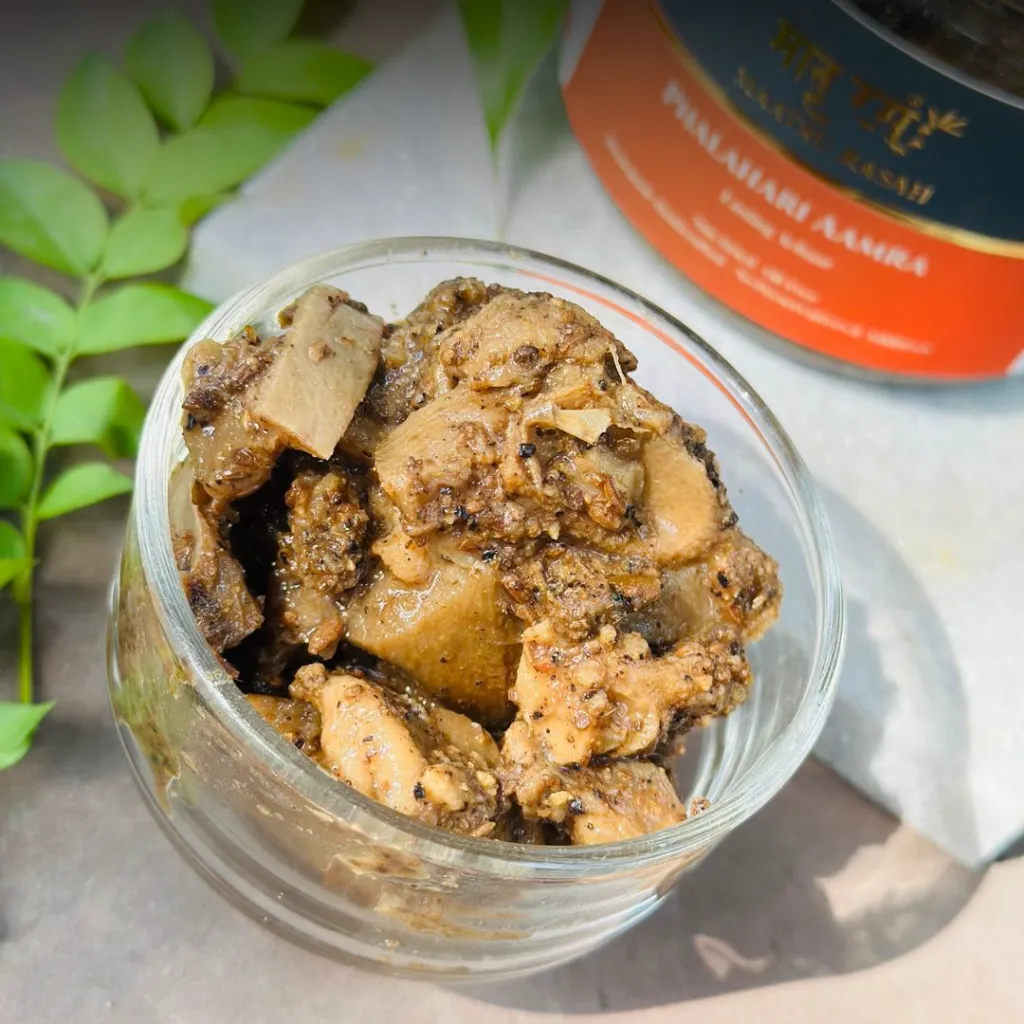
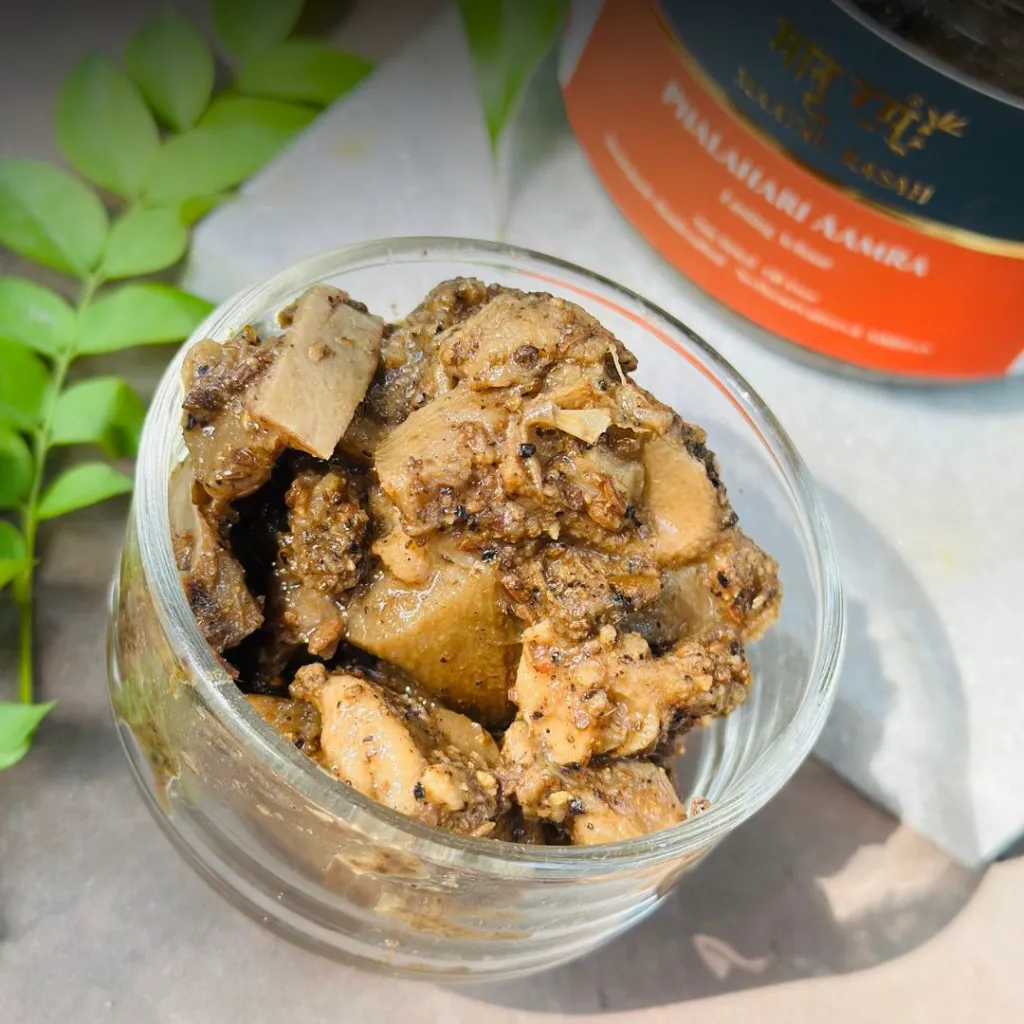
Raw Mangoes — The Base: We use raw, unripe mangoes handpicked at peak sourness. Raw mango gives this pickle its sharp, tangy punch. We hand-peel each mango — no machine blades, no bruising. The flesh is then sun-dried naturally, which concentrates the tang and removes excess water without cooking. Raw mango is rich in Vitamin C and pectin, which supports gut health.
Rock Salt (Sendha Namak) — Not Table Salt: Therefore, the most important distinction in any vrat pickle is the salt. We use only sendha namak — Himalayan rock salt. Common iodised salt is not allowed during Hindu fasting. Rock salt contains natural minerals including potassium, magnesium, and calcium. It also acts as a natural preservative. No other salt enters this jar.
Malabar Black Pepper — Premium and Purposeful: Moreover, we source Malabar Black Pepper — the finest Indian variety, grown on the Malabar Coast of Kerala. It contains piperine, a compound that increases the absorption of other nutrients by up to 20 percent. Its sharp, clean heat gives our achaar a warm bite that standard pepper cannot match. Malabar pepper is sattvic and fully allowed during fasting.
Cloves — Warmth and Preservation: Cloves contribute a deep, warming aroma to the pickle. They contain eugenol — a natural antimicrobial compound documented in Charaka Samhita, one of Ayurveda's oldest texts, as a digestive and preservative agent. In this recipe, cloves extend shelf life naturally and add flavour depth that you notice in the second and third bite.
Black Cardamom — Complex Aroma: Furthermore, black cardamom adds a smoky, camphor-like depth that distinguishes this pickle from any mass-produced version. It contains cineole and other bioactive compounds that support respiratory health and digestion. The flavour is bold but balanced — you smell it before you taste it, and the mellow warmth lingers after.
Cumin Seeds (Jeera) — Digestive Anchor: Cumin is documented in Sushruta Samhita for its role in stimulating digestive fire (Agni). It contains thymoquinone and other compounds that reduce bloating and improve enzyme activity. Because fasting can slow digestion, cumin in this achaar helps the stomach work well during light upvas meals.
Desi Khand (Unrefined Sugar) — Balance, Not Sweetness: Finally, desi khand is unrefined sugarcane sugar — the same form used in traditional Ayurvedic preparations. It is not refined white sugar. It retains natural molasses, minerals, and a complex caramel note that balances the tartness of raw mango. Refined sugar is not used. Desi khand is fully vrat-safe.
Shelf Life and Storage Instructions
How to store homemade pickle without preservatives
- Keep the jar in a cool, dry place — away from direct sunlight and heat sources.
- Always use a completely dry spoon — a single drop of water disrupts natural preservation and causes early spoilage.
- Refrigerate after opening — consume within 3 to 4 months of first opening the jar.
- Never return unused pickle from your plate back into the jar — plate contact introduces bacteria.
- Store away from other strong-smelling foods — black cardamom and cloves absorb surrounding odours easily.
Shelf life: 12 months from packaging date. We dispatch only from the most recent batch.