

![instagram - [Video]](/web/image/product.image/484/image_128/instagram%20-%20%5BVideo%5D?unique=c5fdc48)


-
Weight
| Weight | 350g |
| Weight | 350g |
High Quality Ingredients
crafted with premium ingredients

No Preservative & Additives
Pure and Wholesome Flavor
Hand Crafted
Unique Flavor, crafted with care in small batches at home
1857 Heirloom Legacy
Rooted in 1857 Family Heirloom Recipes

Small Batches
Made in small batches
Loaded with Nutrition
Ancient Wisdom, Modern Nutrition
Since 1857, our family in Prayagraj (formerly Allahabad) has been perfecting the art of making authentic Homemade Gujiya—a cherished recipe passed down through five generations of skilled sweet-makers. What began in the traditional kitchens of our great-great-grandparents has now found its way to discerning homes across Delhi, Noida, Gurgaon, and Faridabad, carrying the same authentic flavors and time-honored preparation methods that made this recipe legendary throughout Uttar Pradesh.
Each batch we create honors this Prayagraj culinary heritage. We've deliberately chosen to remain small-scale, handcrafting every piece in our Delhi NCR facility to maintain the exacting quality standards our ancestors established over a century ago. This isn't just a sweet; it's a piece of living culinary history that connects modern families in Greater Kailash, Vasant Vihar, Golf Course Road, and Sector 62 Noida to the authentic flavors of traditional Prayagraj kitchens.
The Homemade Mawa Advantage
While Delhi's sweet shops use bulk-purchased commercial mawa stored for weeks, we prepare fresh A2 Mawa in-house for each batch. We slow-boil pure A2 milk and hand-stir for 3-4 hours until naturally thickened—no milk powder, no synthetic thickeners, just traditional patience creating creamy, nutrient-rich khoya that market alternatives can't match.
The "Bhuna" Secret: Deep Brown Perfection
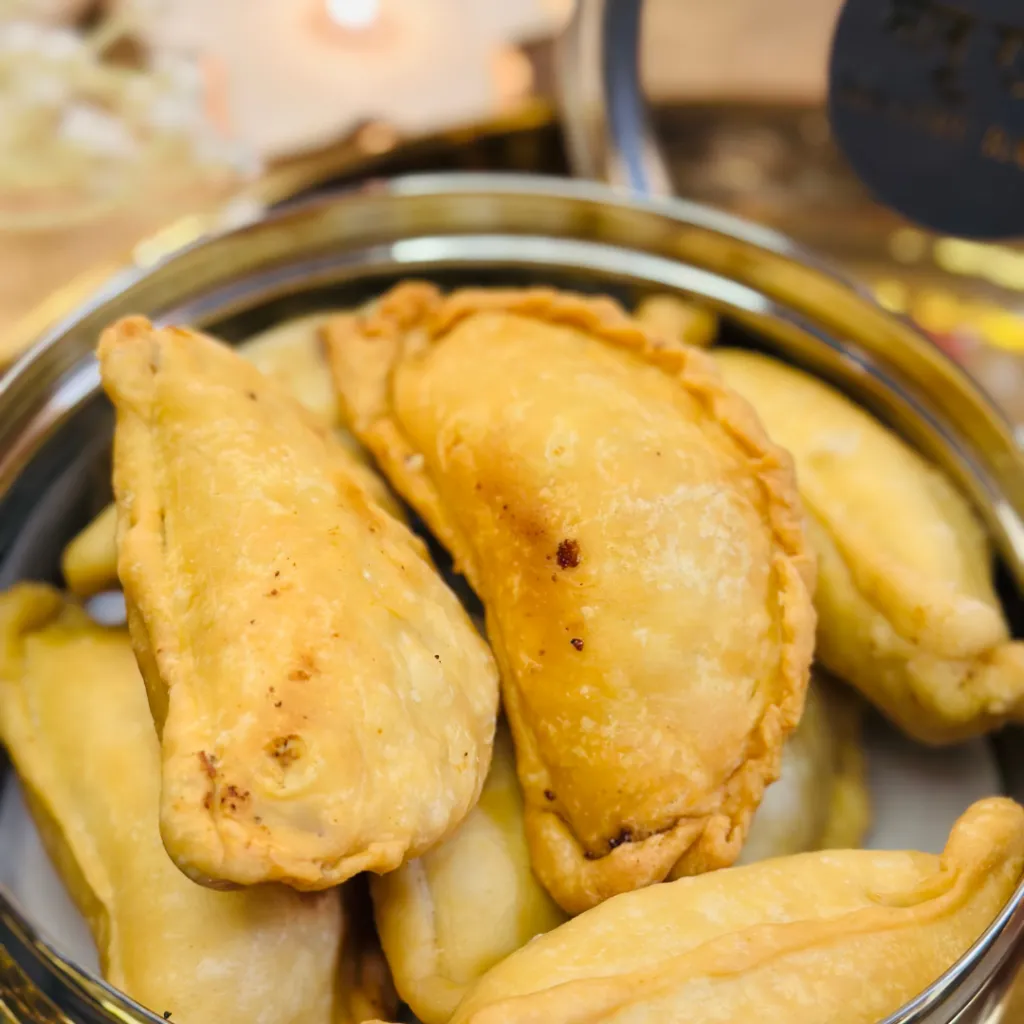
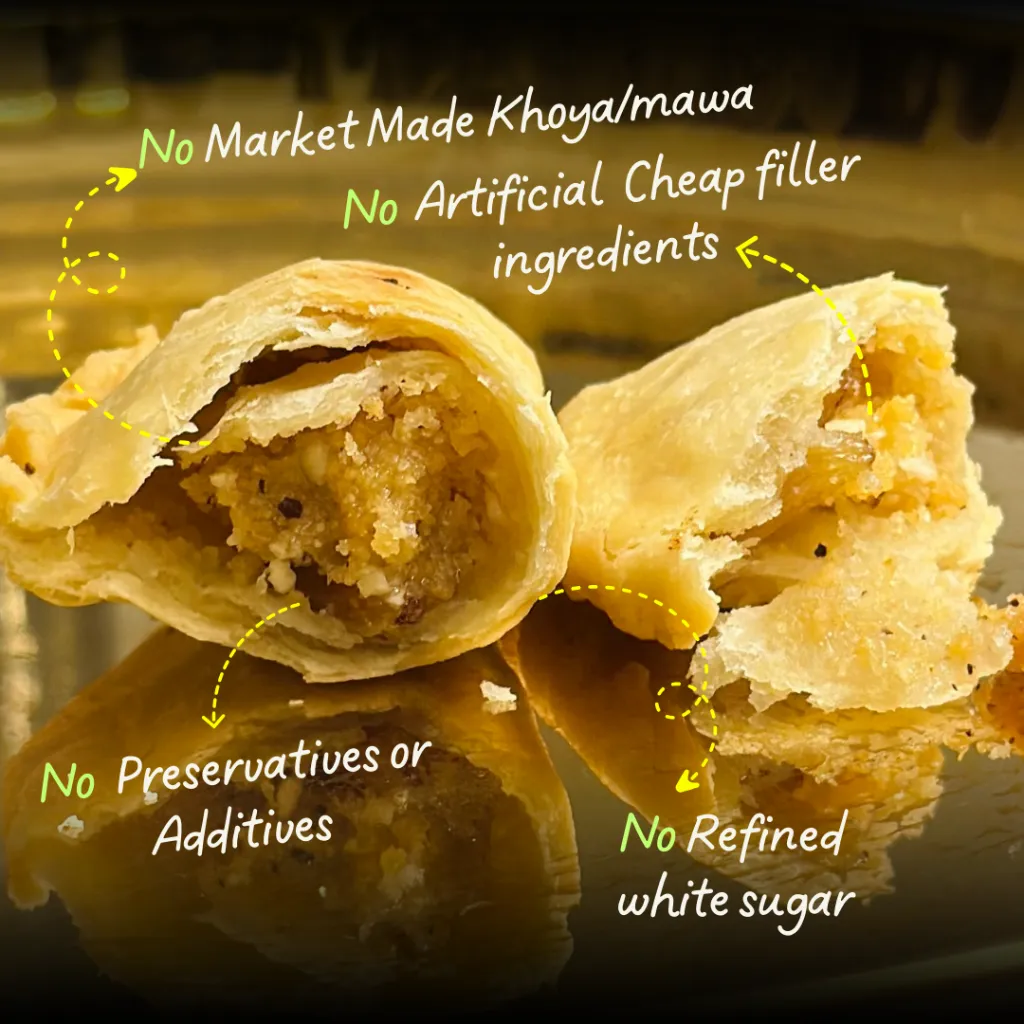
Notice our filling's rich deep brown color? That's from extensively roasting homemade mawa in A2 ghee for 45-60 minutes—creating complex, nutty, caramel-like flavors. This increses longevity for 10 days. Commercial Gujiya across Chandni Chowk and Karol Bagh skip this labor-intensive step, resulting in pale white filling that tastes one-dimensionally sweet without depth or character.
The A2 Ghee Signature Spots
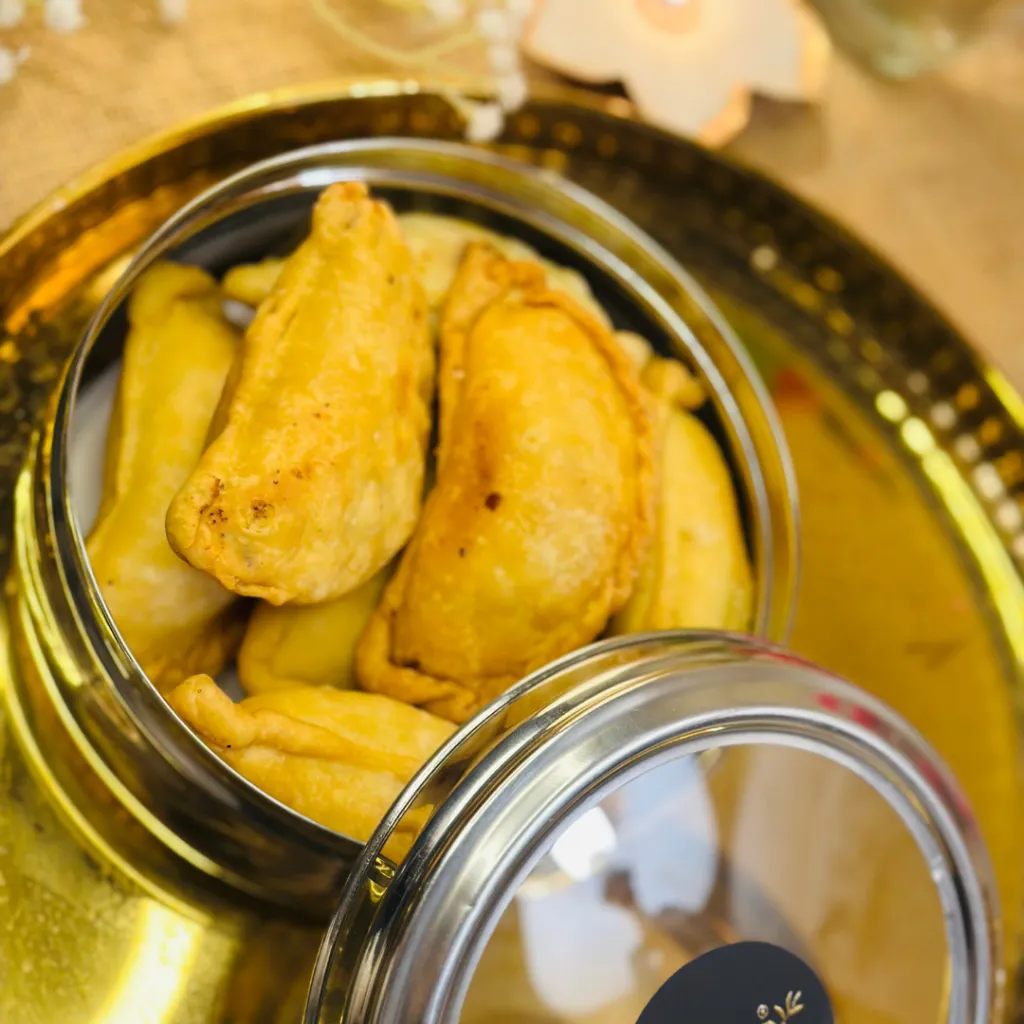
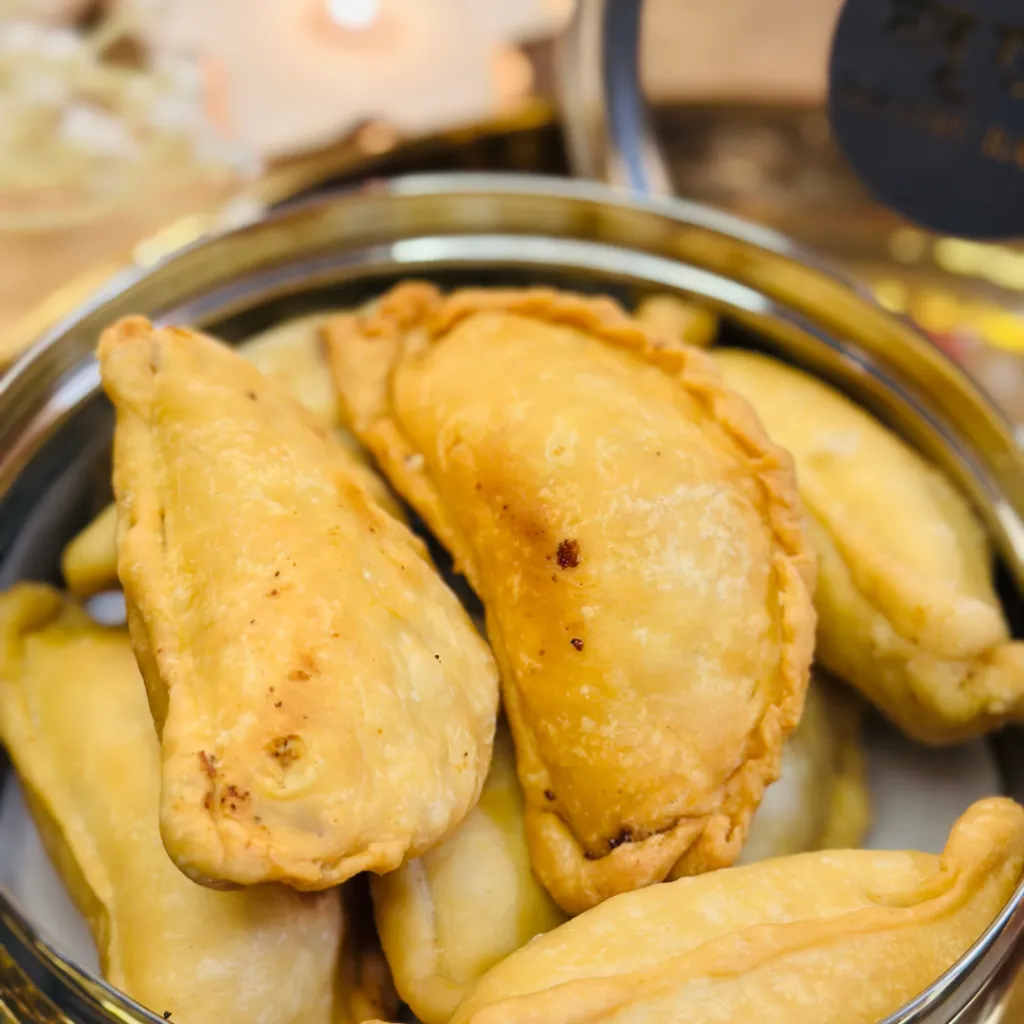
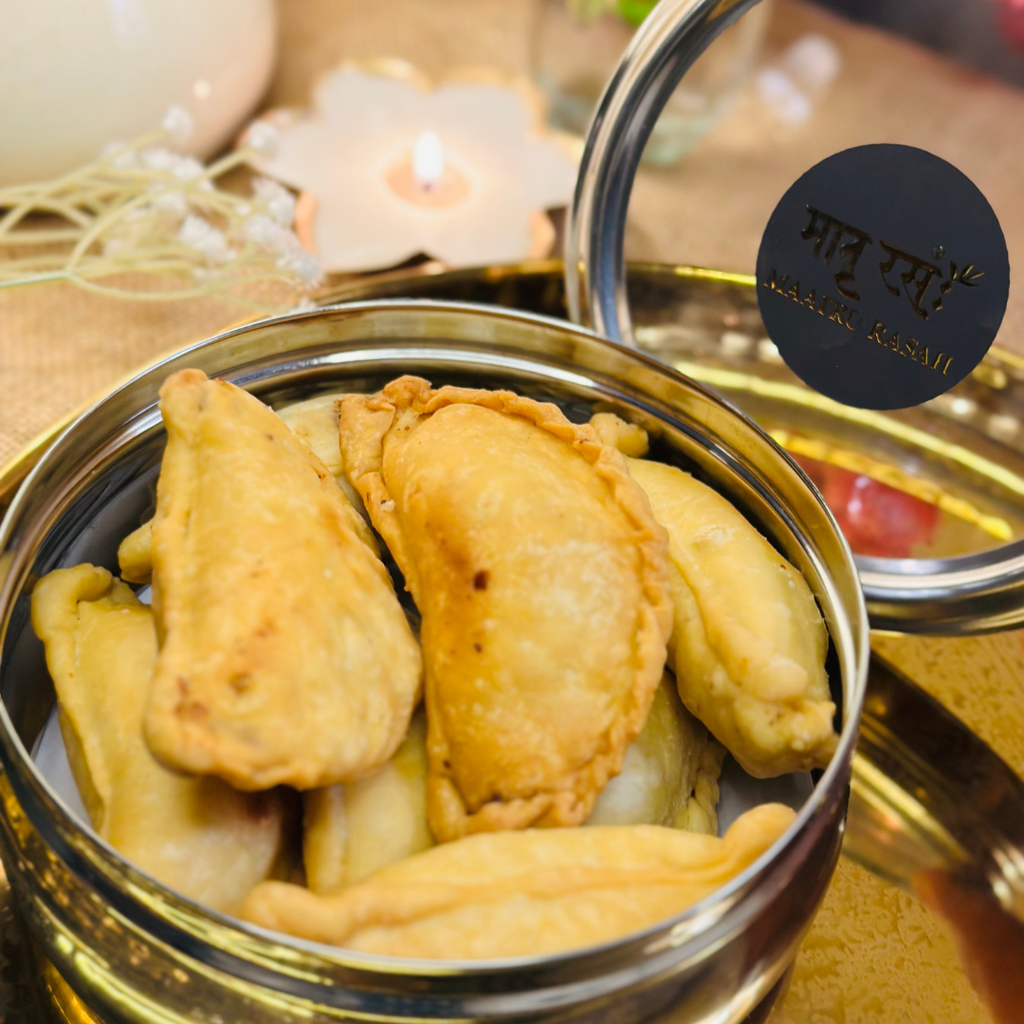
Those golden-brown spots on our Gujiya's crust? That's the unmistakable mark of Pure Desi Ghee interacting with hand-shaped dough during traditional frying. Commercial alternatives fried in dalda or refined oils produce uniform, characterless appearance—plus harmful trans-fats instead of A2 ghee's heart-healthy butyric acid, CLA, and fat-soluble vitamins.
Fresh Ghee Only: Zero Re-Use Policy
Our most expensive commitment: Every batch is fried in 100% fresh A2 Desi Ghee—never reused. Market sweet shops repeatedly use the same oil for days, creating toxic trans-fats and oxidized lipids. Our strict no-reuse policy ensures light, digestible Gujiya free from harmful compounds—costing us 25x more but worth every rupee for your family's health.
Premium Ingredients, Zero Compromises
What Goes In: Green cardamom, dry coconut, premium cashews, golden raisins, California almonds, desi khand (unrefined sugar), A2 khoya, pure A2 ghee.
What Never Goes In: ✗ Refined white sugar ✗ Preservatives ✗ Artificial colors ✗ Dalda/trans-fats ✗ Flavor enhancers ✗ Stale dry fruits ✗ Commercial shortcuts.
For health-conscious families in Delhi NCR, this means genuine nutrition—not chemicals disguised as tradition. Authentic A2 Desi Ghee & Khoya
Unlike commercial alternatives that use dalda or refined oils, our Gujiya is prepared exclusively with homemade Shudh A2 Desi Ghee from indigenous cow breeds. The filling features A2 Desi Khoya (mava) made in-house from pure A2 milk, ensuring superior nutritional value and digestibility. This traditional approach delivers the rich, aromatic flavor that refined alternatives simply cannot replicate.
Handcrafted in Small Batches
Mass production compromises quality. We deliberately limit each batch to ensure every Gujiya receives personal attention during preparation. From shaping the delicate crust to carefully sealing each piece, our artisans follow time-tested techniques that machines cannot duplicate. This small-batch philosophy guarantees consistency, freshness, and the authentic texture that defines traditional Gujiya.
1. Ingredient Purity You Can See & Taste
When we make khoya from A2 milk in our kitchen, you can taste the difference—creamy, rich, naturally sweet. When we fry Gujiya in pure desi ghee, the aroma fills the space with authentic fragrance. Commercial khoya often contains milk powder, stabilizers, and unknown additives. The "ghee" smell comes from artificial flavorings, not real ghee. Our customers in Greater Kailash and Vasant Vihar consistently tell us they can immediately distinguish our Gujiya's authentic taste from market varieties—the real ingredients speak for themselves.
2. Freshness That Transforms Taste
Our 10-day shelf life isn't a limitation—it's a guarantee. When you receive Gujiya made just 1-2 days ago, the flavors are vibrant, the texture is perfect, and the nutritional content is at its peak. Most market Gujiya sits for 15-45 days before sale. The preservatives keep them looking fresh, but the taste becomes flat, oils turn rancid, and nutrients degrade significantly. Fresh Gujiya has a crisp outer layer that gives way to a moist, flavorful filling. Stale market Gujiya becomes either soggy or hard with a cardboard-like texture that no amount of sugar can mask.
3. The Artisan Touch vs. Machine Monotony
Each Gujiya is shaped by skilled hands that feel the dough consistency, adjust filling quantity, and seal with care. Human intuition ensures perfect texture—not too thick, not too thin, sealed just right to prevent filling leakage. Machines stamp out uniform pieces with standardized filling, often creating air pockets or uneven distribution. No adjustment for dough moisture or ingredient variations. Our handcrafted approach means occasional minor variations in size—proof of human craftsmanship. Market Gujiya looks identical because it's factory-made, not because it's better.
4. Transparency vs. Trade Secrets
We list every ingredient. Visit our social media, and you'll see behind-the-scenes videos of us making khoya, preparing filling, and frying Gujiya. Complete transparency because we're proud of our process. "Proprietary blend," "natural flavors," "contains permitted preservatives"—vague labels that hide inferior ingredients. Try asking your local sweet shop exactly what goes into their Gujiya. Delhi NCR families increasingly demand to know what they're feeding their children. Our ingredient transparency builds trust that market vendors simply cannot match.
5. Nutritional Density vs. Empty Calories
Homemade Difference: Every 100g of our Gujiya delivers:
Market Reality: Equal calories but minimal nutrition—refined sugar provides energy without vitamins, dalda gives you trans fats instead of healthy fats, and cheap dry fruits (if any) lack the premium quality that delivers real nutrients.
Impact: Our Gujiya satisfies hunger and nourishes your body. Market Gujiya fills your stomach but leaves you nutritionally deficient and craving more sugar within hours.
6. Cultural Authenticity vs. Commercial Imitation
Our 1857 recipe represents five generations of refinement. The ratio of khoya to coconut, the blend of cardamom, the frying temperature—these details create the authentic Prayagraj taste your grandparents remember. Modern sweet shops optimize for shelf life and profit, not tradition. The recipe changes based on ingredient costs, season, and whatever shortcut reduces production time.
When you serve our Gujiya during Holi celebrations in Noida or Gurgaon, you're sharing genuine heritage—not a commercialized approximation of what Gujiya should taste like.
The Hidden Reality of Market Gujiya
Walk into any sweet shop in Chandni Chowk, Karol Bagh, or even premium confectioneries in South Delhi, and you'll find gleaming rows of Gujiya. They look perfect, stay fresh for weeks, and cost less. But have you ever wondered what makes this possible?
What Market Gujiya Actually Contains:
🚫 Dalda/Vanaspati (Hydrogenated Oils): Cheap trans-fat alternatives to ghee that increase bad cholesterol and harm heart health
🚫 Refined White Sugar: Causes blood sugar spikes, inflammation, and provides empty calories without nutrients
🚫 Preservatives & Additives: Chemical compounds like sodium benzoate and potassium sorbate to extend shelf life artificially
🚫 Artificial Food Colors: Synthetic dyes to create appealing appearance, often linked to hyperactivity and allergic reactions
🚫 Stale or Low-Quality Khoya: Mass-produced mava that sits in warehouses for months, losing nutritional value
🚫 Cheap Filler Ingredients: Commercial bakeries often use semolina mixed with cheaper substitutes to reduce costs
🚫 Mystery Ingredients: Undisclosed flavor enhancers and stabilizers that don't appear on any label
The Manufacturing Process They Don't Tell You About
Commercial Gujiya production prioritizes profit over health:
Many Delhi NCR customers initially hesitate seeing our price compared to market Gujiya. Here's the honest breakdown:
Market Gujiya
₹200-300/kg: Made with dalda (₹80/kg) instead of A2 ghee (₹2,500/kg), Uses commercial khoya (₹300/kg) instead of homemade A2 khoya (₹1,200/kg), Contains cheap dry fruits or minimal filling, Lasts 30-45 days due to preservatives
Hidden costs: Health impacts, doctor visits for sugar-related issues, nutrient deficiency
Our Homemade Gujiya:
Premium pricing: Pure A2 desi ghee (cost: 3,000%+ more than dalda), Homemade A2 khoya (cost: 400% more than commercial), Premium dry fruits in generous portions, Lasts 10 days—no preservatives
True value: Real nutrition, authentic taste, health support, peace of mind
The Question: Would you rather pay ₹250 for chemicals disguised as sweets, or invest in genuine nutrition that supports your family's health?
Serving Suggestions:
Recommended Consumption: 1-2 pieces per serving. Best consumed fresh within the shelf life period.
Authenticity You Can Trust
In a market flooded with industrially-produced sweets labeled "homemade," we offer verifiable authenticity. Our 1857 heirloom recipe isn't marketing fluff—it's a documented family legacy. Each batch is genuinely handcrafted in small quantities by trained artisans who understand traditional preparation methods passed down through generations.
Health-Conscious Without Compromise
We understand that modern Delhi NCR consumers want traditional flavors without health concerns. Our commitment to A2 ingredients, no preservatives, and natural sweeteners means you're choosing wellness alongside taste. Perfect for families who refuse to compromise between tradition and health.
Freshness Guaranteed
We ship only from our most recent batch, ensuring maximum freshness. Unlike retailers sitting on month-old inventory, our 10-day shelf life policy means you receive Gujiya at peak flavor and nutritional value. For customers in Delhi, Noida, Gurgaon, and Faridabad, this translates to bakery-fresh quality delivered to your doorstep.
Supporting Artisanal Traditions
By choosing Maatru Rasah, you're supporting the preservation of dying culinary arts. In an era of automation, your purchase helps sustain traditional food preparation methods and the artisans who keep these skills alive.
No Hidden Ingredients, No Compromises
Every ingredient serves a purpose. We don't add preservatives to increase shelf life, we don't use dalda to cut costs, and we don't hide inferior ingredients behind vague labels. What you see is what you get—pure, traditional, nourishing Gujiya made the way your great-grandparents made it.
Shelf Life: 10 days from the date of packaging (clearly marked on each package)
Storage Instructions:
Freshness Tip: In Delhi's winter months (November-February), Gujiya stays fresh longer. During summer, store in the coolest part of your home.
Why Only 10 Days? Because we don't use preservatives! This isn't a limitation—it's proof of authenticity. Market Gujiya lasts 45 days because of chemicals, not quality.
Made with love
Homemade Handcrafted
Here are some common questions about our Homemade Dru-fruits Desi Ghee Gujiya
Our Gujiya is genuinely handcrafted in small batches following traditional methods—from making A2 ghee and khoya in-house to hand-shaping each piece. We don't use industrial equipment or bulk production. Each batch is prepared like you would make it at home, just with expertise perfected over 134 years.
Absolutely. We use A2 desi ghee (easier to digest than regular ghee), desi khand instead of refined sugar, and zero preservatives or additives. The dry fruits provide natural nutrition, and the traditional recipe supports immunity and energy—making it a healthier indulgence compared to commercial sweets.
A2 ghee comes from indigenous cow breeds that produce milk with only A2 beta-casein protein, which is easier to digest and doesn't cause the inflammation associated with A1 protein found in hybrid cow milk. It's also richer in nutrients and aligns with traditional Ayurvedic principles.
Market Gujiya uses dalda (trans fats), refined sugar, preservatives, and commercial khoya to maximize profit and shelf life. Ours uses pure A2 ghee (3,000% costlier than dalda), homemade A2 khoya, desi khand, and zero chemicals. The taste, nutrition, and health impact are incomparable. Market Gujiya prioritizes appearance and longevity; we prioritize authentic flavor and your family's health.
Because real ingredients cost more. A2 desi ghee costs ₹2,500/kg vs. dalda at ₹80/kg. Homemade A2 khoya costs 400% more than commercial mava. Premium dry fruits, small-batch handcrafting, and zero cost-cutting measures mean higher prices—but genuine nutritional value. You're paying for food, not chemicals disguised as sweets.
While made with desi khand (less refined than white sugar), our Gujiya still contains natural sugars and is calorie-dense. Diabetics should consult their healthcare provider and consume in moderation if approved. The healthy fats help slow sugar absorption, but portion control is essential. However, it's far better than market Gujiya with refined sugar that causes severe blood sugar spikes.
Because we don't use preservatives! The 10-day shelf life reflects the natural freshness window of authentic homemade sweets. We prioritize quality and safety over extended shelf life, ensuring you get the freshest product possible. Market Gujiya lasts 30-45 days only because of chemical preservatives—not because it's fresher.
Every package is clearly marked with the packaging date. We maintain a strict first-in-first-out inventory system and only ship from our most recent batch. For Delhi NCR customers, local delivery means minimal transit time and maximum freshness.
Yes! Our Gujiya makes an excellent gift for Holi, Diwali, or any celebration. We recommend placing festival orders 7-10 days in advance to ensure fresh availability. Gift packaging options may be available—please contact us for details.
Yes. We prepare khoya in-house from pure A2 milk using traditional methods. This ensures quality control, freshness, and the authentic taste that store-bought khoya cannot match. You can taste the difference immediately—creamy, naturally sweet, without the chemical aftertaste of commercial mava.
Traditional Gujiya recipes use refined flour (maida) for the delicate, flaky texture that defines this sweet. The combination with semolina creates the perfect crust consistency. While we respect whole wheat preferences, altering this would fundamentally change the authentic Gujiya experience.
Visit our social media channels where we regularly post behind-the-scenes videos of our preparation process. You'll see our artisans hand-shaping each piece, making khoya from scratch, and frying in small batches. The slight variations in size and shape of each Gujiya are also proof of handcrafting—machines produce identical pieces, human hands create beautiful imperfections.
| Weight | 350g |