





Skip to Content

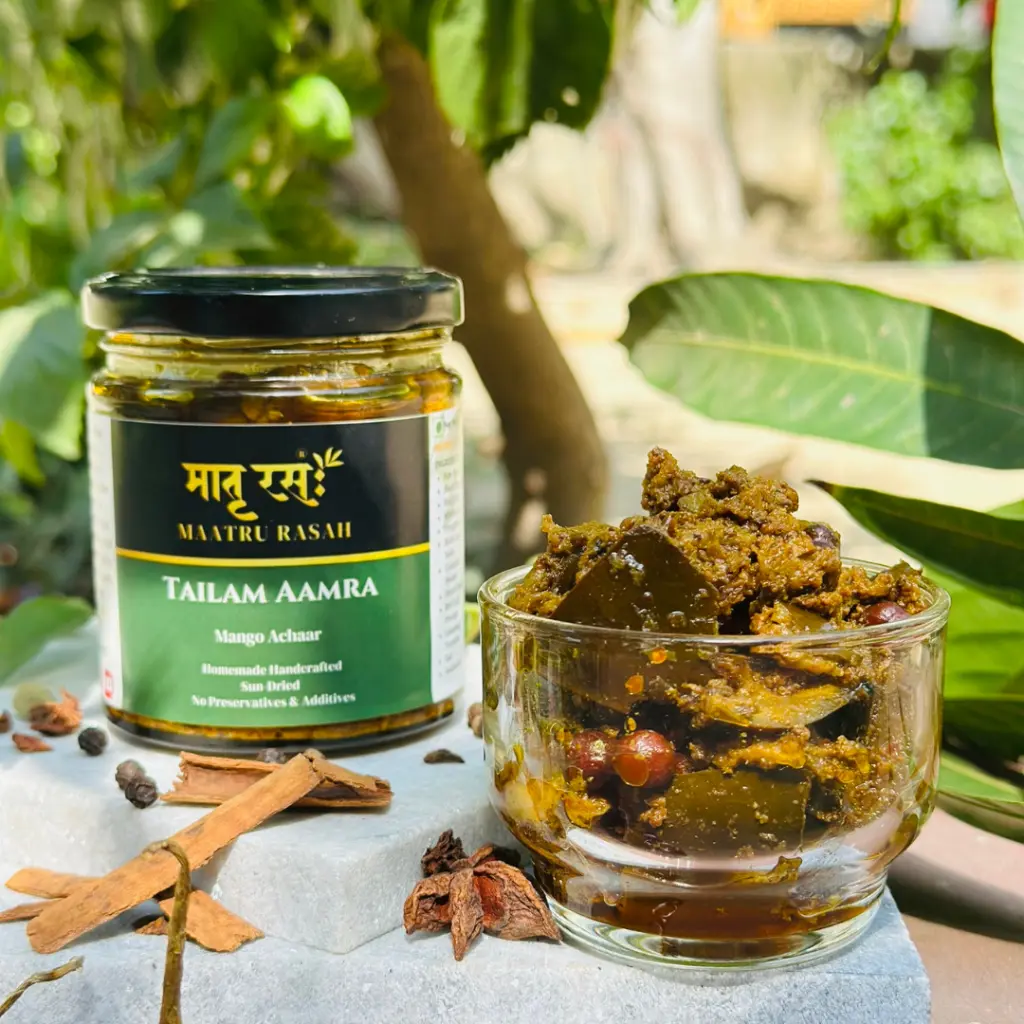
Tailam Aamra — Aam Ka Achar with Wood Pressed Mustard Oil & Black Chickpeas

(14 reviews)

A Katra, Prayagraj family recipe — unchanged since 1890. Raw mango and black chickpeas in wood pressed mustard oil, 12 spices, no preservatives. Small-batch, made to order, ships across India.

5% Savings on MRP🎉

Homemade Handcrafted Products Homemade Mango Achaar
  • Weight
Price
₹ 329.00 ₹ 349.00
₹ 349.00
(Tax excluded)
">
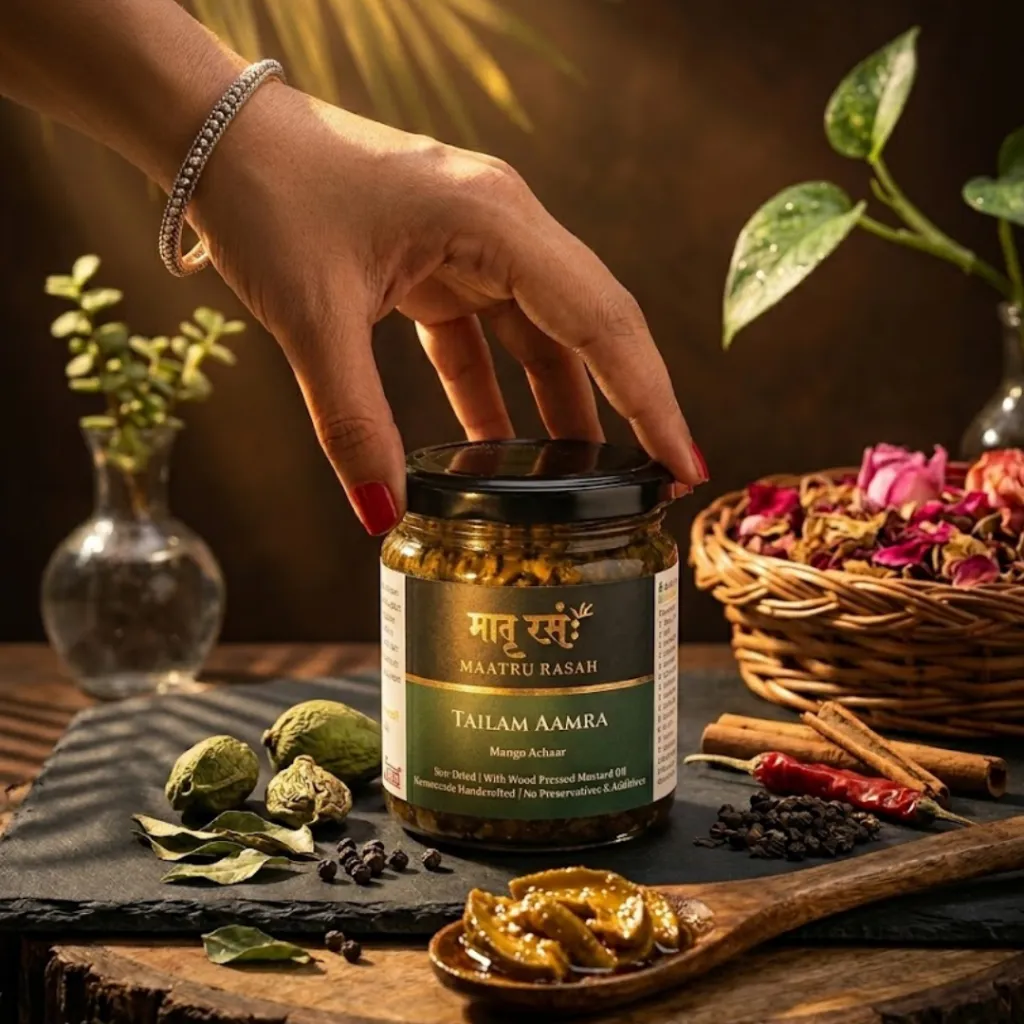
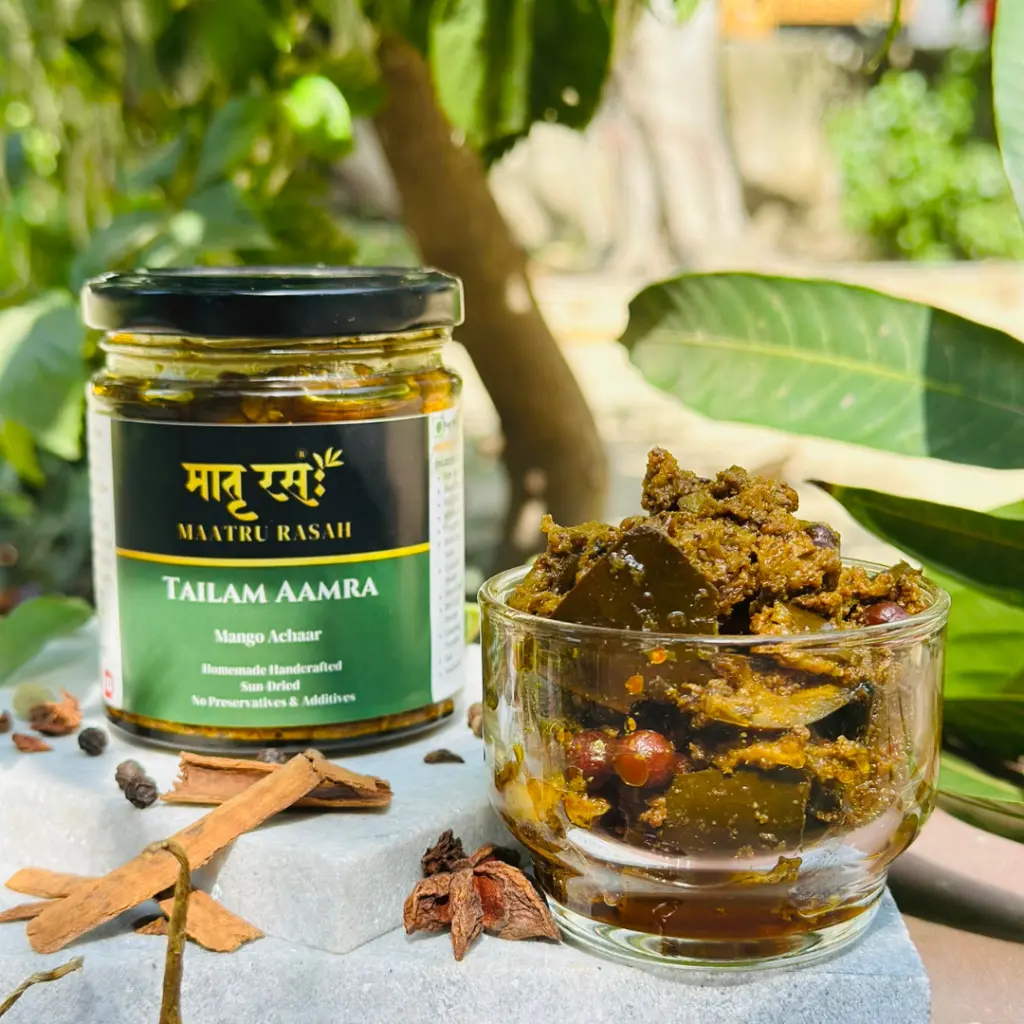
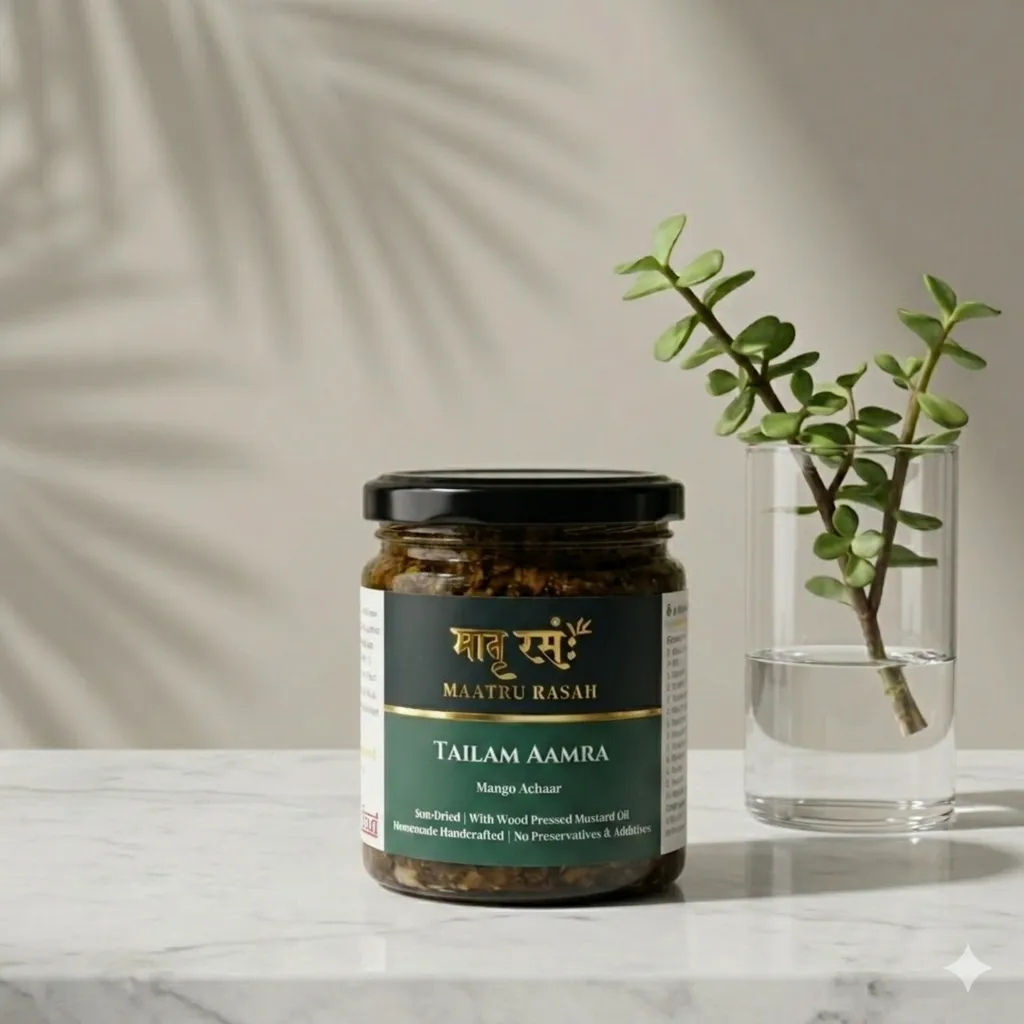
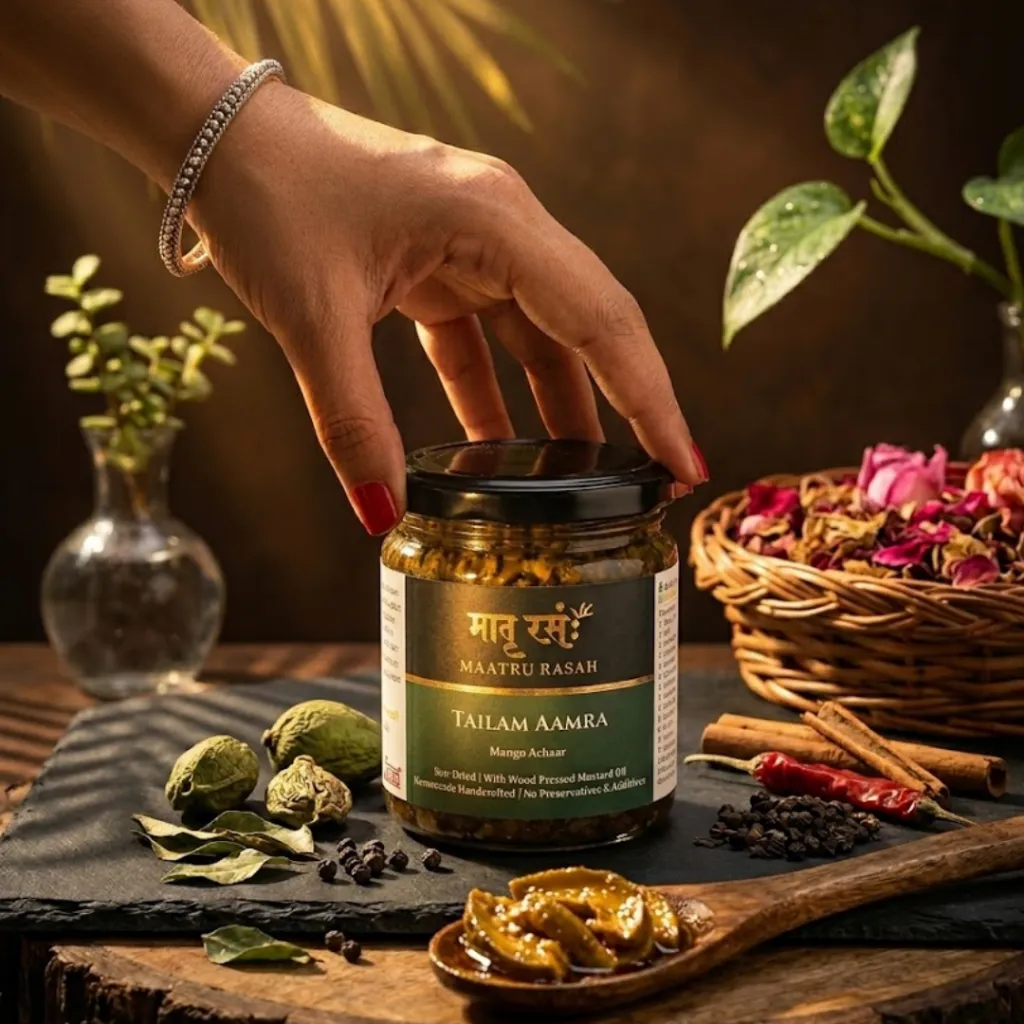
Tailam Aamra aam ka achar made with wood pressed mustard oil — Maatru Rasah

Wood-Pressed Infusion  

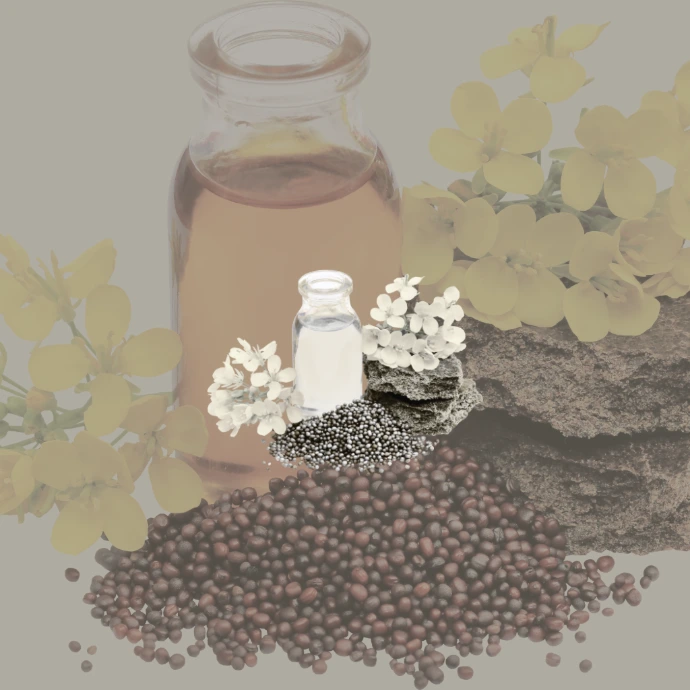
 Infused with Pure Wood-Pressed Mustard Oil

Without artificial preservative and chemical mango pickle — Tailam Aamra by Maatru Rasah

No Preservative & Additives

Pure and Wholesome Flavor

Small-batch handcrafted mango pickle — Tailam Aamra by Maatru Rasah

Hand Crafted

Unique Flavor, crafted with care in small batches at home

High quality Gi tag spices in mango pickles— Tailam Aamra by Maatru Rasah

1890 Heirloom Legacy

Rooted in 1890 Family Heirloom Recipes

Sun-dried raw mango for Tailam Aamra aam ka achar — Maatru Rasah

Sun-Dried

Sun-dried for Natural Intensity

Tailam Aamra mango pickle stored in traditional baranis — Maatru Rasah Prayagraj

Traditionally Preserved

Aged in Traditional Barnis for Rich Flavor

What Is Tailam Aamra?


"Tailam" means oil. "Aamra" means mango. The name is the recipe: raw mango, submerged in oil, with black chickpeas and twelve spices — made the way our family has made aam ka achar in Katra, Prayagraj since 1890. Most mango pickles use four or five spices. Tailam Aamra uses twelve: fenugreek, black cumin, coriander powder, fennel seeds, red chilli and red chilli powder, Lakadong turmeric, asafoetida, and more. And one ingredient that most commercial achars never include: kala chana — black chickpeas. They break down slowly during the curing period, thickening the oil and adding a nuttiness that round off the mustard heat. You will not find kala chana in any large-brand mango pickle. This is why Tailam Aamra tastes the way it does.  

Why This Achaar So Special


Ingredients — The Full List


Twelve ingredients. No more, no less, no hidden additives

Raw Mango

Whole raw mangoes, cut bone-in. Desi cultivars from UP orchards. Not Totapuri, not cold-storage imports.

Black Chickpeas

Kala chana — the ingredient that sets this achar apart. Cures slowly in the oil, adds body and nuttiness. Not found in commercial mango pickle.

Wood Pressed Mustard Oil

Extracted using a traditional wooden kohlu press — no heat generated, no refining. This is a form of kachi ghani: the cold-press method preserves the oil's pungency and the allyl isothiocyanate that gives North Indian achar its bite.

Red Chilli (whole)

Whole dried chillies. Medium-sharp heat.

Red Chilli Powder

Ground from dried chillies in-house. Adds colour and layered heat.

Fenugreek Seeds

Methi dana — slight bitterness that balances the oil. A standard in Prayagraj-style achar.

Black Cumin Seeds

Kala jeera — different from regular jeera. Adds a sharper, more resinous note.

Coriander Powder

Ground dhania — mellows the mustard bite, adds warmth.

Fennel Seeds

Saunf — the mild sweetness that stops the heat from being one-dimensional.

Lakadong Turmeric

Not standard haldi. Lakadong from Meghalaya — 7–12% curcumin content vs 2–3% in commercial turmeric. Deeper colour, sharper flavour.

Salt

Rock salt. Not iodised table salt.

Asafoetida

Hing — a small quantity, used the way our family has always used it: to cut through the raw mango's astringency.

No vinegar. No citric acid. No artificial colour. No sodium benzoate. No preservatives. The oil is the preservative — same as 1890.

How It Is Made


Three weeks minimum, not three hours.

Raw mango pieces are salted and sun-dried for 48 hours — this removes moisture, the primary cause of spoiled homemade achar. The kala chana is soaked separately and partially dried. Both go into ceramic matkas with the twelve-spice blend. Heated wood pressed mustard oil is poured over to cover, then left to cure at room temperature for 15 to 21 days.

During curing, the kala chana absorbs oil and slowly softens. The mustard oil changes colour — from sharp yellow to a deeper amber — as the spices and mango work into it. The oil is checked at day 15. If the mango skin is tender but intact and the oil has thickened, it is ready. If not, it cures longer. We do not rush this.

Batch size: 12 to 15 kg. Made to order. If the product shows "out of stock," the next batch is curing — not a logistics problem.

Why Wood Pressed Mustard Oil


Wood pressed means the mustard seeds are pressed using a traditional wooden kohlu (rotary press) driven by a motor or bullock. No external heat is applied. Because the extraction stays cold, the oil retains allyl isothiocyanate — the compound responsible for the sharp, sinus-clearing bite that defines North Indian achar. This is what "kachi ghani" means: cold press. Wood pressed is a subset of kachi ghani.

Refined mustard oil — what most commercial pickles use — loses this compound during processing. You can taste the difference: refined oil is flat. Wood pressed has a nasal heat that builds as you eat, then fades. That heat is not a flaw. It is the point.

Our wood pressed sarson tel comes from a single press. 

Best Oil For Mango Pickle

The Katra, Prayagraj Provenance


Katra is Prayagraj's oldest spice market. Our family has been making achaar in Katra since 1890 — before Allahabad was renamed Prayagraj, before refrigeration reached these kitchens. The recipe for Tailam Aamra was not developed for commercial sale. It was a household recipe, written in a family kitchen record, passed through generations in the same proportions.

We founded Maatru Rasah in 2013 to take that recipe outside the family kitchen. We have not adjusted the salt ratio. We have not reduced the spice count to cut costs. The only change: we now use Lakadong turmeric where standard haldi was used before, because Lakadong is verifiably better and we can now source it directly.

The 1890 date refers to our family's recipe lineage, not to Maatru Rasah as a company. The company was founded in 2013. The recipe is older.

Shelf Life & Storage


Unopened

12 months from batch date. Cool, dry, no direct sunlight.

After opening

6 months. Keep mango and kala chana submerged under oil. Use a dry, clean spoon every time.

Refrigeration

Not required. Slows curing and mutes the wood pressed mustard flavour.

Normal signs

Cloudy oil = normal curing. Darkened oil = normal oxidation. Soft kala chana = fully cured. All normal.

Spoilage sign

White mould on the oil surface = discard the batch.


How to Use Tailam Aamra


Dal-chawal, roti, paratha, curd rice. The obvious pairings. One piece per meal — the flavour is concentrated.

The oil is equally useful. After the mango and kala chana are gone, the spiced wood pressed oil that remains is a cooking ingredient. Use it to temper lentils, drizzle over poha, mix into mashed potato. The kala chana softens enough to eat whole — mash it into the oil for a finishing paste.

The kala chana itself can be eaten alongside rice — it absorbs spice differently from the mango, making it almost a separate element in the same jar.

Our Legacy

Made with love

Small Batch

Homemade Handcrafted

Frequently Asked Questions

Here are some common questions about our premium Tailam Aamra Achaar (Indian Mango Pickle).

Tailam Aamra includes black chickpeas (kala chana) — unusual in mango pickle. Most commercial aam ka achar has 4–5 spices; Tailam Aamra uses 12, including Lakadong turmeric and asafoetida. The oil is wood pressed mustard oil (a form of kachi ghani), which retains the pungency refined oils lose. The recipe comes from a Katra, Prayagraj family kitchen and has not been adjusted for commercial scale.

Wood pressed means the mustard seeds are extracted using a traditional wooden kohlu press with no external heat — preserving allyl isothiocyanate, the compound that gives mustard oil its characteristic sharp bite. Wood pressed is a type of kachi ghani. Refined mustard oil, used in most commercial pickles, loses this compound during processing and tastes comparatively flat.

No. The full ingredient list is: raw mango, black chickpeas, red chilli, wood pressed mustard oil, fenugreek, black cumin seeds, coriander powder, fennel seeds, red chilli powder, Lakadong turmeric, salt, asafoetida. No vinegar, no citric acid, no sodium benzoate, no artificial colour.

Kala chana is part of the 1890 Katra, Prayagraj family recipe. During the 21-day curing period, the chickpeas slowly absorb the spiced oil, soften, and thicken the oil. They add a nutty, slightly earthy body that balances the sharp mustard heat. They can be eaten whole alongside the mango or mashed into the oil.

6 months at room temperature. Keep the mango and kala chana pieces covered with oil at all times. Use a dry, clean spoon every time. Refrigeration is not required — it mutes the wood pressed mustard flavour.

Yes. Maatru Rasah ships Tailam Aamra across India in small batches of 12–15 kg. If the product shows out of stock, the batch is currently curing (15–21 days). Sign up for restock notification on the product page.

Lakadong is a turmeric variety from the Jaintia Hills of Meghalaya with 7–12% curcumin content, compared to 2–3% in standard commercial turmeric. In Tailam Aamra, it adds deeper colour and a sharper, more complex flavour than haldi typically does in achar. It is the same single-origin Lakadong turmeric sold separately by Maatru Rasah.

The recipe originates from our family's kitchen in Katra, Prayagraj — traceable to 1890. Katra is Prayagraj's oldest market. The recipe was not developed for commercial sale; it was a household recipe passed through generations. Maatru Rasah was founded in 2013 to bring it outside the family kitchen. The proportions have not changed.

Specifications

Weight 150g in Glass Jar, 300g in Glass Jar