



Skip to Content

Khawkhasi — Unpolished Red Rice from the Khasi Hills

(0 review)

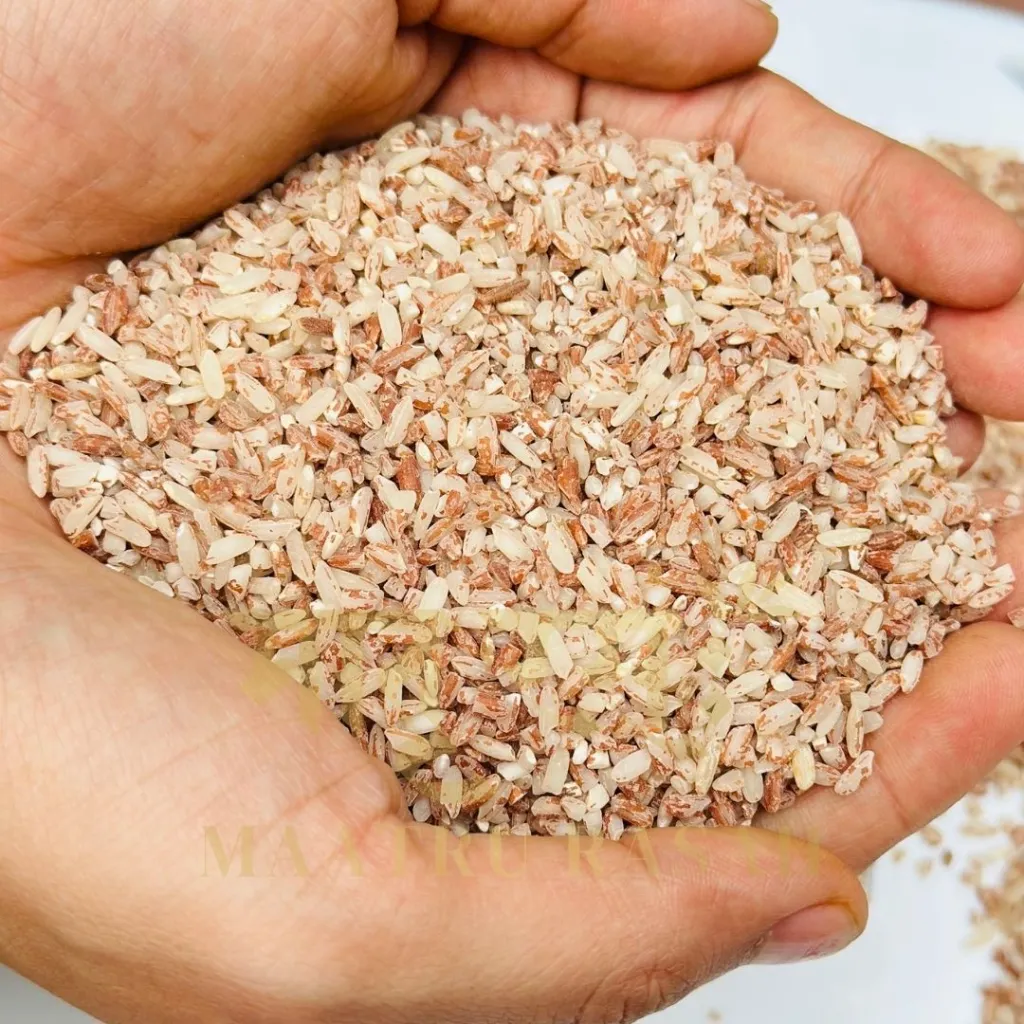
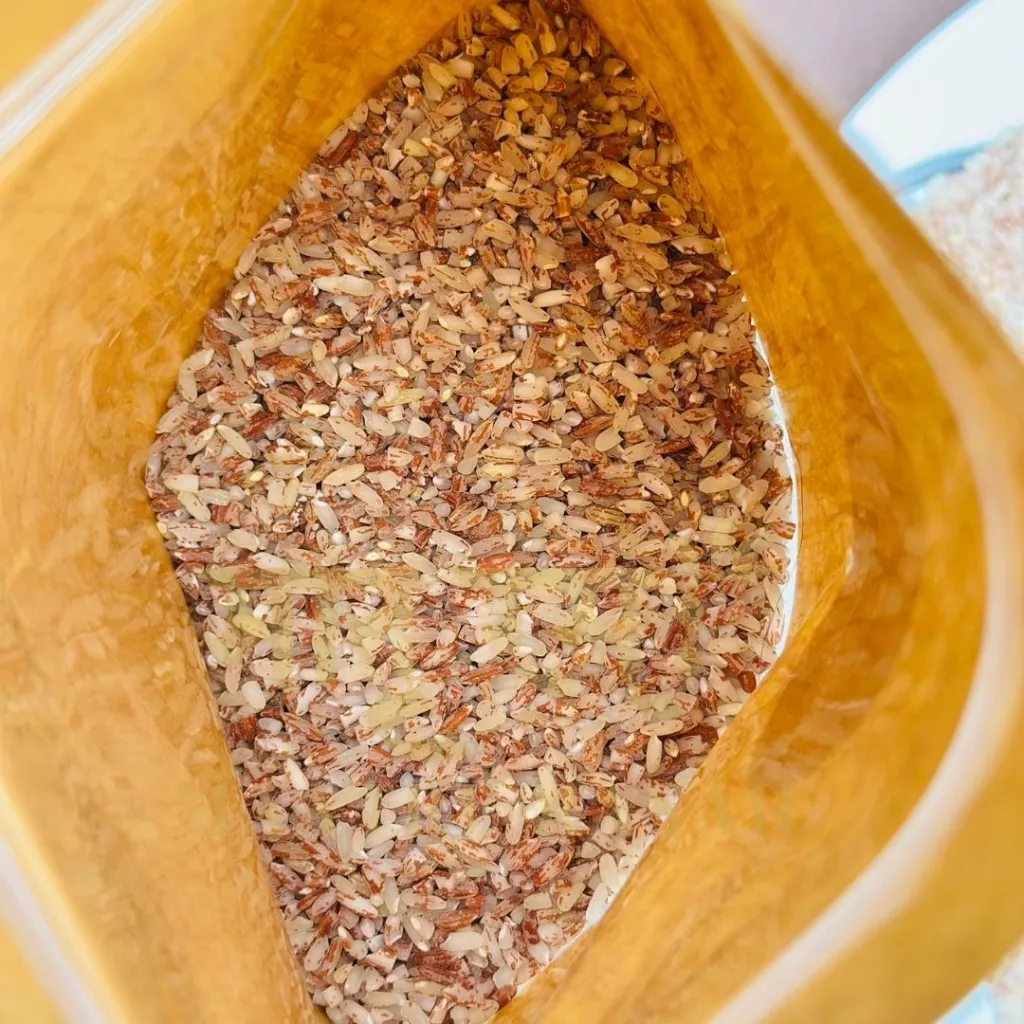
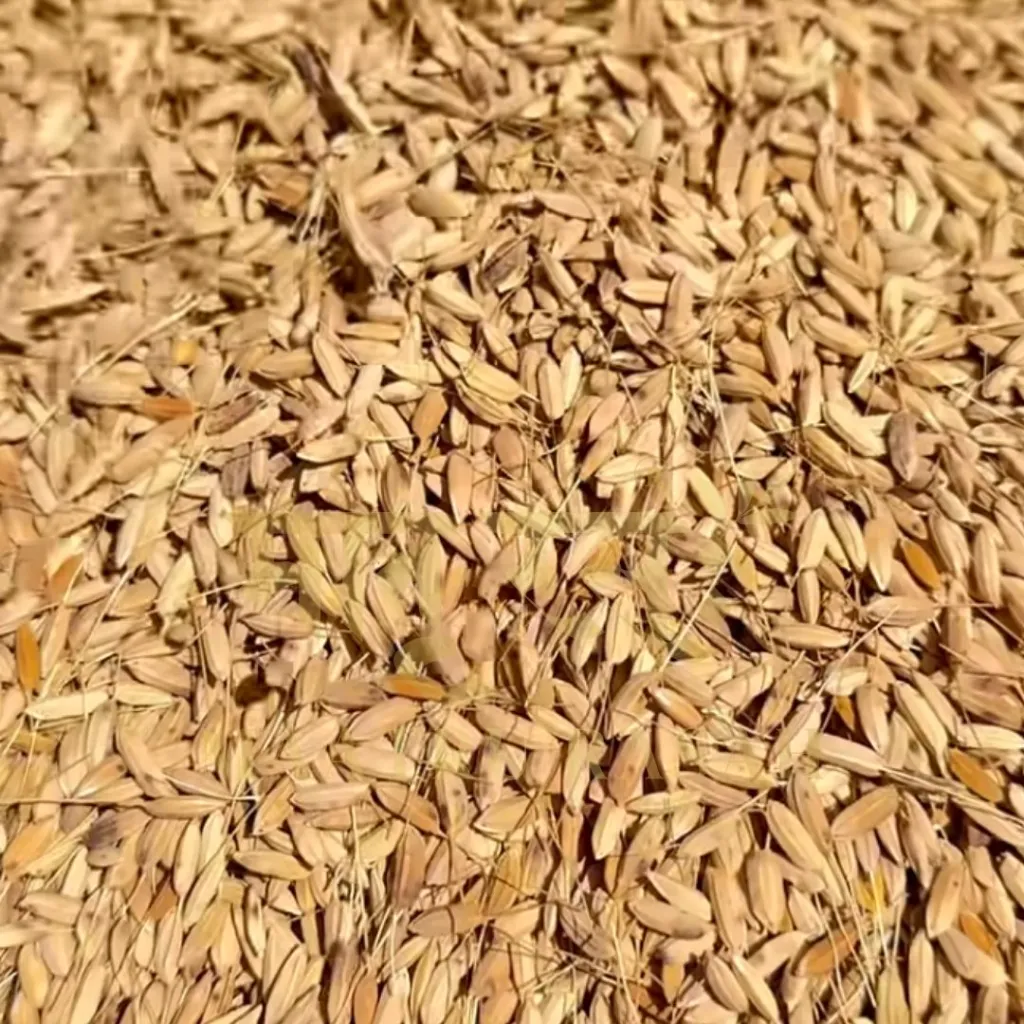
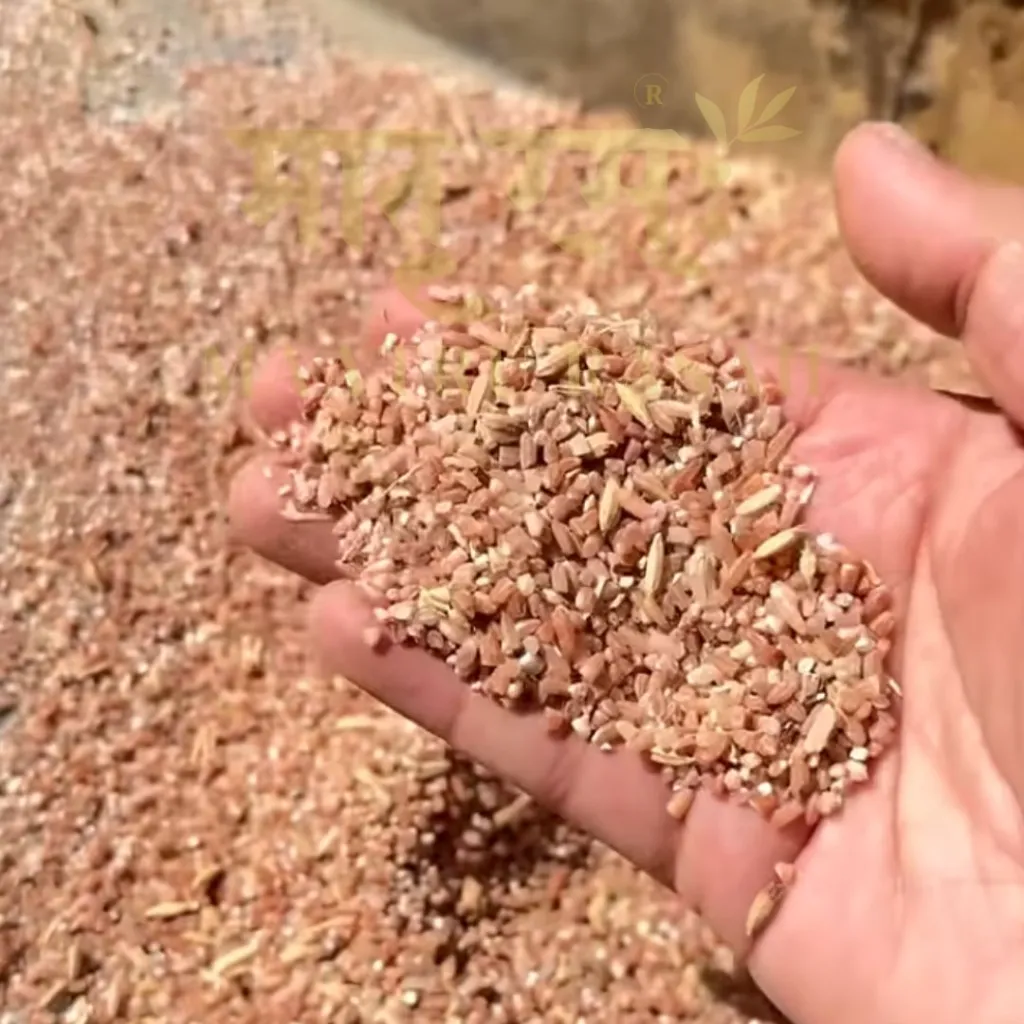
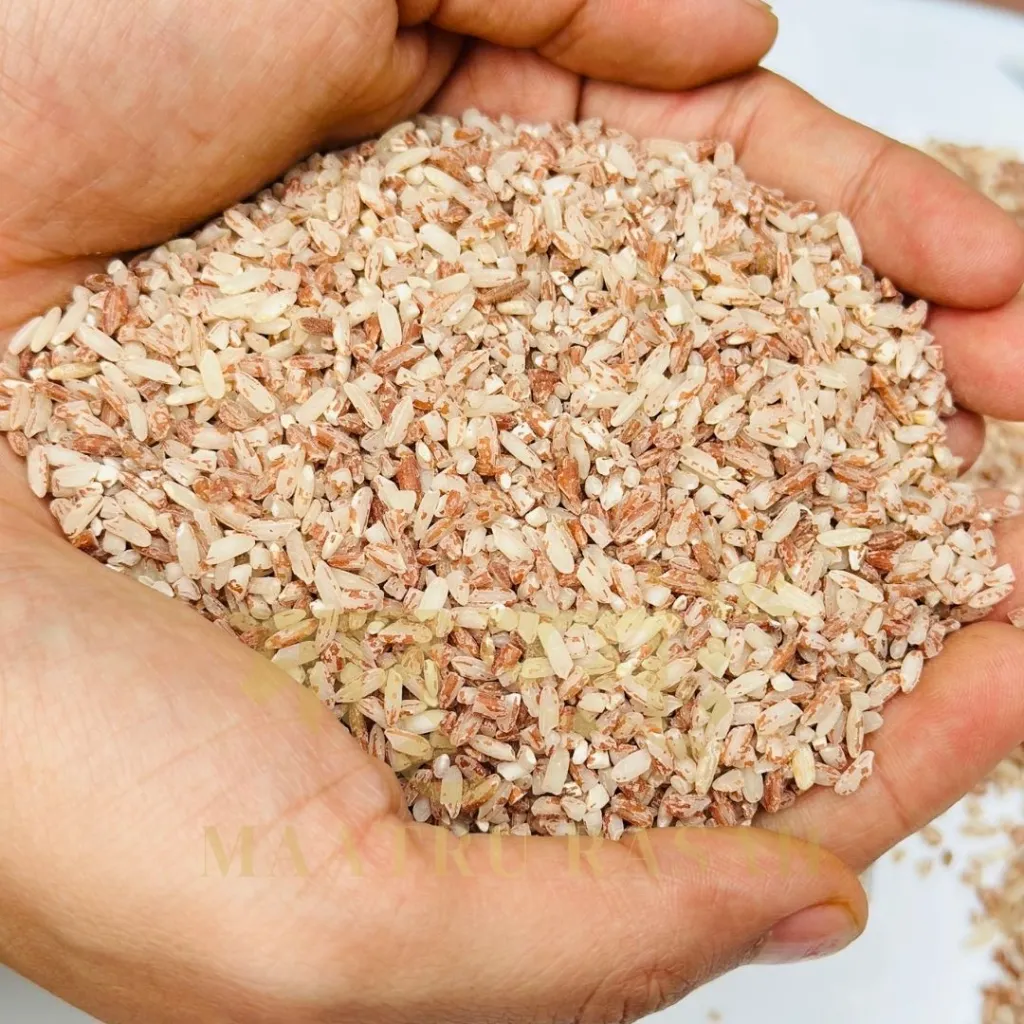
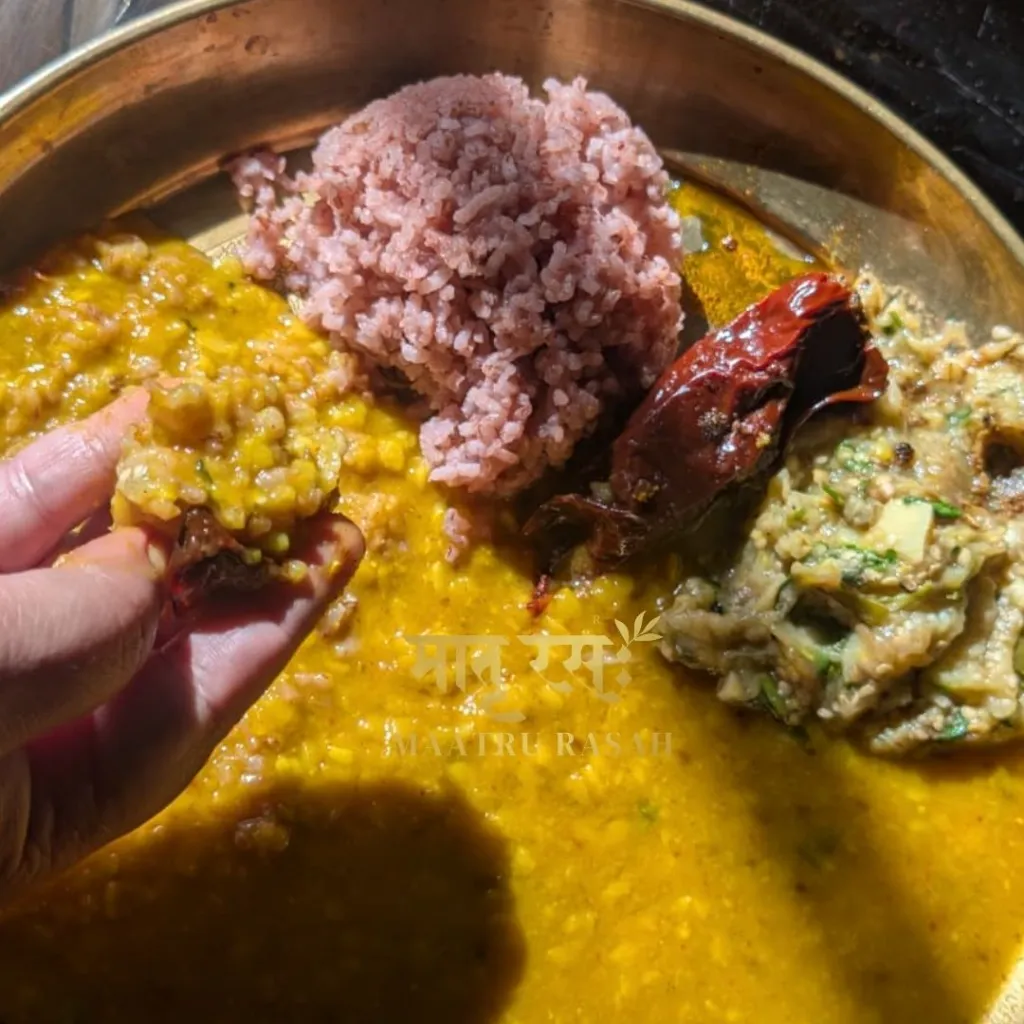
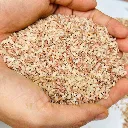
Uncooked, the grain is a deep brick red with a paler streak where the husk was knocked off. It smells faintly of dry hay. Cooked, it turns a soft plum-brown, the grains sitting close together rather than falling apart, with a nutty taste that is closer to a whole grain than to white rice.

At a glance

  • Unpolished, red bran left on
  • Hand-pounded in a wooden mortar, not machine-milled
  • Khasi Hills, Meghalaya
  • One harvest a year, November to December
  • Packed in our kitchen after you order
  • No artificial preservatives

FSSAI 12723052000504 · Ships in 24 hours

Don't leave the kitchen empty-handed.

A 30 g sample from this month's batch is included with orders above ₹699 — from the same batch as your order, tucked in before we pack.

No delivery charge on orders over ₹999

  • Weight
Price
₹ 189.00 ₹ 189.00
₹ 189.00
(Tax included)
₹ 189.00 / Units
✅ FSSAI Licensed 👩‍🍳 Women-Led Kitchen 🌿 No Artificial Preservatives 🫙 Glass Jar 🤝 Supports Welfarepreneur — Our NGO 🔒 Secure Checkout

— CORE FEATURES


Unpolished red rice with red bran on the grain by Maatru Rasah

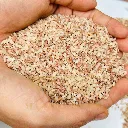
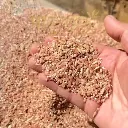
Unpolished — the red bran is still on the grain


Hand-pounded red rice, not machine-milled from Maatru Rasah

Hand-pounded, not machine-milled


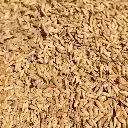
Red rice from the Khasi Hills, Meghalaya, through Trinity Saioo's organisation from Maatru Rasah

From the Khasi Hills, through Trinity Saioo's organisation


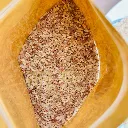
Khawkhasi red rice packed to order in our own kitchen — Maatru Rasah

Packed to order, in our own kitchen

Khawkhasi is harvested once a year, in November and December. What you see here is from that harvest. When this batch is finished, the next one comes with the next crop.

It travels in a craft-paper pouch inside a mailer box. If it reaches you damaged, tell us and we will replace it.

WHAT IT IS

What is Khawkhasi red rice?

Khawkhasi is an unpolished red rice grown in the Khasi Hills of Meghalaya. In Khasi it is called U Khaw Saw, from khaw meaning rice and saw meaning red.

The red comes from the bran, the outer layer of the grain. Most rice sold in India has that layer stripped off by a polishing machine, which is what turns rice white. Khawkhasi is not put through that step. The bran stays, so the grain stays red, and it cooks slower and tastes less plain than polished rice does.

It is one of several rice varieties the Khasi Hills grow for their own kitchens. Some of them are white, some are red, some are almost black. Khawkhasi is the red one.


WHY WE SELL THIS ONE

I love rice.

That has always been the problem.

These days I eat it on a schedule rather than whenever I feel like it. One bowl at lunch, with dal, every other day. Some days I turn it into tehri with whatever vegetables are in the house.

When you only get rice sometimes, you stop being careless about which rice. You start choosing. This is the one I choose, and I have been eating it at home for three or four years, well before we thought of selling it.

Somewhere in those three years white rice stopped tasting like anything to me. I still eat it when I am out. It tastes like the absence of this.


DR. (CS) PUJA SHREE AGARWAL · FOUNDER

— WHY IT’S DIFFERENT

What makes Khawkhasi different


Buy Red Rice Online – Unpolished red rice with natural bran intact from the Khasi Hills

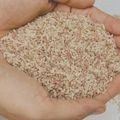
The bran is still on it

Red rice sold in most shops has been polished anyway, and only looks red because of the variety. Khawkhasi has not been polished at all. Run your hand through it and you can feel the difference in the grain surface. That is the bran.

Buy Red Rice Online – Naturally non-parboiled traditional red rice from Meghalaya

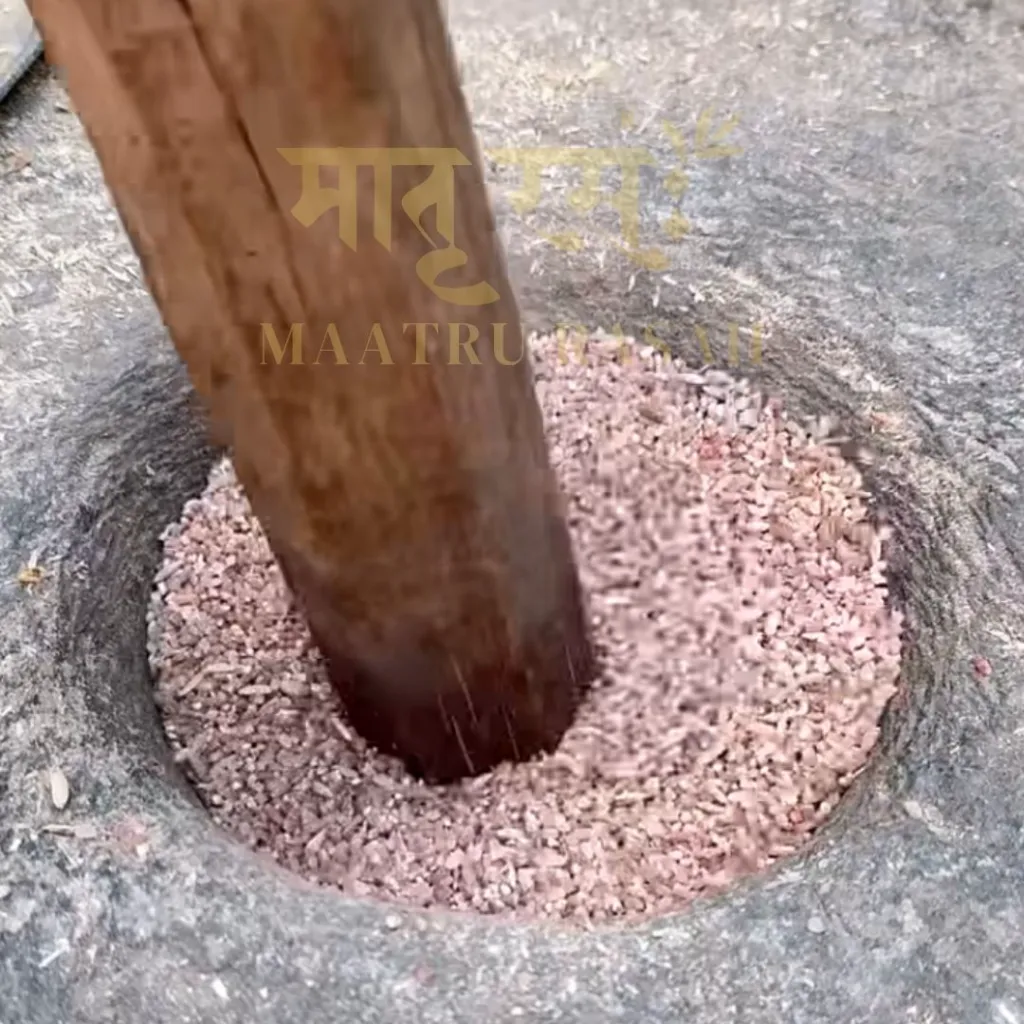
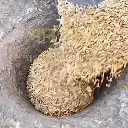
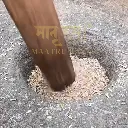
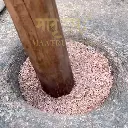
A wooden mortar, not a mill

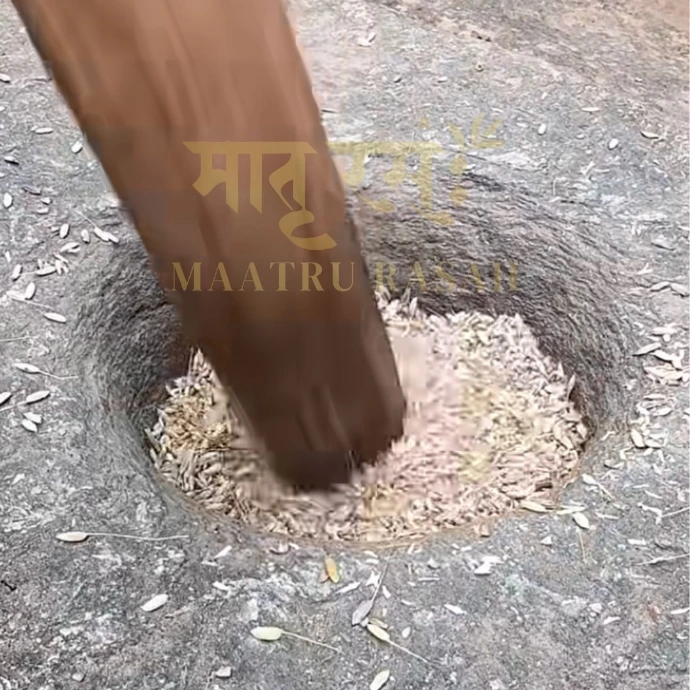
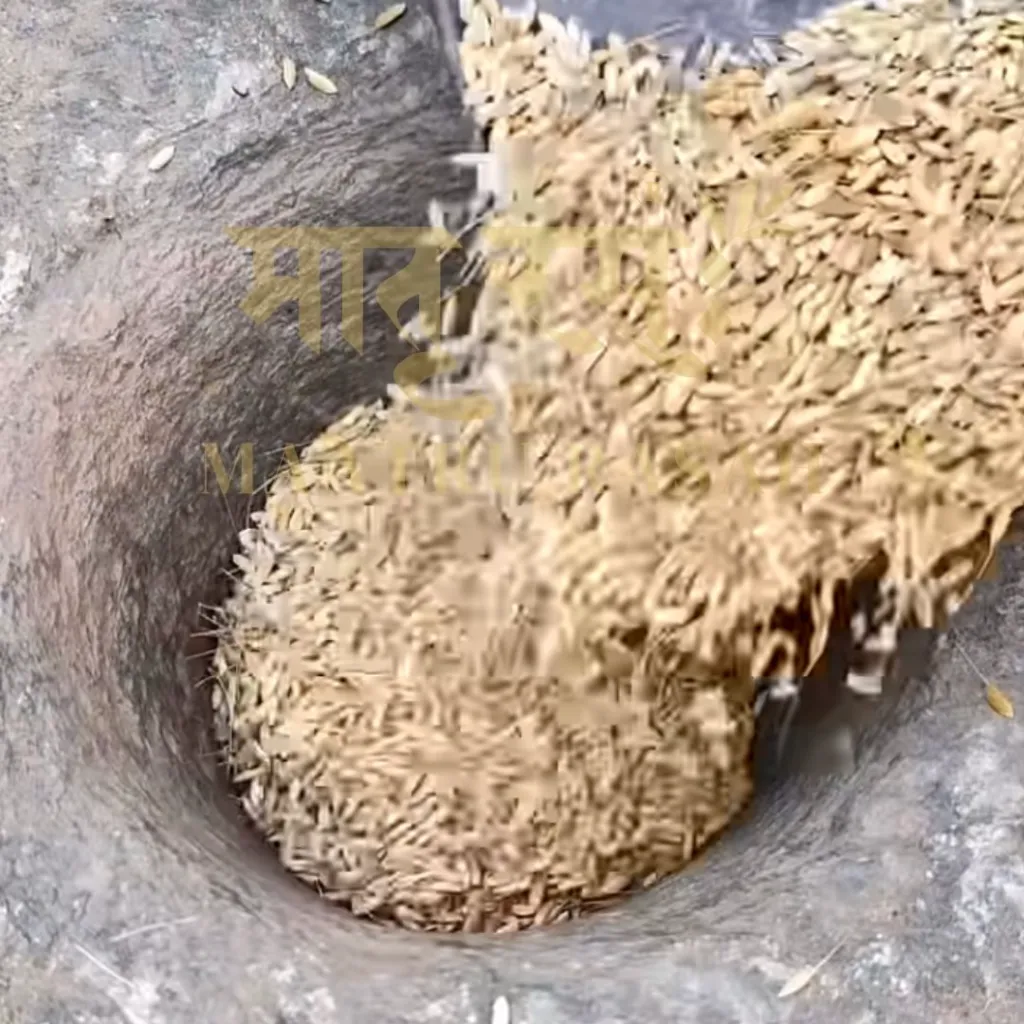
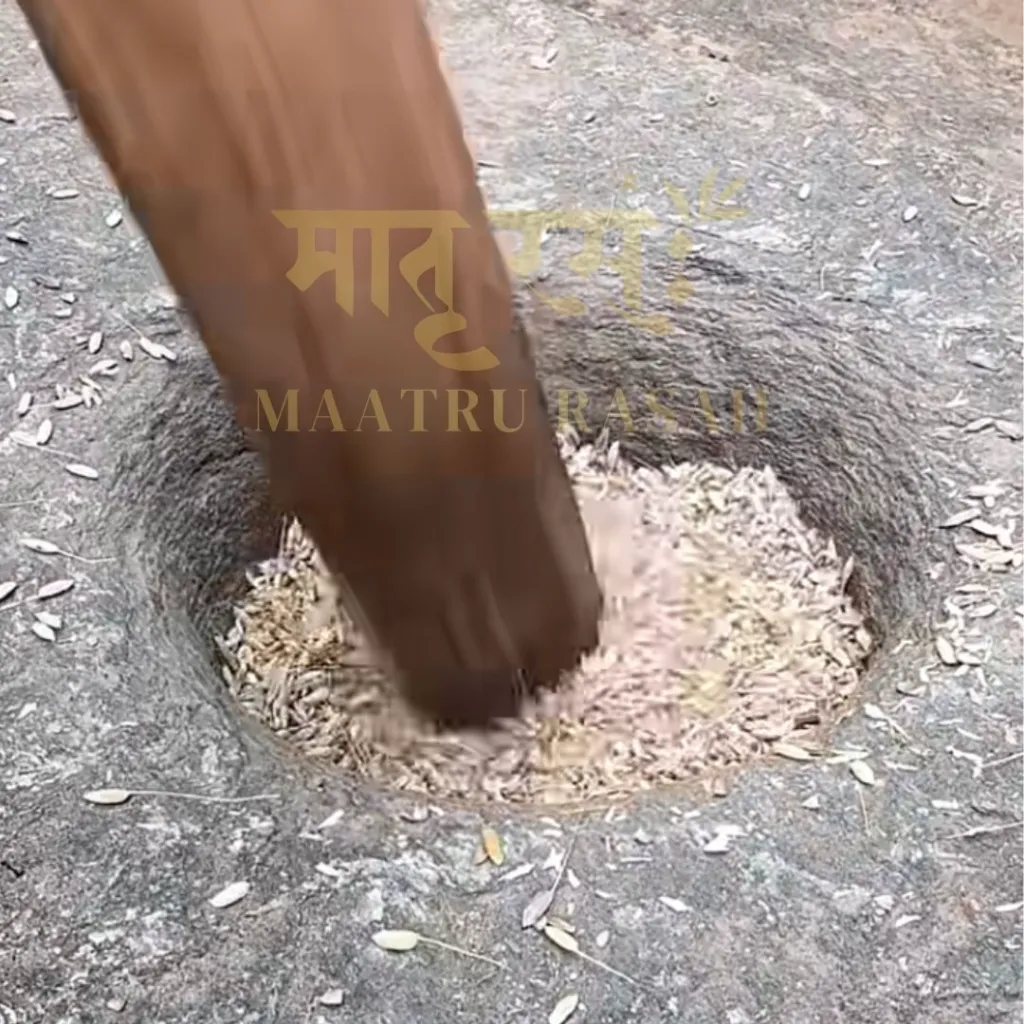
The rice reaches us already hand-pounded, in a wooden mortar, mostly by women in the villages where it grows. We do not pound it ourselves and we are not going to pretend we do. Hand-pounding takes the husk off without shearing the bran away the way a mill does. It is also why a kilo costs ₹339 and not ₹80. You are paying for hours of someone's arms.

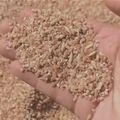
Buy Red Rice Online – Naturally non-parboiled traditional red rice from Meghalaya

It has not been parboiled

Kerala's Palakkadan Matta is red too, but it is parboiled, which is why it tastes of earth and smells the way it does. Khawkhasi has never been steamed in the husk. The taste is cleaner and more nutty.

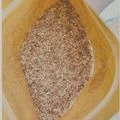
Buy Red Rice Online – Freshly packed small-batch unpolished red rice prepared after your order

Packed the day you order

We do not fill pouches in advance and keep them on a shelf. Your pouch is filled in our kitchen once the order comes in.

— WHAT’S INSIDE

What is in the pack


Ingredients: Khawkhasi red rice. That is the whole list.

WHAT’S NOT IN THIS PACK                           polishing, artificial preservatives,  added colour, nothing blended in

Why we leave it unpolished

Polishing is a mechanical step that scrapes the bran layer off the grain to make it white and to make it last longer on a shop shelf. We skip that step. The rice you get is the grain with its skin still on, which is also why it will not sit for years the way white rice does.

About the pouch.

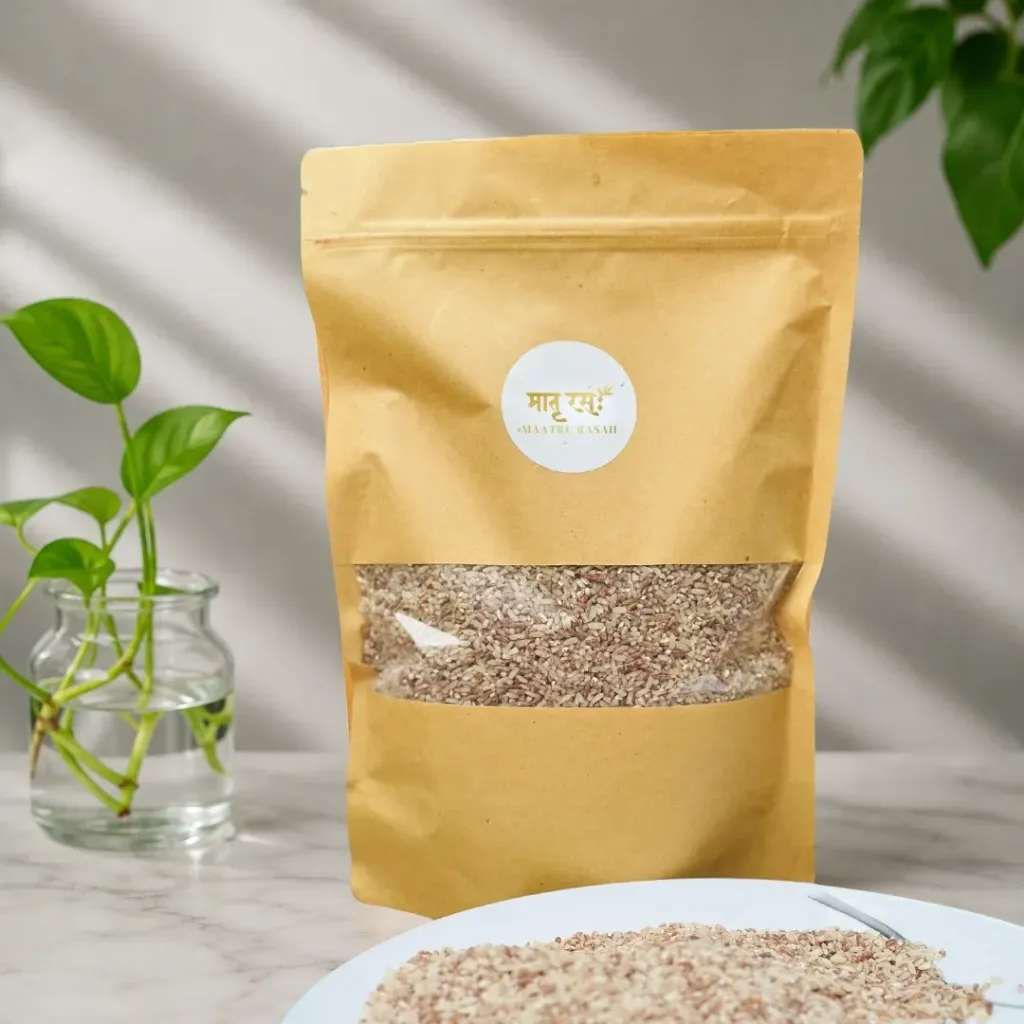
It comes in a craft-paper standing pouch. Craft paper is a good travelling material and a poor storage one. When your pouch arrives, pour the rice into an airtight jar. That one habit is the difference between rice that stays good for twelve months and rice that turns dull in four.

— GOOD TO KNOW

A note on colour


The red is the bran, not a dye. The grains will not be evenly coloured, and the rinse water runs light red the first time. Both are normal.

Deep version — why coloured rice is coloured — belongs to Blog 4.

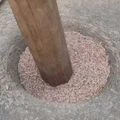
Red Rice Online India – Traditional red rice paddy in a wooden mortar and pestle before milling

PROVENANCE

Where this rice comes from

The Khasi Hills sit in the middle of Meghalaya, in some of the wettest country anywhere. Rice there is grown on slopes and in small valley plots, in quantities that suit a village rather than a market. Khawkhasi is one of the varieties those households have kept in cultivation because they eat it themselves.

It reaches us through the organisation run by Padma Shri Trinity Saioo, the same route our Lakadong turmeric takes. Farmers grow it and pound it. Her organisation collects it. We buy it from there and pack it here.

We should be straightforward about one thing. Khawkhasi has no GI tag. Meghalaya has GI tags on Lakadong turmeric and on Khasi mandarin, but not on any rice. Anyone implying otherwise is selling you a certificate that does not exist.

More on the region: About us

— HOW WE MAKE IT

How it reaches you


1

It grows on the hill slopes of the Khasi Hills, one crop a year.


2

It is harvested in November and December.


3

The grain is pounded by hand in a wooden mortar, which loosens the husk while leaving the bran.


4

Trinity Saioo's organisation gathers it from the villages that grow it.


5

It comes to our kitchen and is checked and stored there.

6

When your order arrives, we fill and seal your pouch.

Khawkhasi compared with other rice


Khawkhasi (U Khaw Saw) Palakkadan Matta White sticky rice
Colour Red, bran intact Red White
Grains cling when cooked Yes No Yes
Where it grows Khasi Hills, Meghalaya Palakkad, Kerala Meghalaya and across Asia
Parboiled No Yes No
Milling Hand-pounded in a wooden mortar Machine milled Usually machine milled
How it is cooked Soaked, then simmered covered in a little water until it dries Boiled in plenty of water Steamed

— HOW TO USE

How this rice behaves in the pot


Khawkhasi is a sticky rice, and that word does it no favours, because most people hear "sticky" and picture something gummy.

It is not that. The grains hold together and sit close on the plate. They do not turn into a paste.

Here is the part almost nobody explains. How much any rice clings has as much to do with how you cook it as with the variety. Cook rice in a little water and let it dry off, and the starch stays in the pot with the grain, and the rice holds together. Cook it in a lot of water and drain the maad off through a colander, and the same rice comes out looser and more separate.

So you get to decide. Our cooking method below uses the first way, because that is how we eat it at home. If you prefer your rice khila khila, use more water and drain it. Same rice, your call.

— STORAGE

Storage


WHEN IT ARRIVES

Pour it into an airtight jar

SHELF LIFE

12 months

WHERE TO KEEP IT

Cool, dry, out of sunlight

NEVER

Wet hands or a wet spoon in the jar

WHY IT MATTERS

The bran holds natural oils. Air and warmth dull them over time. A sealed jar slows that down.

— HOW TO COOK

How to cook Khawkhasi


Founder's method, from our own kitchen.

  1. Rinse the rice three times, until the water runs clear.
  2. Soak it for about thirty minutes.
  3. Put it in a pan with water standing about one and a half fingers above the rice.
  4. Cover it and cook on medium heat.
  5. When the water has dried up, the rice is done.
  6. Do not use a pressure cooker.

Any ordinary pan works. You do not need a steamer.

If you want it looser. Cook it in about four times the water. Press a grain between your fingers to check there is no hard core left, then drain the maad off in a colander.

Specifications


Net weight 500 g · 1 kg
SKU MRR500P (500 g) · MRR001P (1 kg)
Price ₹189 (500 g) · ₹339 (1 kg)
Variety Khawkhasi
Khasi name U Khaw Saw
Origin Khasi Hills, Meghalaya
Sourcing Through Padma Shri Trinity Saioo's organisation
Milling Hand-pounded in a wooden mortar
Polish Unpolished, bran intact
Parboiled No
Ingredients Khawkhasi red rice
Packaging Craft-paper standing pouch
Storage Pour into an airtight jar as soon as it arrives. Keep cool, dry and out of sunlight.
Shelf life 12 months
Harvest November to December, one crop a year
Diet Vegetarian
Allergens None declared. Made in a kitchen that also handles wheat, mustard, sesame and tree nuts.
Packed In our kitchen, after you order
FSSAI 12723052000504
Country of origin India
Shipping Across India. Ships in 24 hours.

— FREQUENTLY ASKED QUESTIONS

FAQ

Here are some common questions about our Khawkhasi — unpolished red rice from the Khasi Hills.

500 ग्राम ₹189, 1 किलो ₹339. यह मेघालय की खासी पहाड़ियों का खावखासी लाल चावल है, हाथ से कूटा हुआ और बिना पॉलिश किया हुआ. भारत भर में भेजते हैं, 24 घंटे में डिस्पैच.

500 g is ₹189 and 1 kg is ₹339. This is Khawkhasi red rice from the Khasi Hills of Meghalaya, hand-pounded and unpolished. We ship across India and dispatch within 24 hours.

दाने पास-पास रहते हैं, थाली में बिखरते नहीं. लेई या साबूदाने जैसा चिपचिपा नहीं बनता. अगर आपको खिला-खिला चावल पसंद है तो ज़्यादा पानी में पकाकर छलनी में माड़ निकाल दें — चावल वही रहेगा, बनावट बदल जाएगी.

The grains hold together and sit close on the plate. They do not turn gummy or paste-like. If you prefer looser grains, cook it in more water and drain the maad off in a colander. Same rice, different texture.

पॉलिशिंग एक मशीनी प्रक्रिया है जिसमें दाने की ऊपरी परत छीलकर चावल सफ़ेद किया जाता है. यह चावल उस प्रक्रिया से गुज़रता ही नहीं, इसलिए लाल परत दाने पर बनी रहती है.

Polishing is a machine step that scrapes the bran layer off the grain to turn it white. This rice never goes through it, so the red bran stays on the grain.

खावखासी चावल की किस्म का नाम है. खासी भाषा में इसे U Khaw Saw कहते हैं — khaw यानी चावल, saw यानी लाल. दोनों नाम एक ही अनाज के हैं.

Khawkhasi is the name of the rice variety. U Khaw Saw is what it is called in Khasi, from khaw meaning rice and saw meaning red. Both names refer to the same grain.

तीन बार धोकर लगभग आधा घंटा भिगोएँ. पतीले में चावल के ऊपर डेढ़ उँगली पानी डालें, ढककर मध्यम आँच पर पकाएँ. पानी सूख गया तो चावल तैयार है. कुकर में नहीं.

Rinse it three times, soak for about thirty minutes, then cook it covered on medium heat with water standing about one and a half fingers above the rice. When the water has dried up, it is done. Not in a pressure cooker.

हम नहीं करते. यह चावल ढके हुए पतीले में बनता है जहाँ आप देख सकते हैं कि पानी कब सूखा. कुकर में वह अंदाज़ा आपके हाथ से निकल जाता है और चावल ज़्यादा गल सकता है.

We do not. It cooks in an ordinary covered pan where you can watch the water dry off, which is how you know it is done. A cooker takes that judgement away from you and the rice can overcook.

बारह महीने, बशर्ते पाउच आते ही चावल को एयरटाइट जार में पलट लें. बिना पॉलिश वाले चावल पर भूसी की परत बनी रहती है जिसमें कुदरती तेल होता है, और हवा लगने पर वह धीरे-धीरे फीका पड़ता है. बंद जार यही रोकता है.

Twelve months, as long as you move it into an airtight jar as soon as the pouch arrives. Unpolished rice keeps its bran, and bran holds natural oils that dull with air and time. A sealed jar is the whole trick.

फ़सल साल में एक बार आती है, नवंबर और दिसंबर में. एक बैच को अगली फ़सल तक चलना होता है. जब ख़त्म हो जाता है तो अगली फ़सल का इंतज़ार करना पड़ता है.

It is harvested once a year, in November and December, so a batch has to last until the next crop. When it runs out, the next one comes with the next harvest.

मेघालय की खासी पहाड़ियों के किसान परिवारों से. यह हम तक पद्मश्री ट्रिनिटी सायो की संस्था के ज़रिए पहुँचता है — वही रास्ता जिससे हमारी लाकाडोंग हल्दी आती है.

From farming households in the Khasi Hills of Meghalaya. It reaches us through the organisation run by Padma Shri Trinity Saioo, the same route our Lakadong turmeric takes.

पहली बार धोने पर पानी हल्का लाल होता है. यह दाने की ऊपरी लाल परत का रंग है, कोई मिलाया हुआ रंग नहीं. तीन बार धोने पर पानी लगभग साफ़ आने लगता है. दाने भी एक जैसे लाल नहीं होंगे — कुछ गहरे, कुछ भूरे, कुछ हल्के. बिल्कुल एक जैसा लाल चावल ही शक की बात होती.

The first rinse runs light red. That colour comes off the red bran on the outside of the grain. Nothing has been added to this rice at any stage. By the third rinse the water runs close to clear. You will also notice the grains are not evenly coloured, some deep red, some brown, some pale. Rice that is uniformly red is the kind worth asking questions about.

नहीं. "Glutinous" शब्द दानों के आपस में चिपकने की बनावट बताता है, गेहूँ वाले gluten प्रोटीन से इसका कोई संबंध नहीं है.

No. The word "glutinous" describes the way the grains cling together when cooked. It has nothing to do with the gluten protein found in wheat.

Khawkhasi Red Rice by Maatru Rasah – Buy Unpolished Red Rice Online from Meghalaya Khasi Hills

Khawkhasi — unpolished red rice from the Khasi Hills

Hand-pounded, never machine-polished, one harvest a year.

500 g ₹189 · 1 kg ₹339 · Ships in 24 hours · No delivery charge above ₹999