Harira is a traditional Indian winter soup — dry fruits and makhana roasted in desi ghee, simmered into a warm jaggery base, and finished with Lakadong turmeric and Ing Makhir ginger. In many North-Indian homes it's the bowl made for new mothers and cold mornings.
The bowl my grandmother made when the cold set in
Some foods are tied to a season and a person. In our family, Harira is one of them. When winter arrived in Prayagraj, or when there was a new mother in the house, my mother — Uma Agarwal — would stand at the stove and roast a handful of dry fruits in ghee until the whole kitchen smelled of it. What came out was a warm, deep-gold bowl: sweet with jaggery, fragrant with ginger, gold with turmeric. Not a dessert, not quite a soup — its own thing, eaten slowly, usually with both hands around the cup.
This is that recipe, the way our family has made it for generations. It is comfort food with a long memory.
What Harira actually is
Across North India, harira (sometimes hareera or gond ka harira) is a traditional warming preparation made for new mothers in the weeks after childbirth, and more widely through the cold months. Every region and household has its own version. Ours is built on four honest things:
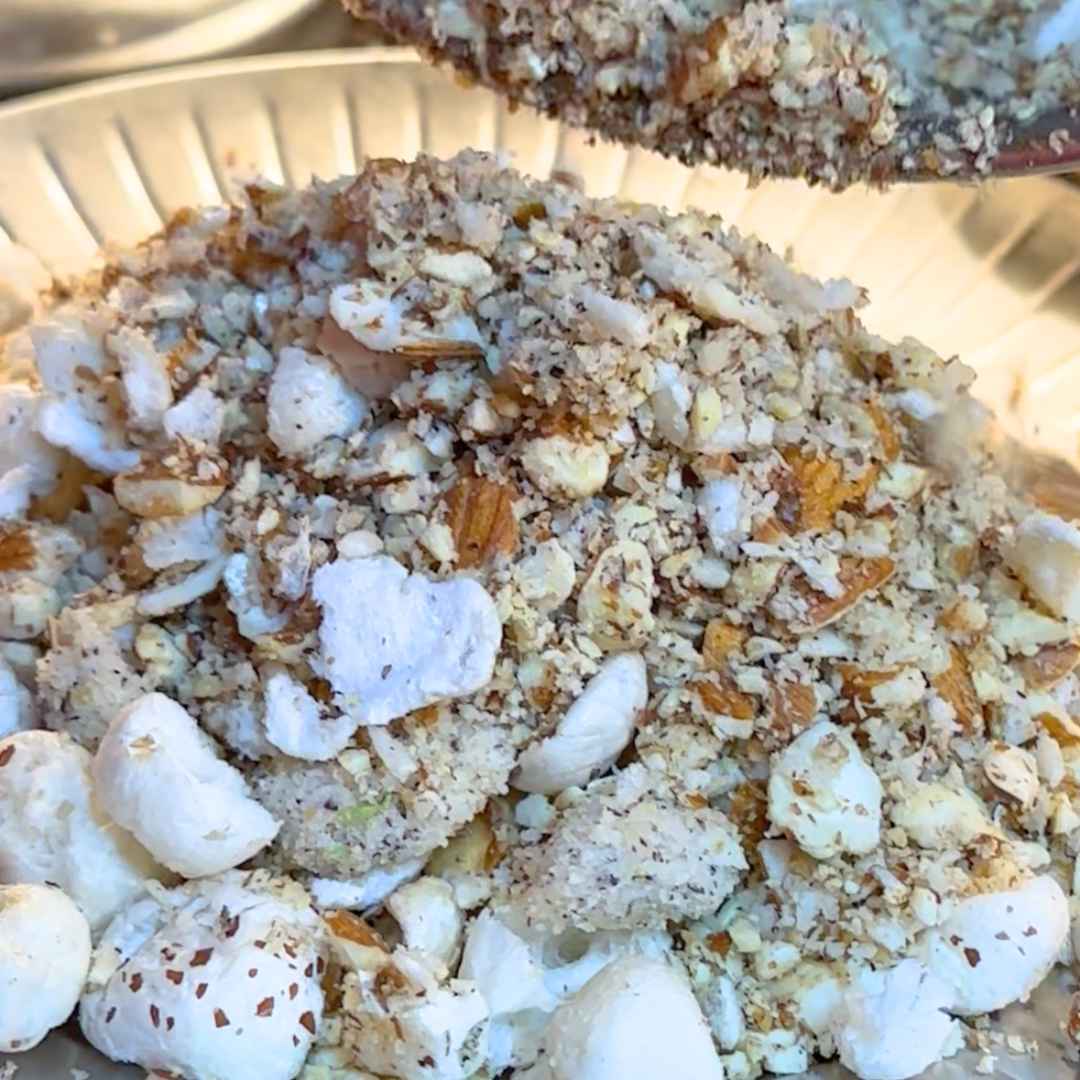
- Dry fruits and makhana (fox nuts) — cashews, almonds, dry coconut and makhana, roasted in ghee until golden and nutty.
- Jaggery (gur) — an unrefined cane sweetener that carries the deep, mineral, slightly smoky flavour white sugar can't.
- Desi ghee — the carrier and the soul of the dish; it's what makes the spices bloom and the nuts turn fragrant.
- Our GI-tagged spices — Lakadong turmeric for its deep gold colour and Ing Makhir ginger for its bright, fragrant heat, with a pinch of black pepper and cardamom the way tradition pairs them.
It was always about warmth and care in the plain, home-kitchen sense — the food you make for someone you're looking after.
In the spirit of ancient Ayurveda
Harira sits inside a long tradition, and it's worth telling that part honestly. In Ayurvedic tradition, the ingredients in this bowl were valued for their place at the table rather than in any pharmacy. Turmeric (haldi) was revered for centuries as a sacred and auspicious spice; classical texts described ginger with the honorific vishwabheshaj, according to Pole (2013); and ghee carried the name sneha, a word meaning both "fat" and "tenderness" (Pole, 2013). For generations in North-Indian kitchens, Harira was simply part of everyday food through winter and the weeks after childbirth — made at home, not prescribed.
We share this the way Forest Essentials speaks of the purity of ancient Ayurveda — as heritage and provenance, and nothing more. Harira is a food, not a remedy; please read the note at the foot of this page.
Watch it being made
There's no substitute for seeing the ghee turn the turmeric gold and the makhana go crisp. Here's Harira coming together in our kitchen, start to finish.
"Harira, the way we make it — dry fruits and makhana roasted in desi ghee, a jaggery base, and a finish of Lakadong turmeric and Ing Makhir ginger."
How it comes together (the method, in brief)
I'll walk you through how Harira is built — the order and the technique are what matter most. (I'm keeping our exact ratios for the kit; more on that below.)
- A gentle jaggery base. Jaggery is melted slowly into water until it dissolves into a thin, glossy syrup, then kept warm. Slow is the whole trick — rushed jaggery turns harsh.
- Roasting in ghee. Cashews go into hot desi ghee first, then almonds, then dry coconut, and finally makhana — each added in turn so nothing scorches. You're looking for an even golden colour and a nutty aroma, not deep browning.
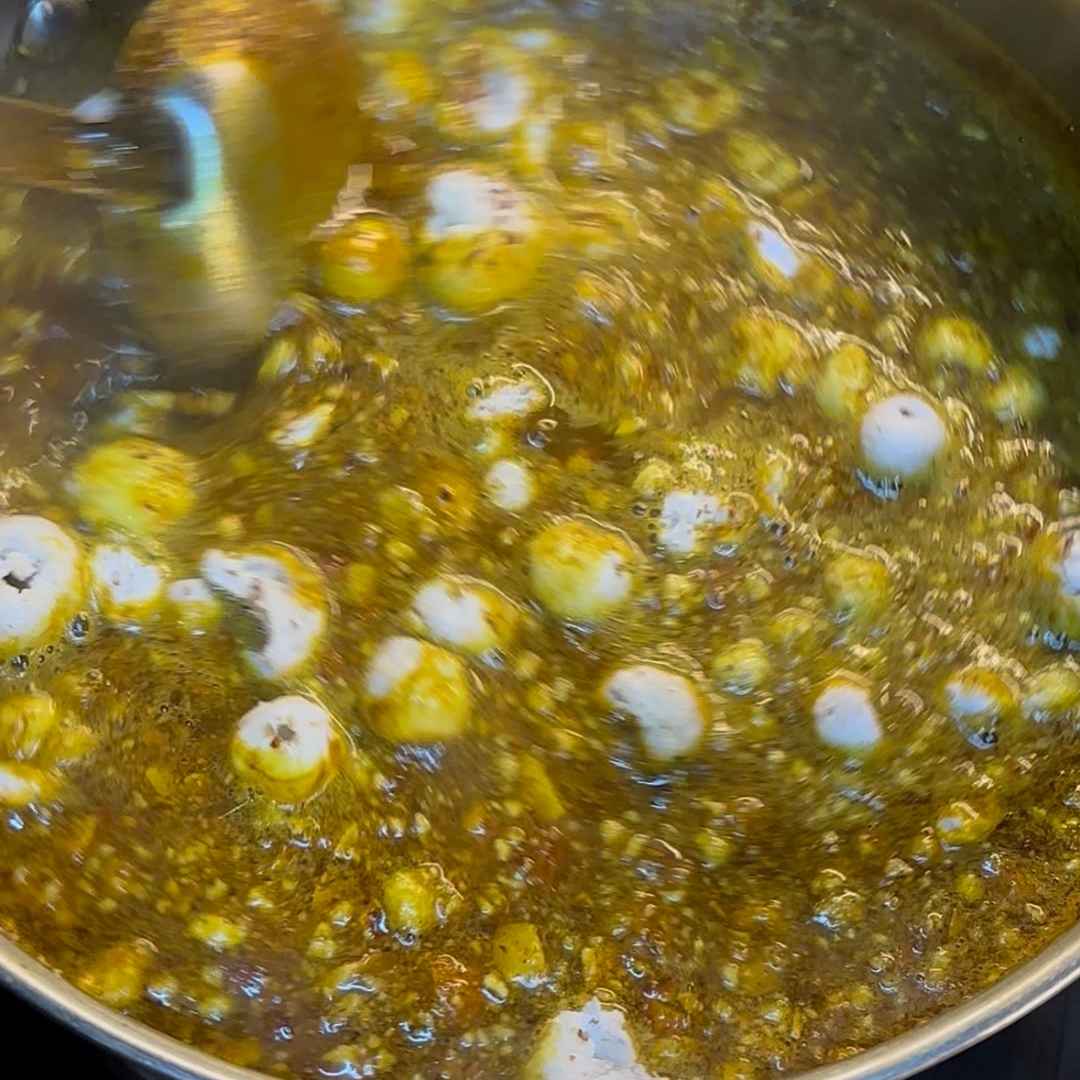
- The golden finish. Off the strong heat, the turmeric and ginger go in and bloom in the ghee for under a minute — long enough to turn everything a vivid gold, not so long that the turmeric turns bitter.
- Bringing it together. The warm jaggery syrup meets the roasted, spiced nuts and simmers briefly into a pourable bowl. A pinch of pepper and a little cardamom or saffron at the very end, and it's done.
Served warm — not scalding — it's the kind of thing you hold and sip rather than spoon down quickly.
Small things that make a big difference
- Use a heavy pan and medium heat. Nuts catch fast; low and steady beats hot and rushed.
- Don't let the turmeric burn. It goes in late, off high heat, and only for seconds.
- Jaggery, not sugar. The flavour is the point — that deep, rounded sweetness is what makes Harira taste like Harira.
- Store in glass. Keep any extra in a glass container in the fridge and warm it gently; turmeric can stain and react with some metals.
A ready Harira kit is on its way
Harira is simple, but it's fiddly to shop for — the right jaggery, fresh dry fruits, makhana, and genuinely high-quality Lakadong turmeric and Ing Makhir ginger, all in the right proportion. We're putting together a Harira prep kit: every measured ingredient in one box, so you roast, simmer and sip without the guesswork — the exact proportions are the part we've spent years getting right, and they'll come in the kit.
Want to be told when it launches? Get in touch or follow us on Instagram. In the meantime, you can pick up the two spices that make it gold — Lakadong turmeric and Ing Makhir ginger — and start with the method above.
Where Harira sits in the family table
If you like Harira, you'll know the same instinct behind our golden turmeric–ginger–honey tea and our winter sweet, Sithora — slow food, made by hand, built around jaggery, ghee and good spices. Different bowls, same kitchen.
Harira isn't complicated, and it was never meant to be. It's what a winter morning tastes like in our house, and it's the food we reach for when someone needs looking after. Make it once, slowly, and you'll understand why it stayed in the family this long.
— with my mother, Uma Agarwal, at the stove
Set Maatru Rasah as a preferred source on Google
Compliance disclaimer: This article is shared for cultural and educational interest. It describes culinary and Ayurvedic traditions as heritage, drawing on cited sources. It is not medical or nutritional advice. Maatru Rasah products are foods, not medicines, and are not intended to diagnose, treat, cure, or prevent any disease. For any health concern, please consult a qualified professional.
References
- Pole, S. (2013). Ayurvedic medicine: The principles of traditional practice. Singing Dragon.