Skip to Content

Lakadong Turmeric — Single-Origin from the Jaintia Hills of Meghalaya

(10 reviews)

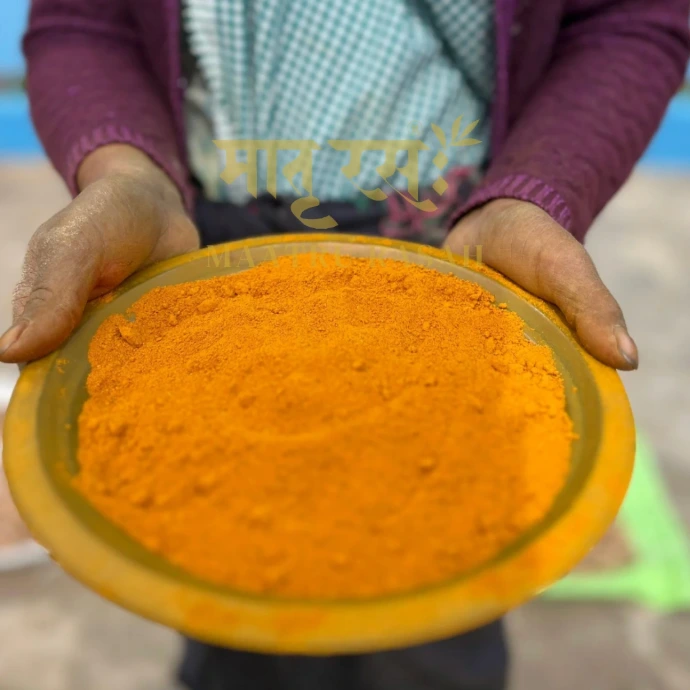
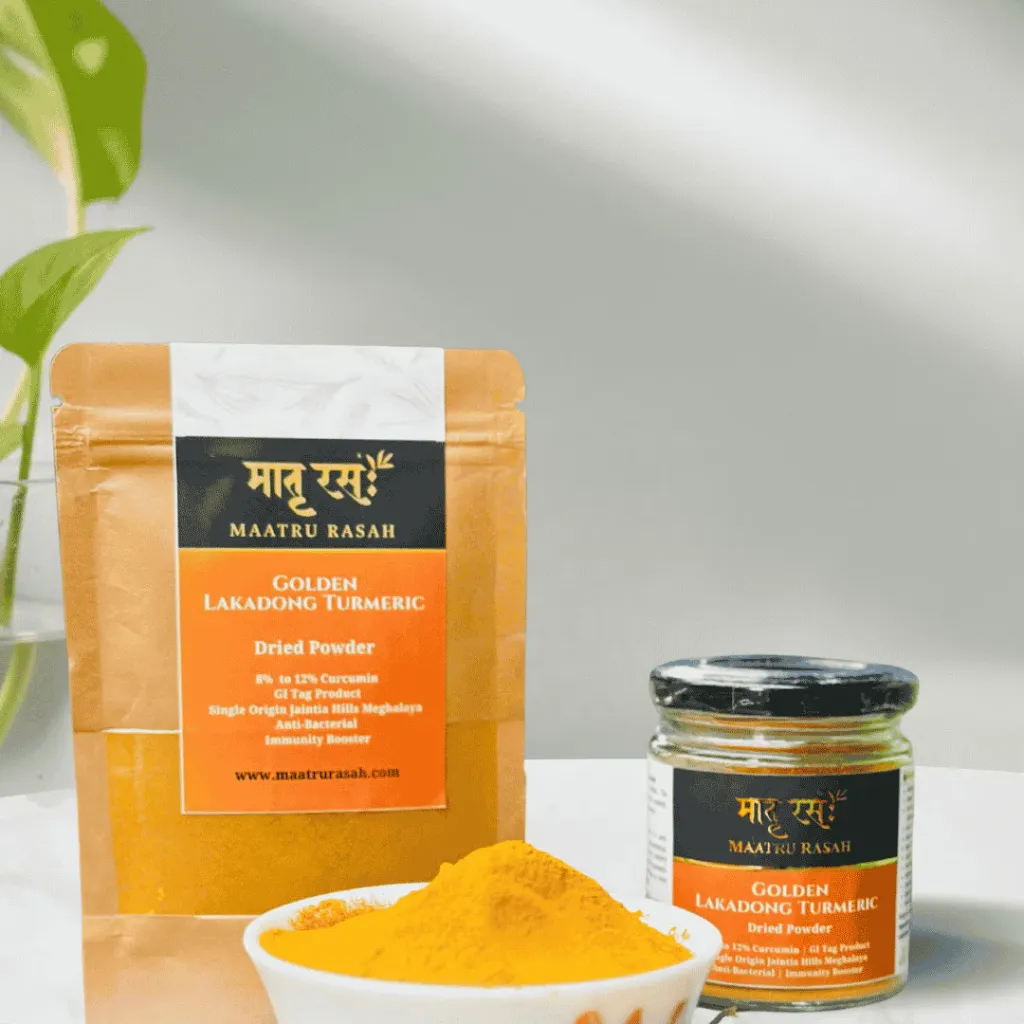
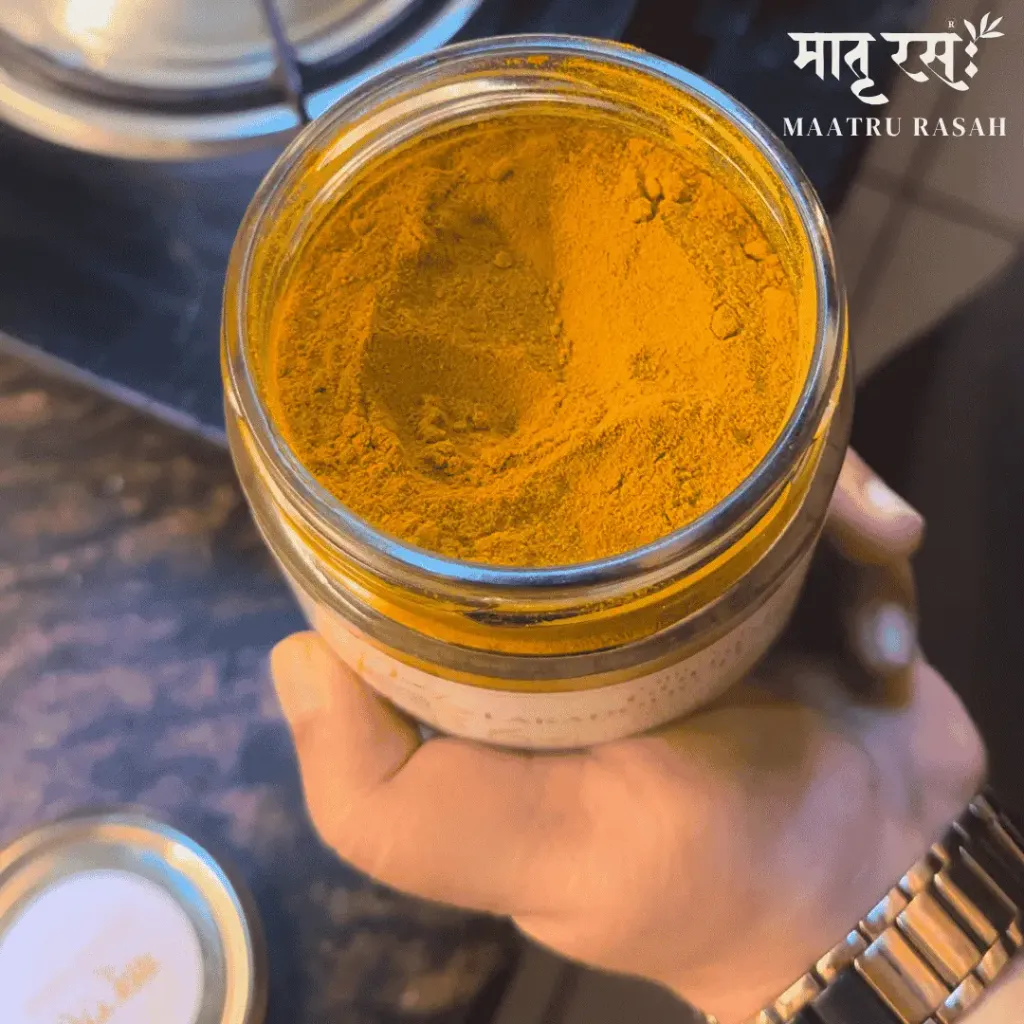
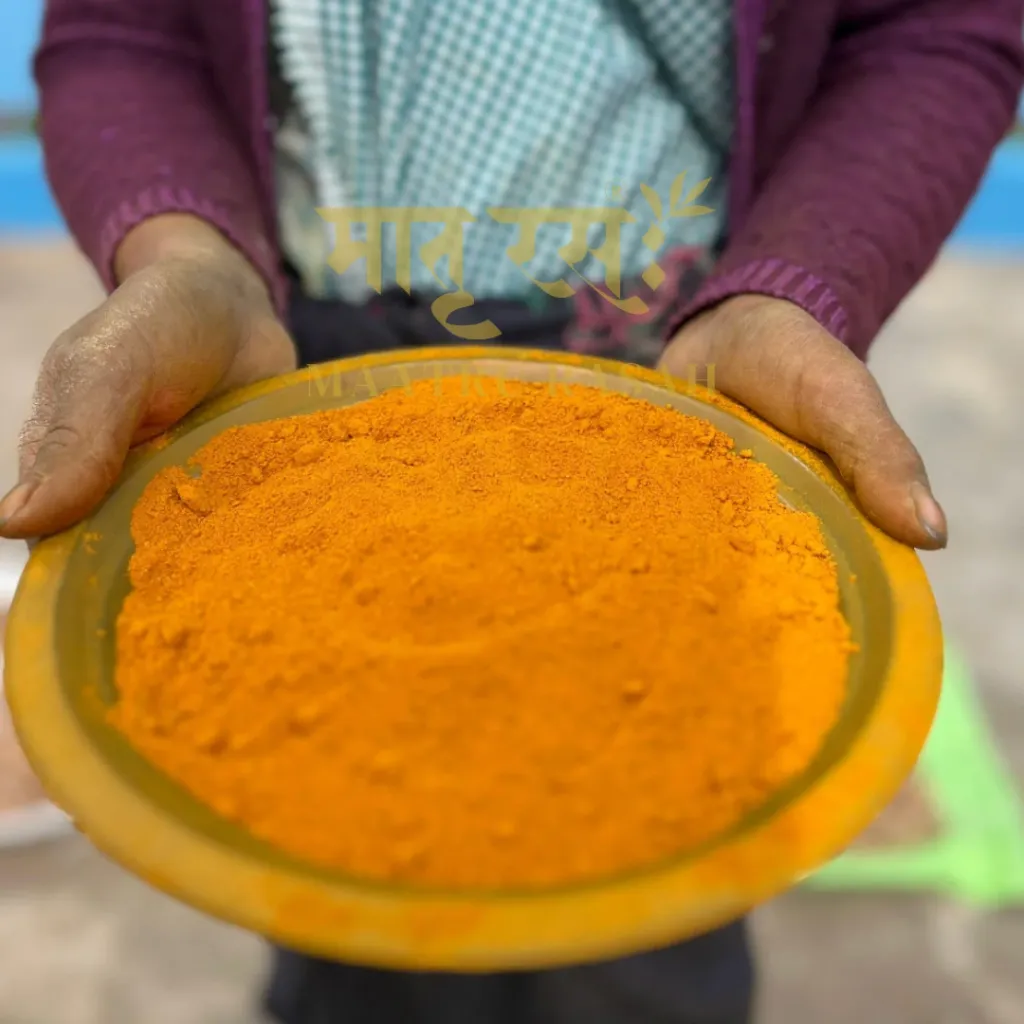
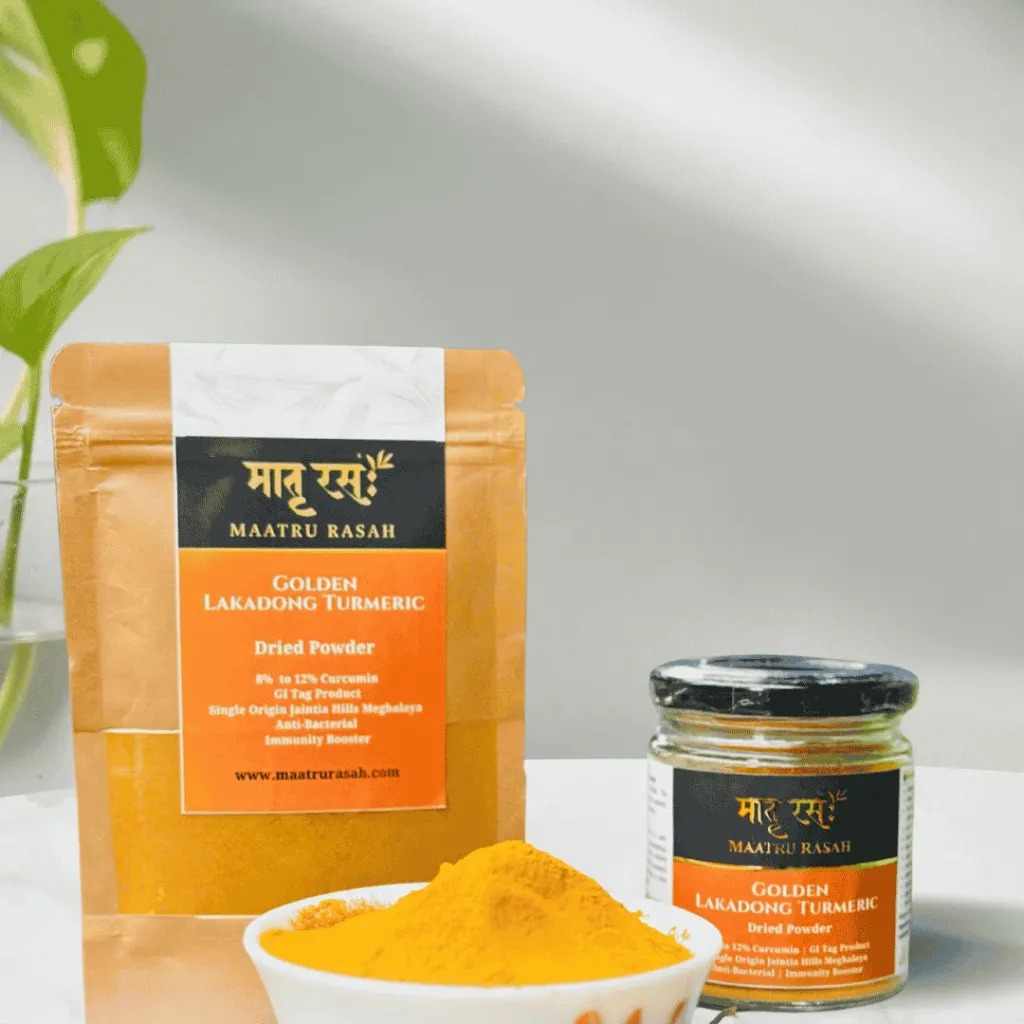
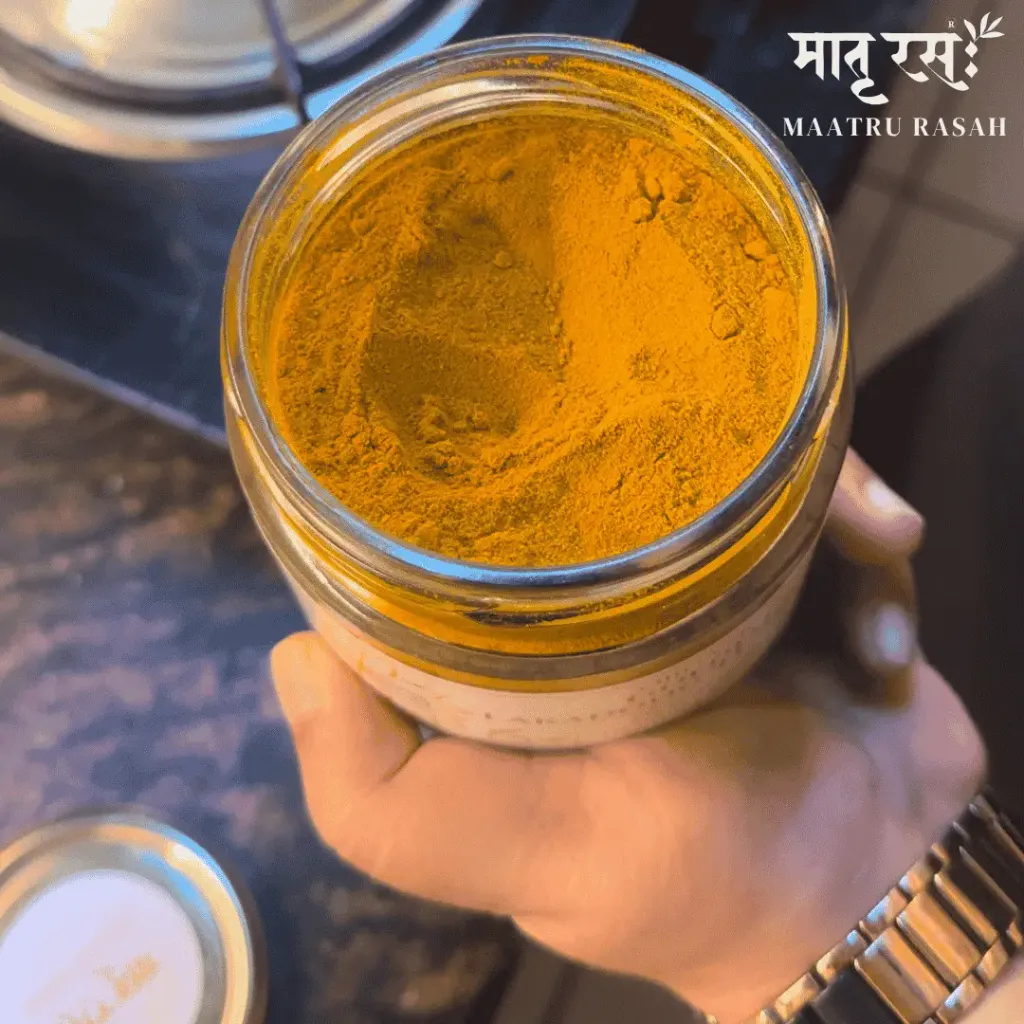
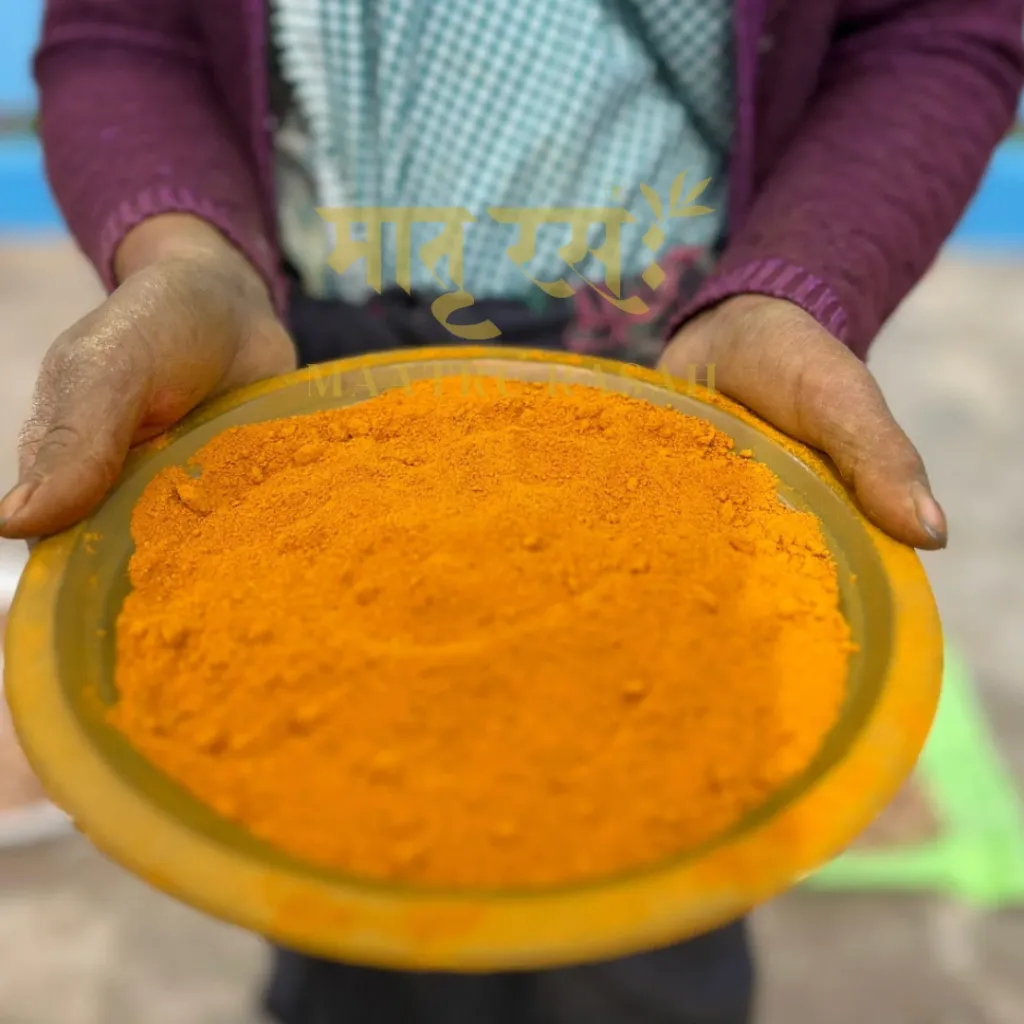
Open the pouch and the colour tells you first: a deep, burnt amber-orange, closer to rust than the pale yellow of supermarket haldi. Then the smell — warm earth, fresh-cracked black pepper, a woody resin sharpness that lingers on your fingers. On the tongue it is earthy and peppery, with a clean bitter-warm edge that ordinary haldi never has. And in the pot it shows off: a spoon smaller than you are used to turns a whole pan of dal a glowing gold, and stains a glass of warm milk in seconds.

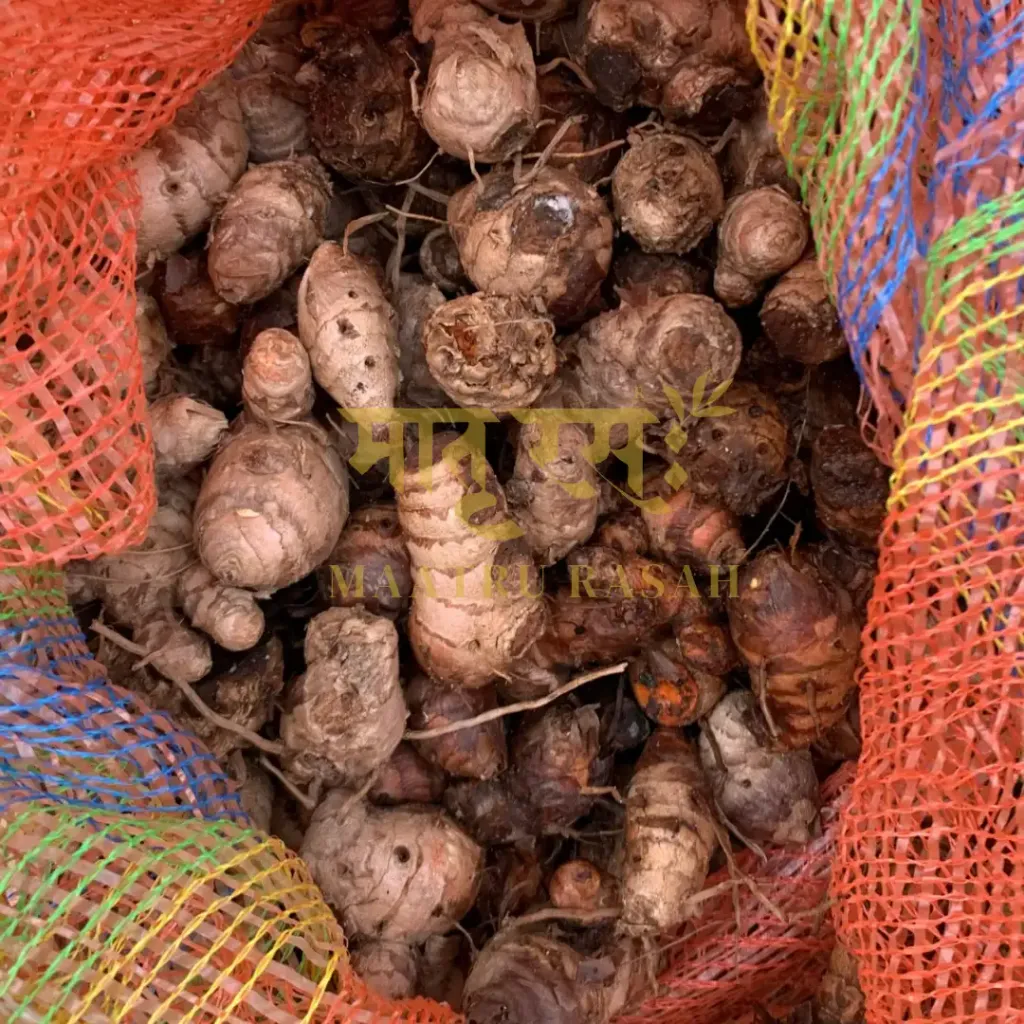
This is real Lakadong — a high-curcumin variety of Curcuma longa grown only in the Jaintia Hills of Meghalaya, single-origin and lab-tested, ground and packed in our own kitchen. We buy it through Padma Shri Trinity Saioo's organisation around Mulieh village, where we have stood in the field, eaten lunch with the farmers, and recorded their answers. We tell you the variety, the village, the organisation and the tested number, so you can check exactly what you are buying.

Each grind is small. Order while this batch lasts.

Winter 2025–26 Harvest | Curcumin (this batch): 10.68%  | 

Ground & packed fresh on order | FSSAI Lic. No.: 12723052000504

Don't leave the kitchen empty-handed.

A 30 g sample from this month's batch is included with orders above ₹699 — from the same batch as your order, tucked in before we pack.

No delivery charge on orders over ₹999

  • Weight
Price
₹ 159.00 ₹ 159.00
₹ 159.00
(Tax included)
✅ FSSAI Licensed 🤝 Farmers & Women Empowerment 🏺 No Preservatives 🫙 Glass Jar 🔒 Secure Checkout

— CORE FEATURES


Lakadong Turmeric with 7–12% curcumin, lab-tested with a real batch number. Maatru Rasah.

7–12% Curcumin

Lab-tested, real batch number


Lakadong Turmeric from a single-origin village in the Jaintia Hills of Meghalaya. Maatru Rasah.

Single-Origin

One village, Jaintia Hills


Lakadong Turmeric stone-ground fresh and hand-packed only on order. Maatru Rasah.

Stone-Ground Fresh

Hand-packed, only on order


GI-tagged Lakadong Turmeric, verified and never relabelled. Maatru Rasah.

GI-Tagged

Verified Lakadong, never relabelled

"Lakadong haldi pehle laga normal hogi, but jaise hi container khola strong earthy aroma aur deep yellow colour ne hi difference bata diya. Simple si cheez hai, but use karte waqt quality feel hoti hai. Mujhe sabse zyada pasand garam doodh mein ek pinch or kali mirch clean, natural, aur comforting." Shivam Jaiswal from Mumbai

Ground in small batches and packed to order. When a batch runs out, the next is freshly ground.

Glass jar, packed to order. If it reaches you damaged, we replace it.

WHAT IT IS

What is Lakadong Turmeric?

LAKADONG · a place, not a grade — a village in the West Jaintia Hills, Meghalaya

Locally: Shynrai (Khasi) / Chyrmit (Pnar) = "turmeric"

Lakadong turmeric is a high-curcumin landrace of Curcuma longa grown only in the Jaintia Hills of Meghalaya, in India's northeast. It is a variety — the way Alphonso is a variety of mango — not a grade and not a brand. Its defining trait is curcumin: where ordinary commercial haldi usually carries about 2–3%, Lakadong typically runs 7–12%.

Ours is single-origin. One variety, one organisation, one district — never cut with cheaper turmeric to make a batch go further.


Why Lakadong Turmeric is Special →

— WHY IT’S DIFFERENT

Why Maatru Rasah Lakadong Turmeric is different


Most "Lakadong" sold online is a label. Ours is a chain you can follow from the field to the pouch.

Lakadong Turmeric sourced through Padma Shri Trinity Saioo’s organization around Mulieh village, Jaintia Hills. Maatru Rasah.

A named source, not "Meghalaya farmers"

We buy through Padma Shri Trinity Saioo's organisation around Mulieh village — a named source you can check, not anonymous hands. Read about our sourcing.

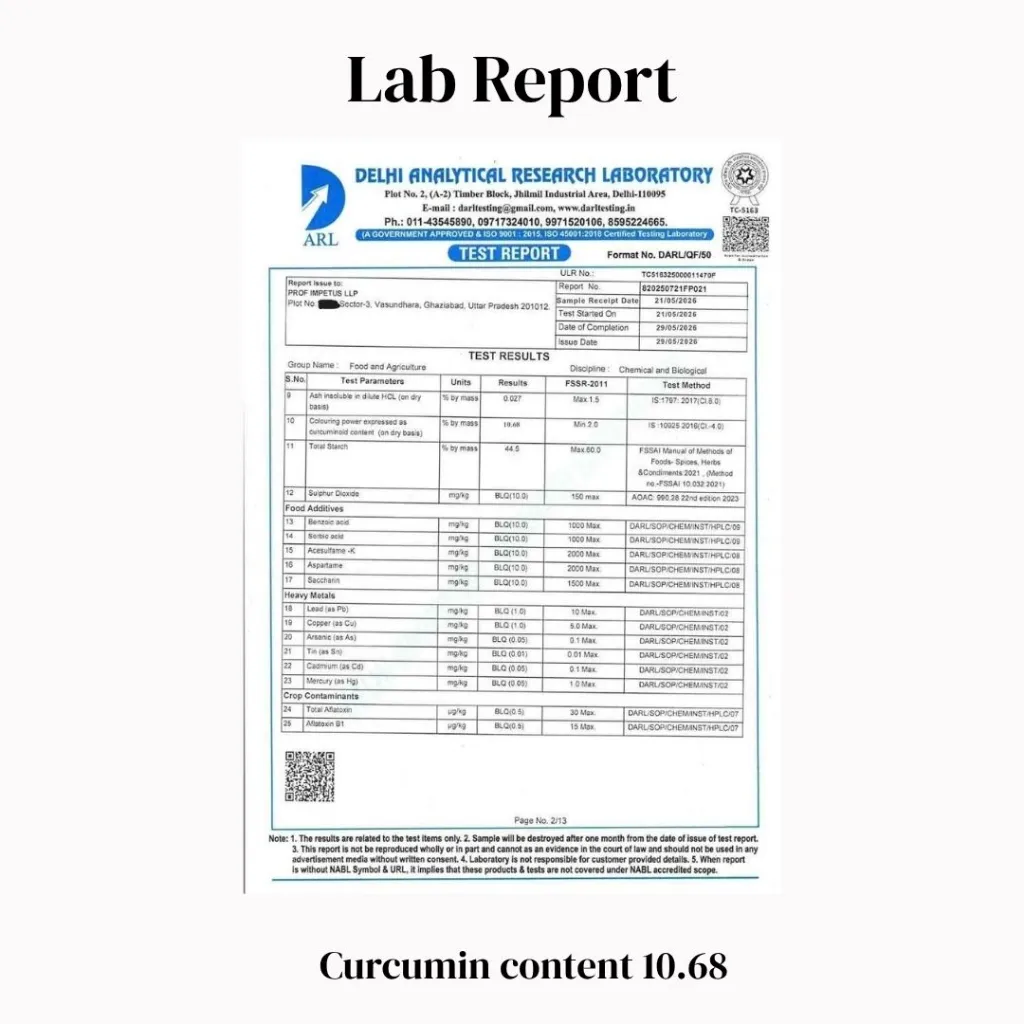
Lakadong Turmeric powder with batch-tested curcumin figure of 10.68 percent. Maatru Rasah.

A real number, not a slogan

We print the batch-tested curcumin figure — this batch is 10.68% — instead of stamping one flattering number on every pack, year-round.

Lakadong Turmeric ground in small batches and packed to order in the Maatru Rasah kitchen.

Packed to order, by us

We grind in small batches and pack each pouch by hand in our own kitchen after you order. Nothing is pre-bagged, nothing is outsourced to a contract packer.

GI-tagged Lakadong Turmeric from Meghalaya, protected from ordinary turmeric relabelled as Lakadong Maatru Rasah.

GI-tagged

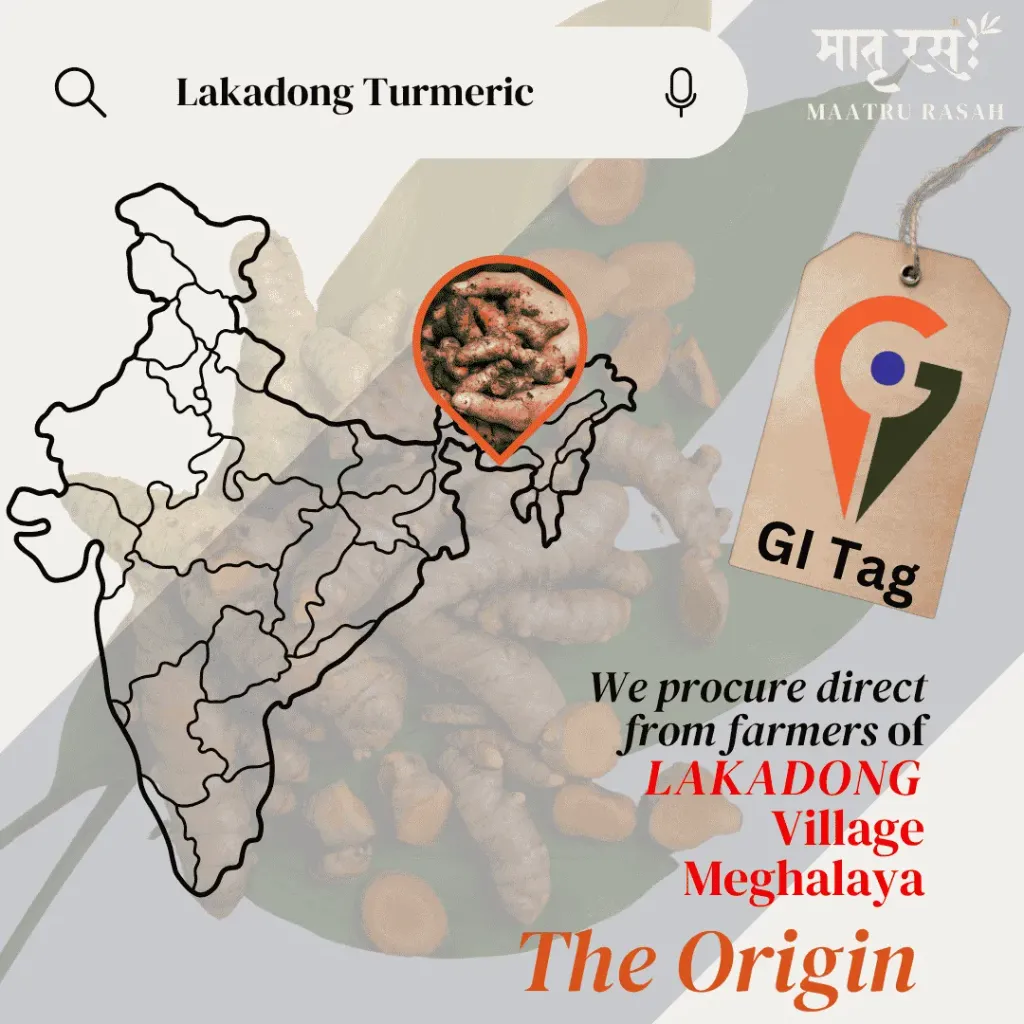
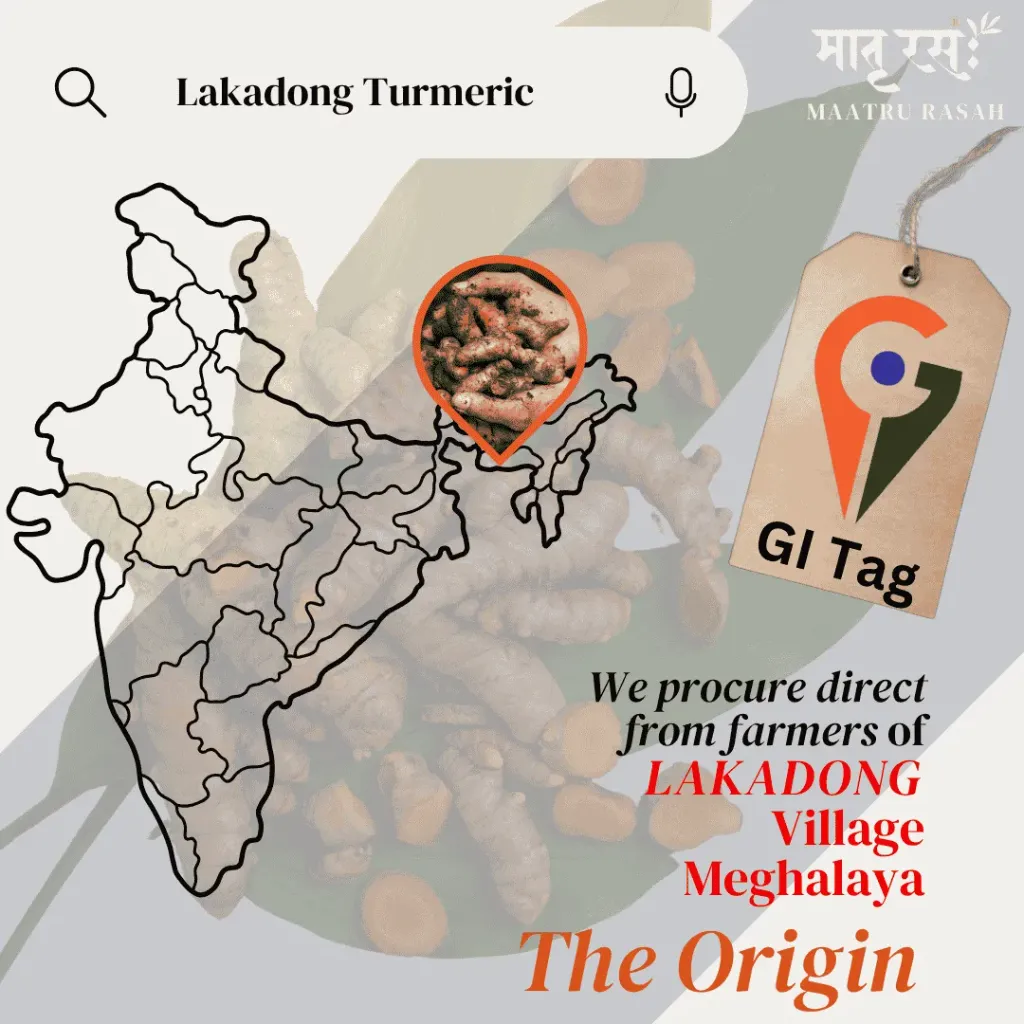
Lakadong carries a Geographical Indication tag, which ties the name to its region and is your guard against ordinary turmeric relabelled as Lakadong.

Lakadong turmeric vs ordinary turmeric


Maatru Rasah Lakadong Ordinary / commodity turmeric
Variety Lakadong landrace (Curcuma longa) Mixed or unspecified
Curcumin This batch 10.68% (range 7–12%), lab-tested Typically ~2–3%
Origin Single-origin: Mulieh village, West Jaintia Hills District, Meghalaya Multiple or unknown
Sourcing Through Padma Shri Trinity Saioo's organisation; batch traceable Commodity supply chain
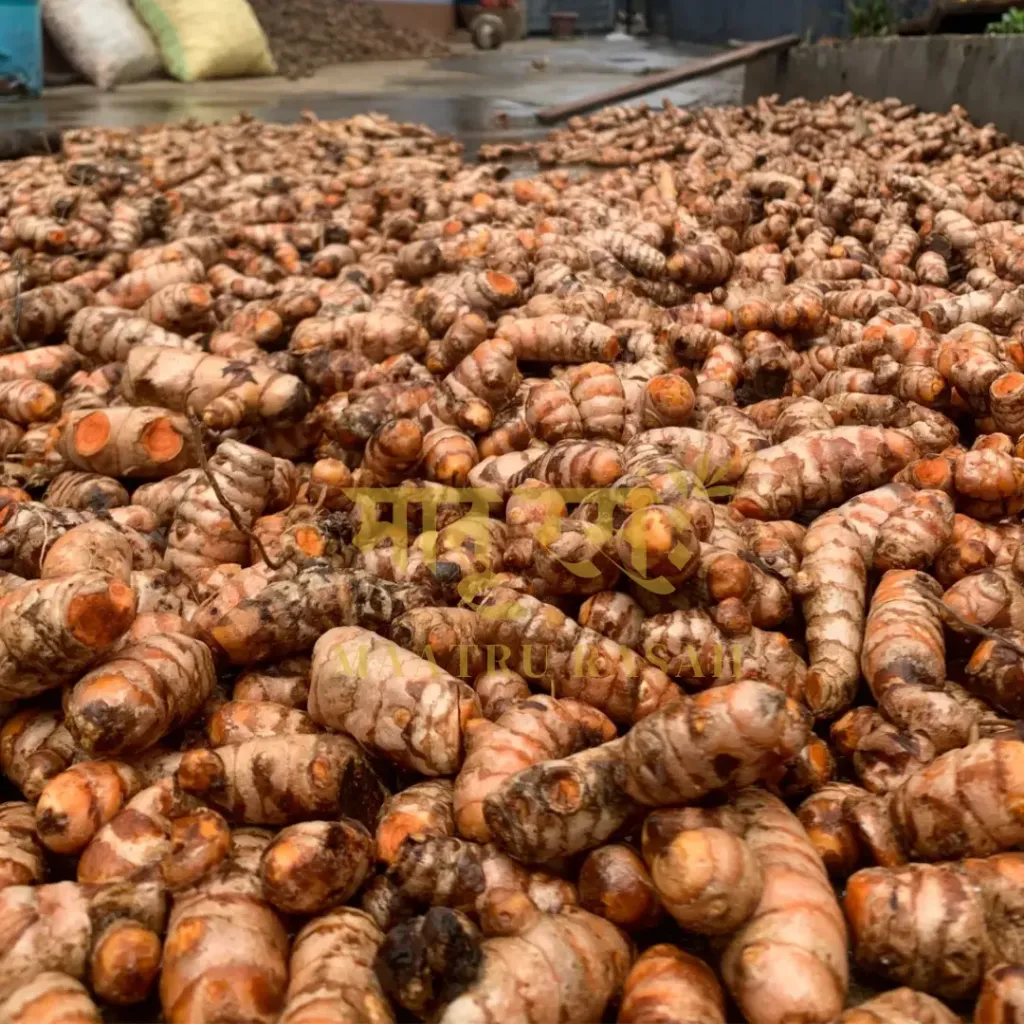
Processing Hand-sliced, sun-dried, stone-ground, packed to order in-house Machine-processed, mass-packed
Authenticity GI-tagged Often relabelled
In the pot Deep amber-orange; fuller colour and flavour from less powder Lighter colour, milder

WHAT PEOPLE SAY — CUSTOMERS & CREATORS

Trusted Tales

Ladoo with Lakadong turmeric & ginger

Tasteful Treasures rolls Lakadong turmeric and Ing Makhir ginger into festive laddus inspired by traditional kitchens.

Kathal Sabji, brightened with Lakadong

Nirmala Home Kitchen pairs everyday jackfruit curry with our single-origin Lakadong turmeric for richer colour and deeper flavour.

Golden Milk with Lakadong turmeric

Richie's Recipe stirs our single-origin Lakadong turmeric into warm milk for a comforting evening ritual.

The story of Lakadong turmeric


LAKADONG · the Jaintia Hills area this turmeric is named after

Also searched as: Lakadong haldi · Meghalaya turmeric · Jaintia Hills turmeric · golden turmeric

The name is a place. Lakadong is an area in the West Jaintia Hills, and the turmeric carries the name of where it belongs — because with this turmeric, the origin is the whole point. For a long time it was a hill crop barely known outside Meghalaya. It is only in recent years that it has travelled out under its own name and become a turmeric people go looking for, rather than just whatever haldi sits on the shelf.

You can tell it apart before you even cook with it. The colour is a deep, burnt amber-orange, closer to rust than the pale yellow of supermarket haldi. The smell is warm earth and fresh-cracked black pepper, with a woody, resinous sharpness that stays on your fingers. On the tongue it is earthy and peppery, with a clean bitter-warm edge. And in the pot, a spoon smaller than you are used to turns a whole pan of dal a glowing gold.

Lakadong turmeric sourcing visit through Padma Shri Trinity Saioo’s cooperative. Maatru Rasah.


"A named source, not a slogan. We buy our Lakadong through Padma Shri Trinity Saioo's organisation — and we've sat in her fields and recorded the growers ourselves." 

— Dr. (CS) Puja Shree Agarwal, Founder, Maatru Rasah

Why its curcumin runs higher


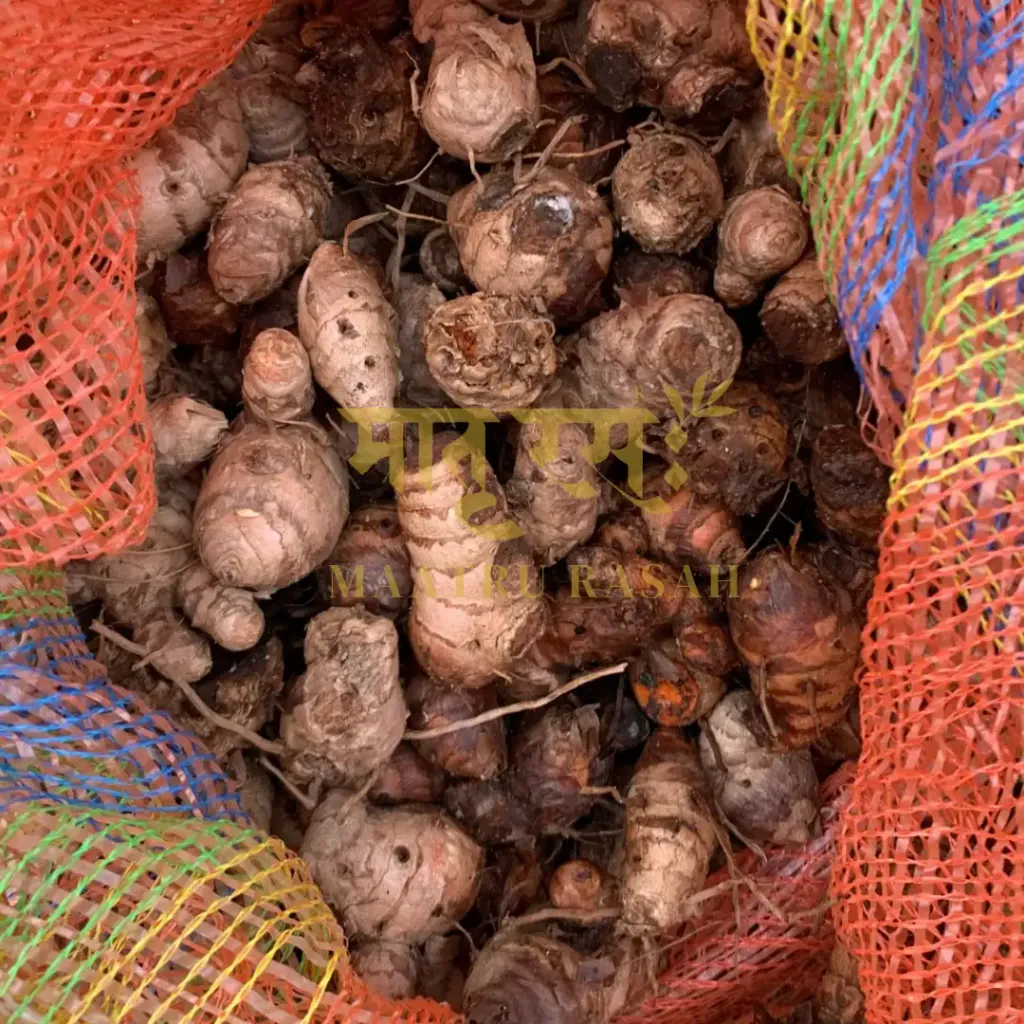
Three things stack up in the Jaintia Hills. The variety itself is a high-curcumin landrace — that is its claim to fame. The place suits it: iron-rich hill soil, high rainfall, and the altitude and climate of the Jaintia Hills. And the method is slow: hand-harvested at maturity, sun-cured rather than kiln-rushed, and stone-ground at low temperature so the colour and aroma survive the grind.

These conditions are hard to replicate on a commercial plain-grown farm, which is the honest reason Lakadong stays uncommon and is priced as it is.

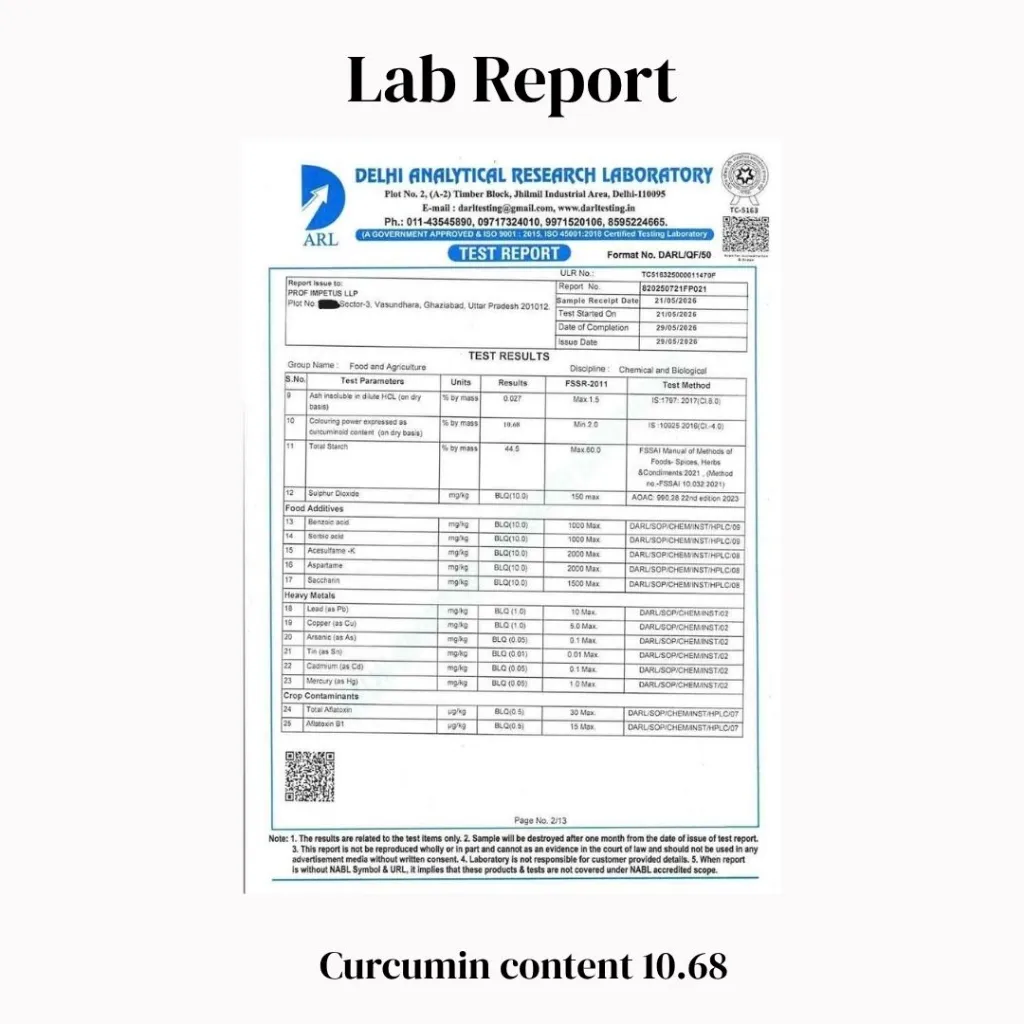
This batch: 10.68% curcumin


We print a real, batch-tested number rather than a fixed marketing figure. This batch, from the Winter 2025–26 harvest, tests at 10.68% curcumin. Across harvests the range is 7–12%, because curcumin shifts with soil, season and curing — a single number printed on every pack, all year, is a flag, not a flex.

Curcumin is measured in a laboratory, not by eye; a bright powder can still be low in curcumin, and colour can be faked. The reliable method is analytical, such as high-performance liquid chromatography (HPLC). For what the percentage means and how it is measured, read our companion guide to curcumin percentage in turmeric.

How we source it


We buy our Lakadong through the farmer organisation led by Padma Shri Trinity Saioo, drawing on around 900 farmer households around Mulieh village in the West Jaintia Hills. We have stood in the field, eaten lunch with the farmers, and recorded their answers on a fieldwork audio recorder.

We are honest about what this is. The organisation sells to other buyers too; what is ours is the depth of the relationship and the traceability of each batch. Once the turmeric reaches us, we stone-grind it in small batches and pack each pouch to order, by hand, in our own kitchen — no contract manufacturing, no outsourcing. The full sourcing story is on our About Us page.

GI-tagged authenticity


Lakadong turmeric carries a Geographical Indication (GI) tag, the same kind of protection that sits behind Darjeeling tea and Kanchipuram silk. The GI ties the name to its region of Meghalaya and is your guard against the oldest trick in the spice trade: ordinary turmeric relabelled and sold as "Lakadong." Colour is easy to fake; a named variety, a named village and a batch test are not. With ours, all three are on the page.

How to spot real Lakadong


Here is the honest part most sellers skip: you cannot tell Lakadong from ordinary turmeric just by looking, and no kitchen test proves it either. A deep colour only tells you it is turmeric, and colour can be deepened artificially. The water-glass test — a spoon of powder stirred into warm water — checks for added dye, not for the variety. So a bright pouch on a marketplace is not evidence of Lakadong.

What actually proves it is a source you can follow and a number you can check:

  • A named variety. Lakadong is a landrace of Curcuma longa, not a grade or a brand. The words "premium" or "organic" on a label are not the same as Lakadong.
  • A named place and source. A real seller can tell you the district and the farmers. Ours is Mulieh village, West Jaintia Hills, through Padma Shri Trinity Saioo's organisation.
  • A GI tag. Lakadong carries a Geographical Indication, the same protection that sits behind Darjeeling tea — it ties the name to its region.
  • A batch curcumin figure. A real laboratory number, measured by HPLC, for the batch in your hand, rather than one flattering percentage printed on every pack all year. This batch: 10.68%.

If a seller can show the variety, the village, the GI tag and a batch test, you are almost certainly holding the real thing. If all you get is a bright photo and the word "Lakadong," you are holding a label. How curcumin is measured →

How to cook with it


Lakadong is more concentrated in colour and flavour than ordinary haldi, so use less — start with about a third to a half of what a recipe asks for, then adjust to taste.

  • Add it early, in fat. Stir it into hot ghee or oil at the start of a dish, in the tadka, rather than dusting it on at the end. It blooms into a deeper, more even gold that way.
  • Everyday cooking. Dal, sabzi, khichdi, pulao, biryani, and marinades for paneer or fish — a small spoon carries a lot of colour.
  • Haldi doodh (golden milk). Warm milk, a small pinch of Lakadong, a little jaggery, and a turn of black pepper for flavour. The classic turmeric milk.
  • Golden infusion. Simmer a pinch with fresh ginger and a squeeze of lemon for a warm, golden cup.

Because it is so concentrated, a 50 g pouch goes a long way in a home kitchen.

How to store it


We pack your turmeric to order in a food-grade pouch. Because it is a single ingredient — only turmeric, with no preservative, no added colour and no anti-caking agent — a little care keeps it fresh and weevil-free with no chemicals at all. We recommend pouring it into an airtight glass jar once it reaches you. A glass jar option is also available on this page if you would like it sent that way.

  • Glass jar, dark cupboard. Glass does not react with turmeric's oils, and keeping the jar out of the light protects both the colour and the curcumin.
  • Or refrigerate. In a humid kitchen, the fail-safe is the fridge: kept airtight in the cold, the powder stays dry and weevils (ghun) cannot hatch.
  • Always a dry spoon. A single drop of moisture can spoil the whole jar.
  • Keep it away from steam. Don't open it over a boiling pot.
  • A natural guard. A whole dried bay leaf (tejpatta) or one or two cloves (laung) on top of the powder keeps insects away without changing the flavour.

Stored this way, Lakadong holds its colour and aroma for about 24 months unopened and is best within 12 months of opening. Fresh, it is deep golden-orange with a strong, peppery smell; when either fades, the jar is past its best.

Why it costs what it costs


Real Lakadong is not a cheap turmeric, and we would rather explain the price than disguise it. Yields are smaller on hand-worked hill plots than on mechanised plains farms. The organisation is paid fairly. The curing is slow, the grinding is small-batch, and every pouch is packed to order rather than mass-bagged. Because it is single-origin and batch-tested, each step is traceable instead of anonymous. We are expensive because we are honest about how the food is made.

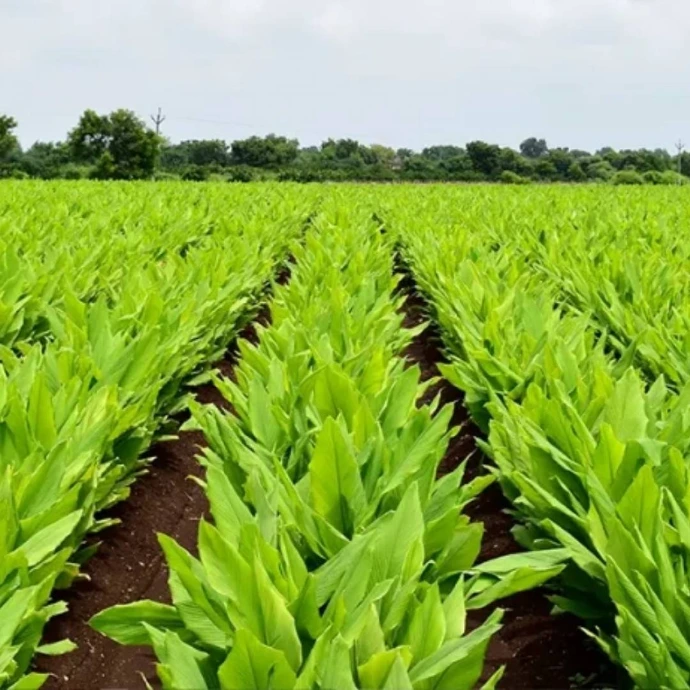
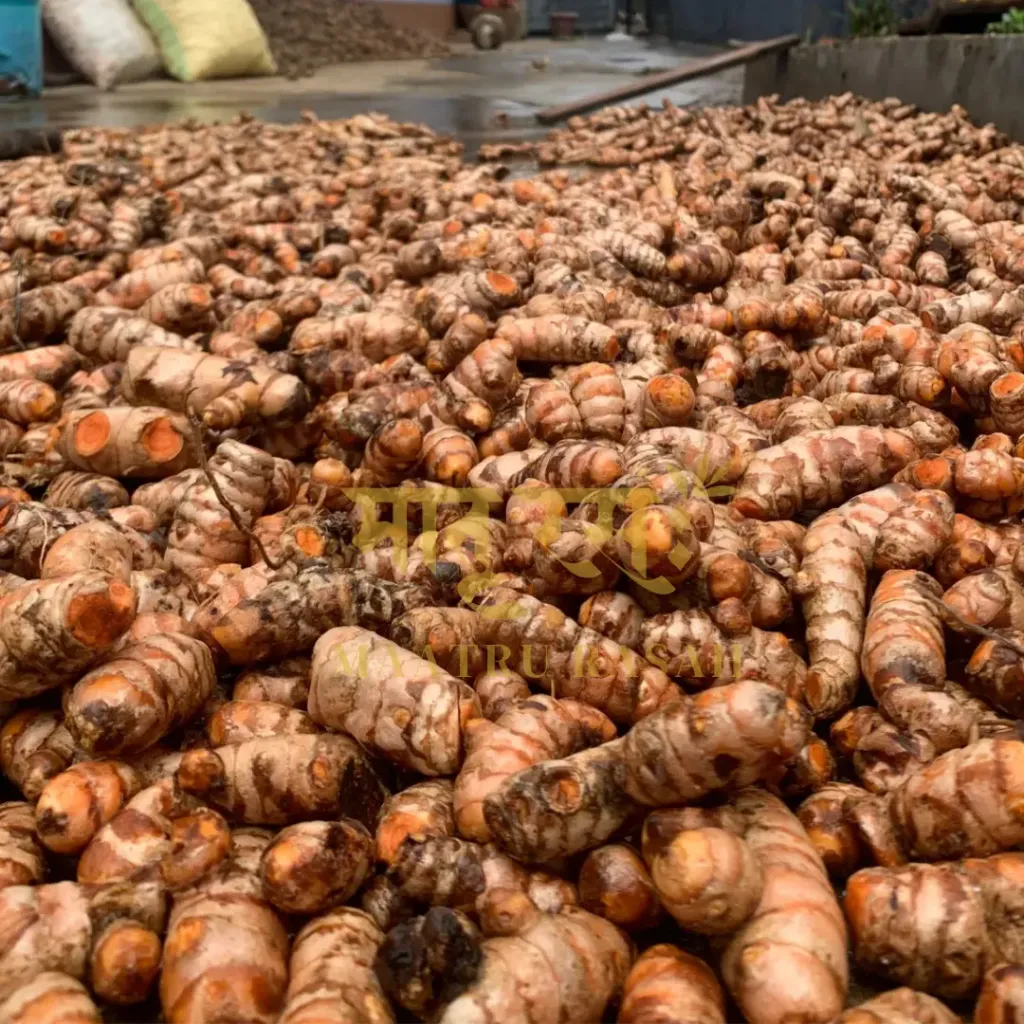
Lakadong turmeric fields in Meghalaya growing single-origin Lakadong haldi with naturally high curcumin
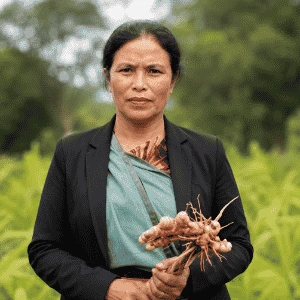
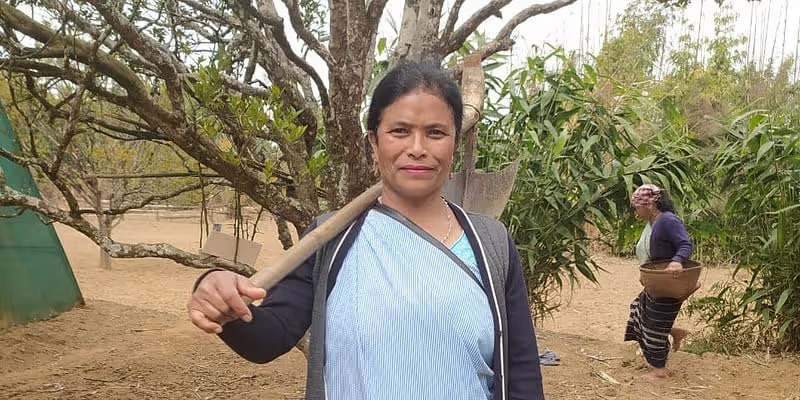
Farmer standing in Lakadong turmeric farm in Meghalaya supplying Maatru Rasah Lakadong turmeric
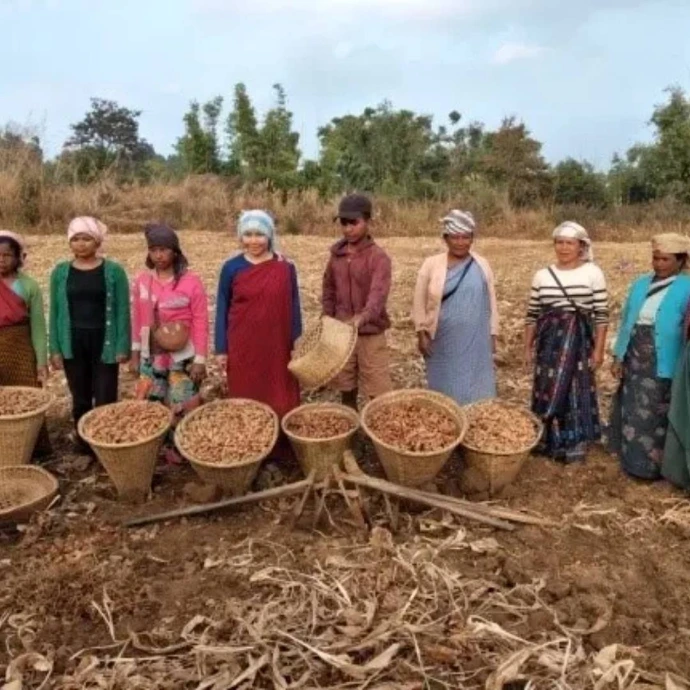
Farmer group harvesting Lakadong turmeric in Meghalaya through Padma Shri Trinity Saioo's organisation
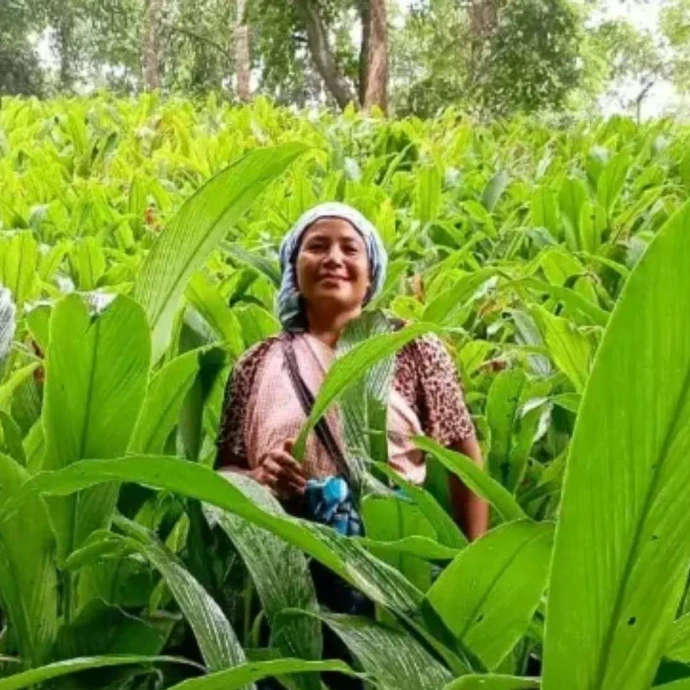
Padma Shri Trinity Saioo standing amidst lush green Lakadong turmeric plants in Meghalaya for Maatru Rasah.

From a Padma Shri's organisation, in the Jaintia Hills 

  Our Lakadong turmeric comes through the organisation led by Padma Shri Trinity Saioo, around Mulieh village in the West Jaintia Hills. Around 900 farmer households grow for it. We name the variety, the village, the organisation and the tested number — every batch traceable to its source.

Specifications


ProductLakadong turmeric powder (single-origin)
VarietyLakadong landrace of Curcuma longa
OriginMulieh village, West Jaintia Hills District, Meghalaya
Sourced throughPadma Shri Trinity Saioo's farmer organisation
This batchWinter 2025–26 harvest · 10.68% curcumin (range across batches 7–12%)
Ingredients100% Lakadong turmeric. Nothing added.
ProcessingHand-sliced · sun-dried · stone-ground · packed to order, in-house
Weight options50 g pouch · 250 g pouch · 500 g pouch · 1 kg pouch · 50 g glass jar
CertificationGI-tagged · FSSAI Lic. No. 12723052000504
StorageAirtight glass jar, cool, dark, dry; dry spoon only
Shelf life~24 months unopened · best within 12 months of opening
Rating4.9 / 5 from 10 verified buyers
ShipsWithin India only · dispatch in 24 hours (spices ship same-day per shipping policy)

— FREQUENTLY ASKED QUESTIONS

FAQ


Here are some common questions about our Golden Lakadong Turmeric.

Lakadong turmeric is a high-curcumin variety of Curcuma longa grown in the Jaintia Hills of Meghalaya. It is a variety rather than a brand, sought out because its curcumin runs well above ordinary turmeric. Maatru Rasah sources it through Padma Shri Trinity Saioo's cooperative around Mulieh village.

Lakadong is a place — an area in the West Jaintia Hills of Meghalaya that this turmeric is named after. Locally the crop is called Shynrai (Khasi) and Chyrmit (Pnar). The name points to an origin, not a brand.

Lakadong is a single-origin Meghalaya variety with markedly higher curcumin — typically 7–12% against roughly 2–3% in ordinary haldi. In the kitchen that means deeper colour and fuller flavour from less powder. It is also GI-tagged, so its origin can be verified rather than just claimed.

This batch, from the Winter 2025–26 harvest, tests at 10.68% curcumin, and across batches the range is 7–12%. The figure is measured in a laboratory, typically by HPLC, because colour alone is not a reliable guide. We print the real batch number instead of a fixed marketing figure.

It is single-origin Lakadong — one variety, from one organisation, ground fresh. We do not blend it with cheaper turmeric to stretch a batch, and the pouch contains only turmeric: no added colour, no anti-caking agent, no preservative.

Trinity Saioo is a turmeric farmer from the Jaintia Hills of Meghalaya, awarded the Padma Shri in 2020 for reviving Lakadong cultivation. We buy our Lakadong through the farmer cooperative she leads around Mulieh village, which draws on around 900 farmer households. Read the sourcing story.

A simple check: stir half a spoon into warm water. Pure turmeric settles and tints the water a soft yellow; a sharp, dark colour that bleeds fast can signal added dye. Remember, a home test shows it's turmeric, not that it's Lakadong — for that, look at provenance and a lab number.

You cannot tell Lakadong from ordinary turmeric by colour or a home water test — both are turmeric. The reliable proof is provenance and a lab number: a named variety, a named village, a GI tag, and a batch curcumin figure measured by HPLC. We print all four on this page.

It comes from Mulieh village in the West Jaintia Hills District of Meghalaya, sourced through the farmer organisation led by Padma Shri Trinity Saioo, which draws on around 900 farmer households. We have visited the field and recorded the farmers' own account.

Use about a third to a half of the turmeric a recipe calls for, since Lakadong is more concentrated. Add it early to hot ghee or oil so it blooms, and use it in dal, sabzi, khichdi, marinades, or in haldi doodh. A 50 g pouch lasts a long time in a home kitchen.

We pack each pouch to order, by hand, in our own kitchen. We recommend pouring the powder into an airtight glass jar at home (a glass jar option is also available on this page), kept cool, dark and dry, and always using a dry spoon. Stored well it keeps about 24 months unopened.

Lakadong is grown in small quantities on hand-worked hill plots, cured slowly, stone-ground and packed to order, and the organisation is paid fairly. Because it is single-origin and batch-tested, every step is traceable. The price reflects the yield, the sourcing and the work.

1 किलो लाकाडोंग हल्दी की कीमत ₹1,299 है, टैक्स सहित, डिलीवरी पूरे भारत में फ्री। The 250 g pouch is ₹349 and the 50 g pouch is ₹159. Genuine Lakadong costs more than ordinary haldi because yields in the Jaintia Hills are small and we lab-test every batch. This one measured 10.68% curcumin. If you see "Lakadong" at ordinary haldi prices, ask the seller for the village and the batch report.

Lakadong turmeric Meghalaya

Cook with this winter's batch — while it lasts

Stone-ground and packed by hand the day your order comes in — this is the Winter 2025–26 harvest at 10.68% curcumin. When it runs out, the next batch will read its own number.

50 g pouch · 250 g pouch · 500 g pouch · 1 kg pouch (₹1,299) · 50 g glass jar · No delivery charge above ₹999