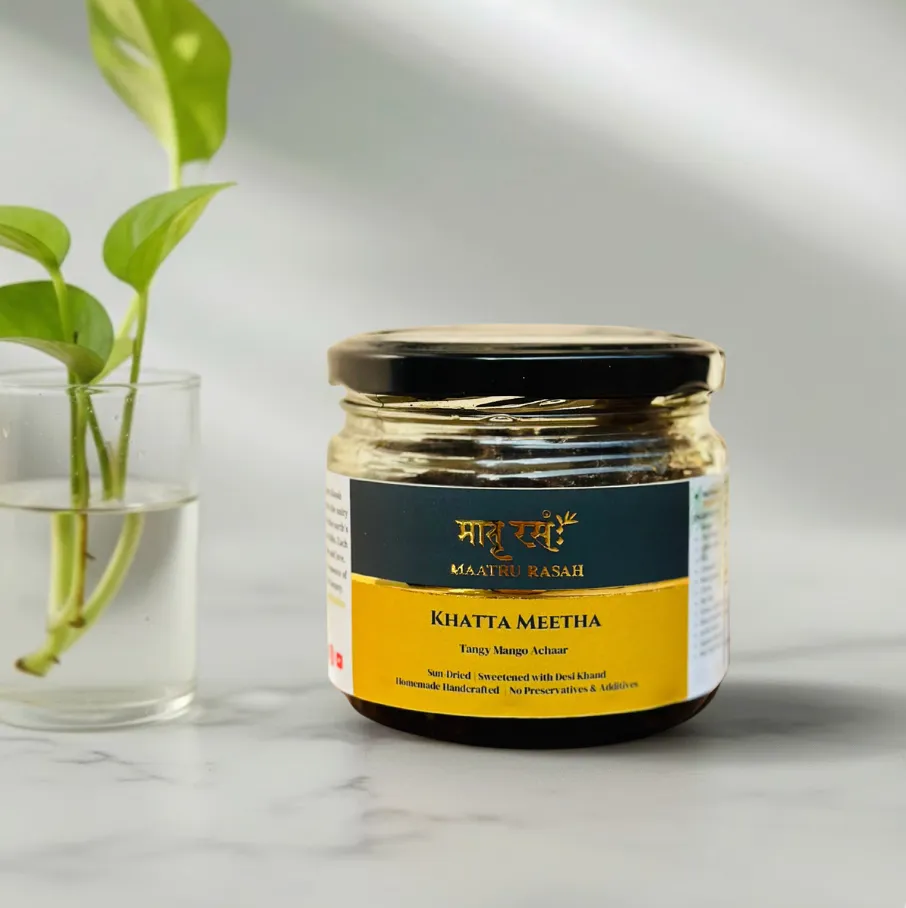
What is Khatta Meetha Mango Achar? The Kairi Chundu Explained
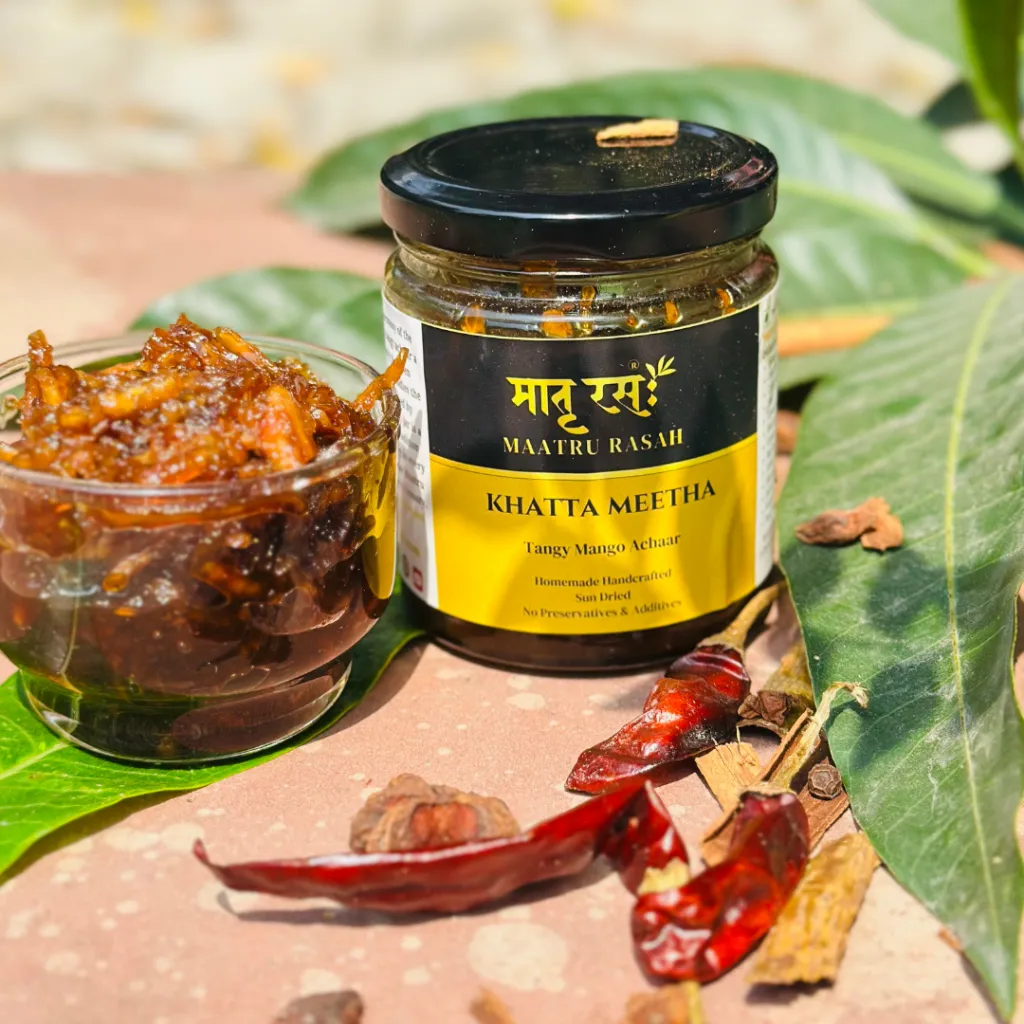
Khatta meetha mango achar — also called kairi chundu, mango chunda, or sweet sour mango pickle — is a different category from the spicy mustard oil achar most people know. There is no mustard oil in this. No cooking. No frying of spices.
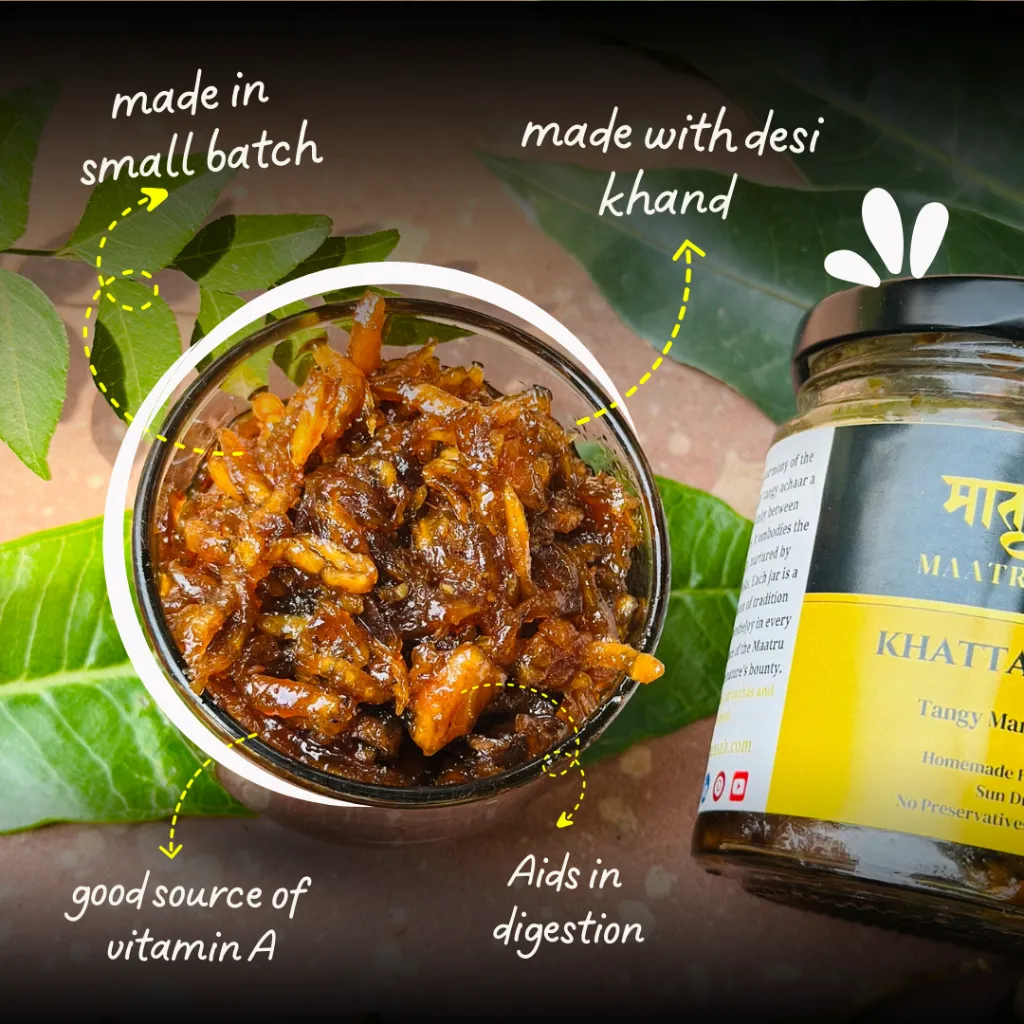
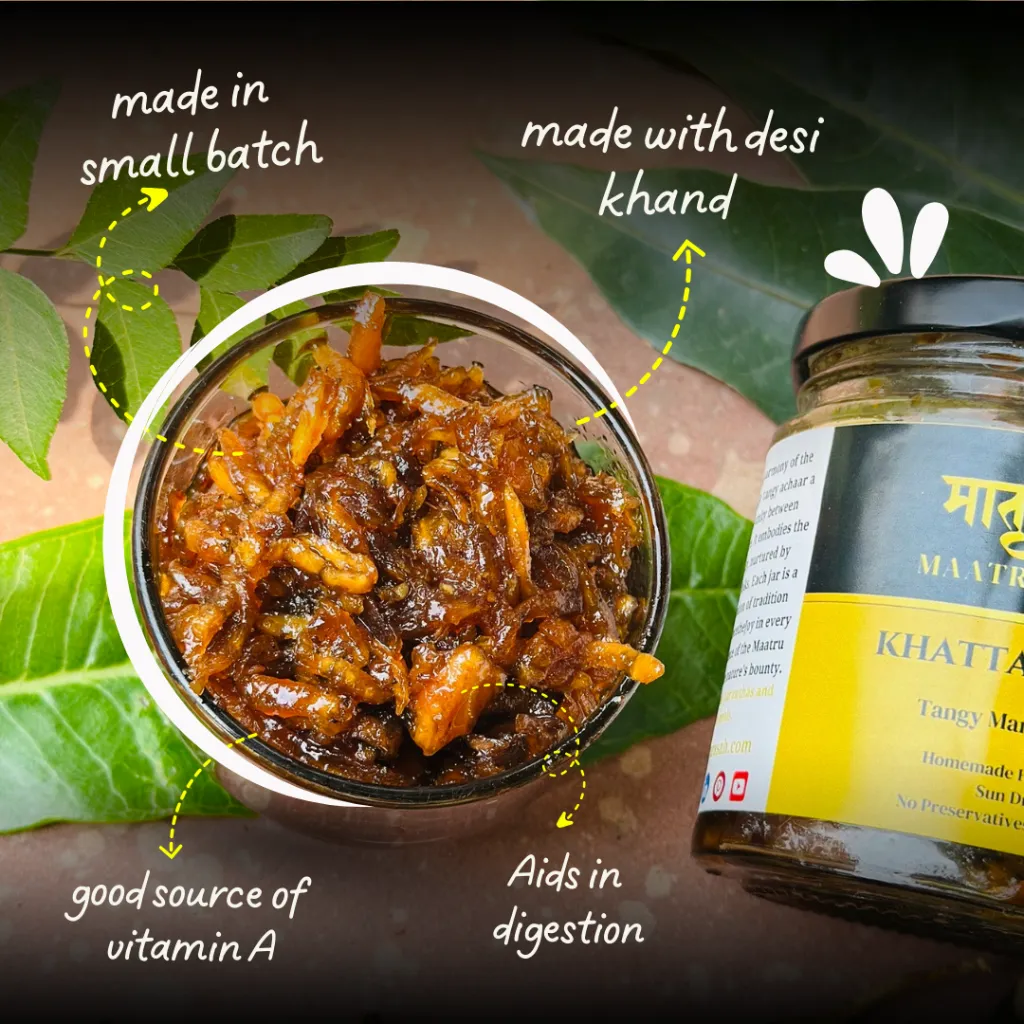
Kairi chundu is raw mango cured in Desi Khand (unrefined cane sugar) with whole spices. The Desi Khand draws moisture from the raw mango over several days, forms a thick spiced syrup, and the mango pieces slowly soften inside it while staying intact. The result sits somewhere between a pickle and a preserve. Sharp, sweet, warm, and complex — all at once.
Spread it on roti. Eat it with dahi rice. Use it the way your grandmother used it — one small spoonful with whatever you're already eating.
Maatru Rasah's version follows the original recipe from Prayagraj (Allahabad), 1857. Made in Katra, one of the oldest spice-trading neighbourhoods in the city. The proportions were developed for a family kitchen, not a factory. They have not been adjusted.
Why this Achaar is so special
13 Spices in This Sweet Sour Mango Pickle — and Why It Matters
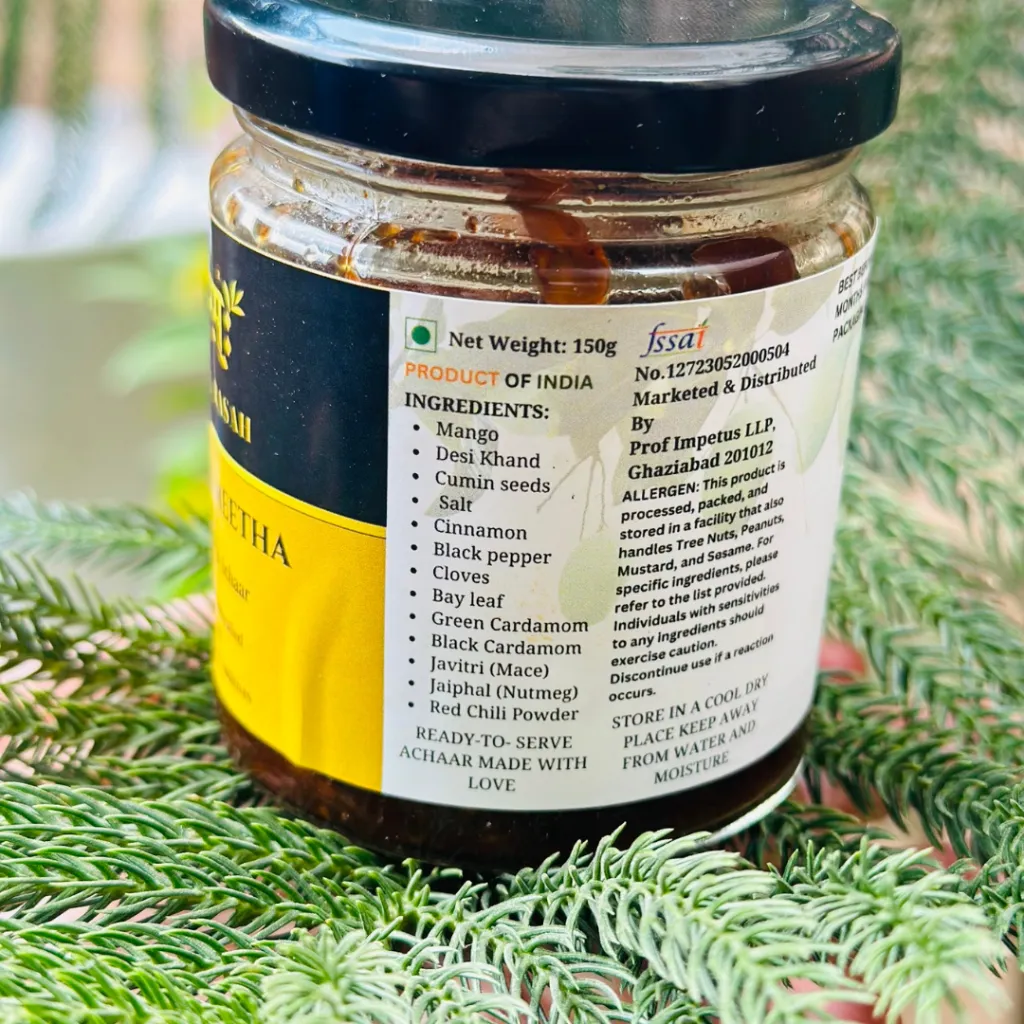
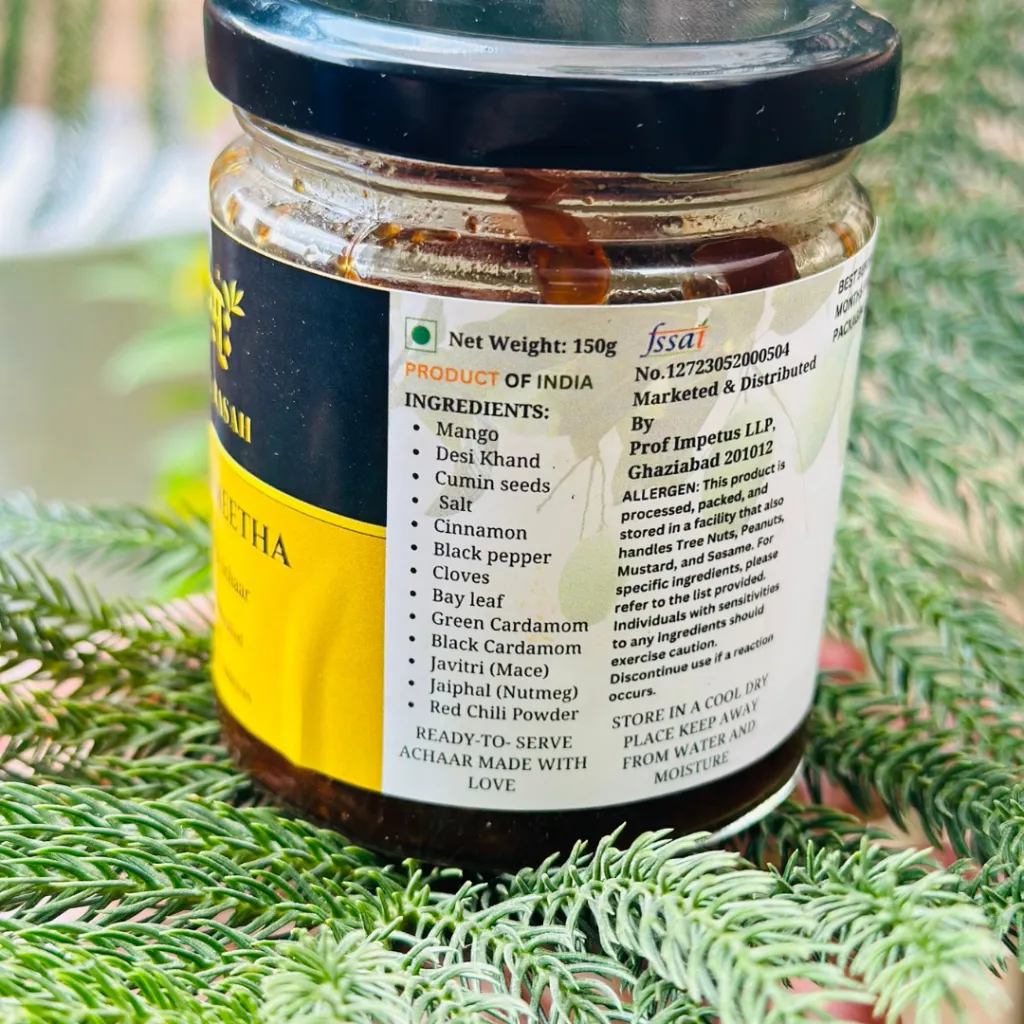
Most commercial sweet mango pickles use 3 or 4 spices. This homemade sweet mango achar uses 13: cumin, fenugreek, coriander, fennel, red chilli, cinnamon, black pepper, cloves, bay leaf, green cardamom, black cardamom, javitri (mace), and jaiphal (nutmeg).
The aromatic spices — both cardamoms, mace, nutmeg, cloves, cinnamon — are unusual in a mango chundu. Most chunda recipes in Gujarat and Rajasthan skip them entirely because they add cost and complexity. The Prayagraj recipe keeps them because this city sits at the meeting point of UP, Bengal, and Bihar spice traditions. The resulting flavour is not Gujarati chunda. It is not Rajasthani aam achar. It is its own thing.
This is also why a bottle of this khatta meetha achar smells different the moment you open it. The warm aromatic spices hit first, before the sweet and the sour.
Sun-Cured, No Cooking: Why This Homemade Mango Achar Needs No Preservatives
This sweet sour mango pickle is made without fire. The curing happens entirely in the sun.
Raw mango pieces are mixed with Desi Khand and whole spices, sealed in glass, and placed in direct sunlight for several days. The sun provides low, consistent warmth — enough to activate the spices and allow the sugar to draw moisture from the mango without destroying the mango's natural enzymes or the volatile oils in the spices.
Commercial mango pickles cannot do this at scale. Sunlight curing requires time, weather, and hand-monitoring — none of which are compatible with mass production. This is why commercial brands cook their pickle instead, then add sodium benzoate or potassium sorbate to compensate for what cooking destroys.
In the Maatru Rasah recipe, the Desi Khand itself acts as the preservative. High sugar concentration is one of the oldest preservation methods in the world — the same principle behind murabba, jam, and traditional preserves. No synthetic chemicals needed.
How the sun-curing process works
Why Desi Khand and Not Refined Sugar
Desi Khand is unrefined cane sugar — pressed from sugarcane juice and dried without chemical bleaching or stripping. It retains the natural minerals and colour from the original cane.
Refined white sugar gives sweetness. Only sweetness. Desi Khand gives sweetness with a mild caramel depth, a slight earthiness, and natural colour that turns the syrup a warm amber. This is what gives this khatta meetha aam achar its characteristic colour and that extra layer of flavour that refined-sugar versions simply do not have.
It is also better for digestion. Refined sugar is stripped of all fibre and minerals. Desi Khand retains both, making it easier for the body to process.
Glass Jar — Why Packaging Matters for Mango Achar
Sweet, acidic, spiced foods react with plastic over time. The longer the contact, the more the risk — especially in warm Indian climates where packaging spends days in transit and months in kitchens.
A thick, acidic, spiced sugar solution sitting in plastic for weeks — first in transit, then in a kitchen — slowly absorbs plasticizers from the container walls. The flavour changes subtly at first. Over months it becomes noticeable. This syrup spends up to 12 months in its jar before the shelf life ends. Every one of those months matters.
Glass changes nothing. There is no transfer, no reaction, no residue. The syrup in a Maatru Rasah jar is exactly the syrup that went in on the day it was sealed — which is the day the recipe was done.
Ingredients
Raw mango (kairi), Desi Khand (unrefined cane sugar), cumin, fenugreek, coriander, fennel, red chilli, cinnamon, black pepper, cloves, bay leaf, green cardamom, black cardamom, javitri (mace), jaiphal (nutmeg), salt.
No refined sugar. No mustard oil. No vinegar. No artificial preservatives. No artificial colour. No MSG.
What It Tastes Like
Sharp mango sourness upfront, followed immediately by the warmth of whole spices, then a long sweet finish from the Desi Khand. The mango pieces are soft but not mushy. The syrup is thick and clings.
It is not the same as Gujarati chunda — that version is sweeter and uses fewer spices. It is not the same as regular aam ka achar — that is oil-based and spicier. This sits in between, closer to a spiced mango preserve than a conventional pickle.
One spoonful with plain rice is enough. One spoonful with paratha and dahi is complete.
Storage & Shelf Life
The Desi Khand syrup preserves this achar for 12 months from the packaging date — no refrigeration needed before opening. High sugar concentration is one of the oldest food preservation methods in the world, the same principle that makes murabba and traditional Indian preserves shelf-stable without chemicals. After opening, refrigerate during warm months. One rule matters: always use a completely dry spoon. A single drop of water thins the syrup, breaks the preservation balance, and triggers fermentation. Opened jar: consume within 3 months.
Order Khatta Meetha Mango Achar Online — Pan-India Delivery
Maatru Rasah delivers this homemade sweet mango pickle pan-India. Delhi NCR (Delhi, Noida, Gurgaon, Faridabad) — 4 to 5 working days. Mumbai and Pune — 3 to 4 working days. Bengaluru, Hyderabad, and Chennai — 4 to 6 working days. Kolkata — 4 to 5 working days. Jaipur, Lucknow, and Bhopal — 3 to 4 working days. Most other cities — 5 to 7 working days.
Orders are packed in bubble wrap inside a sealed outer carton. The glass jar is insulated during transit. If the jar arrives damaged, contact us within 24 hours with a photo and we replace it.