Skip to Content

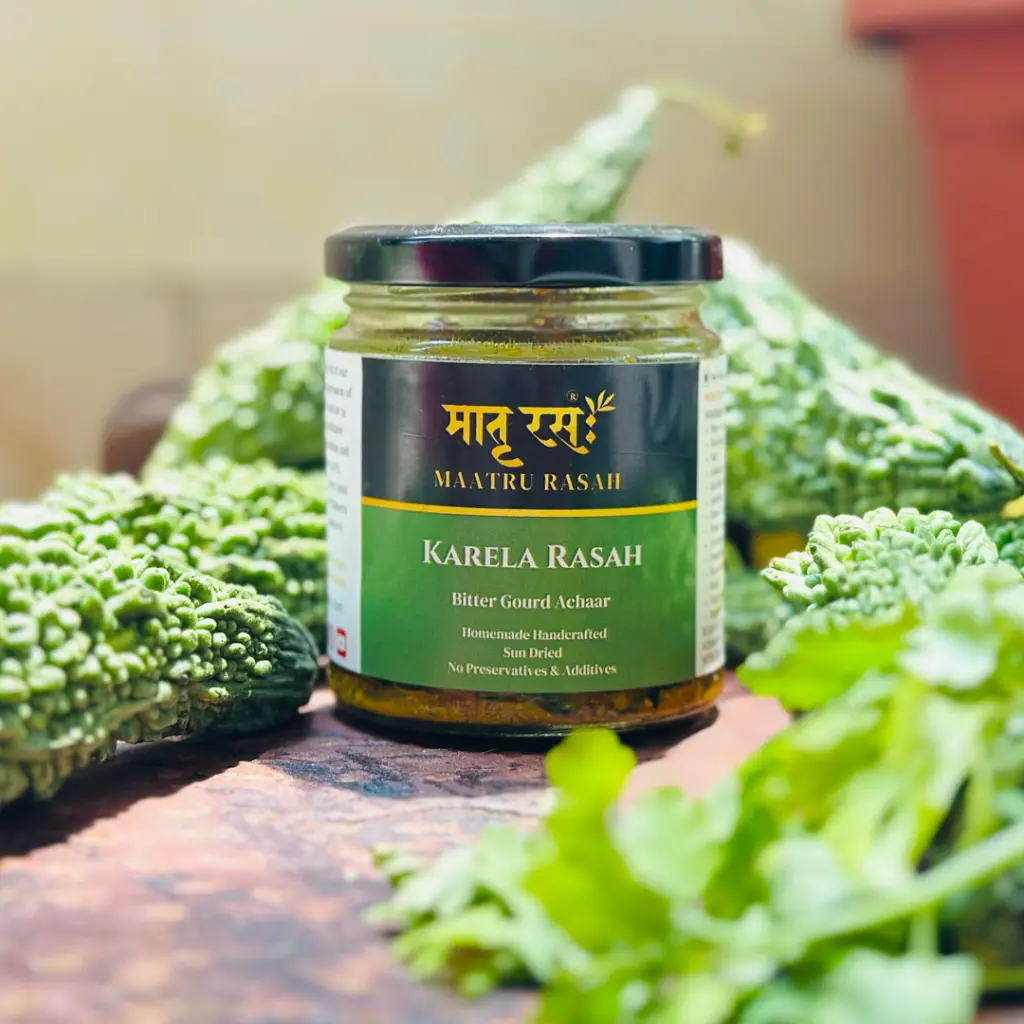
Karela Rasah — Bitter Gourd Achaar (Karela Ka Achar)

(4 reviews)

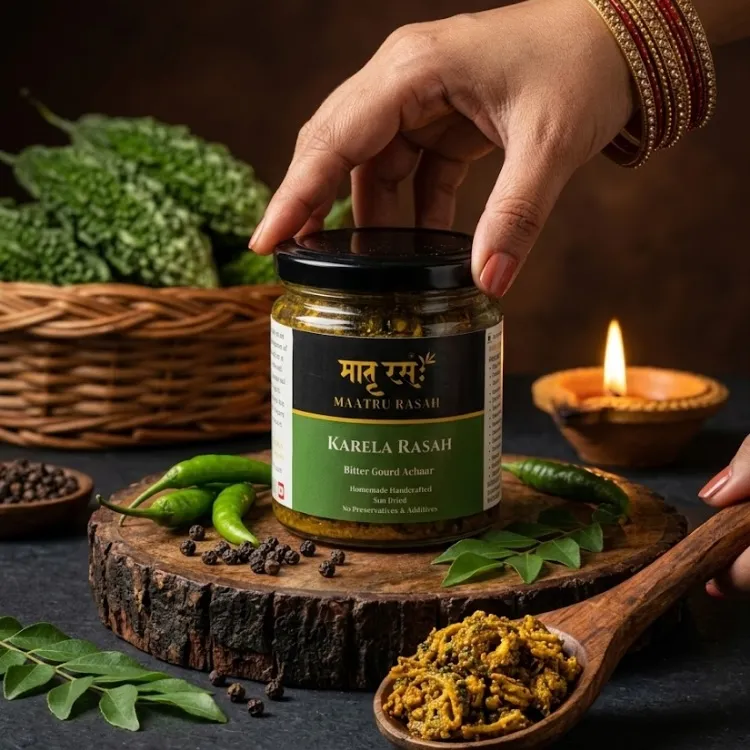
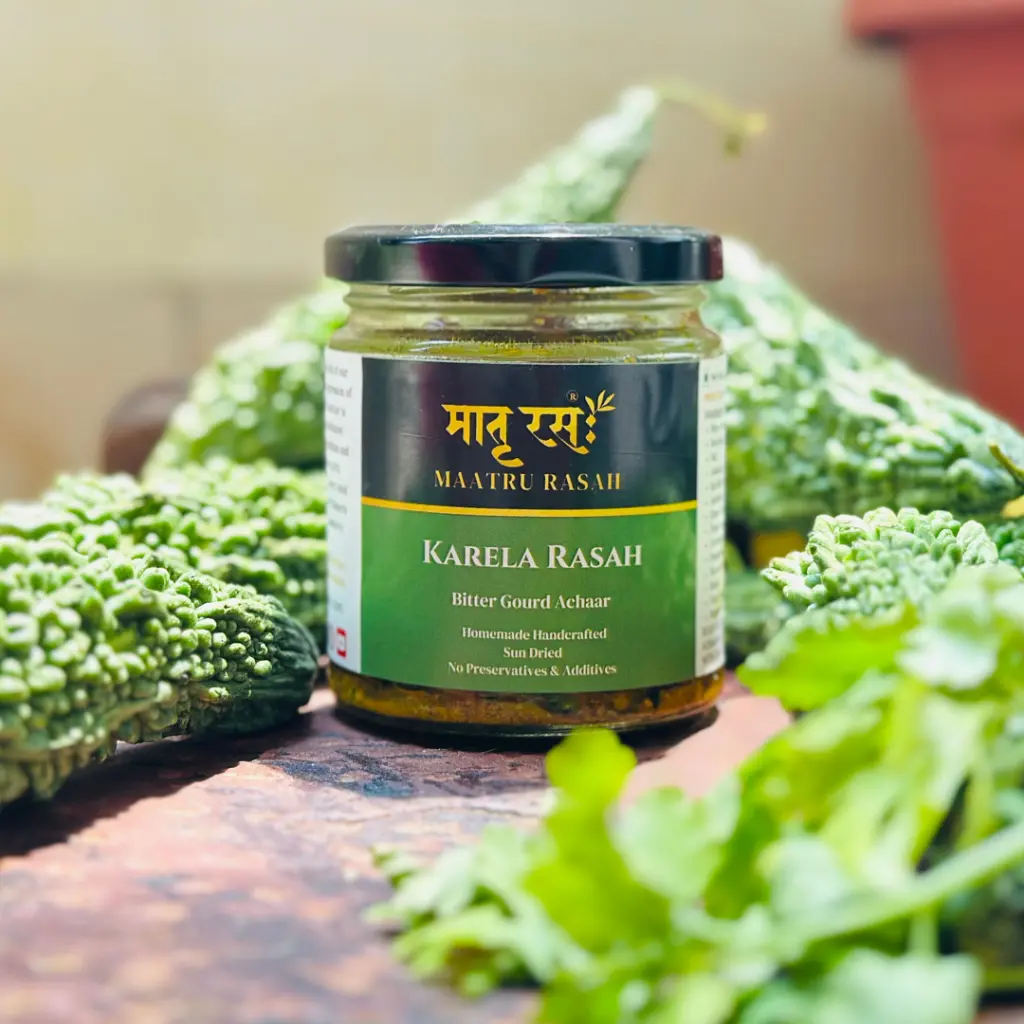
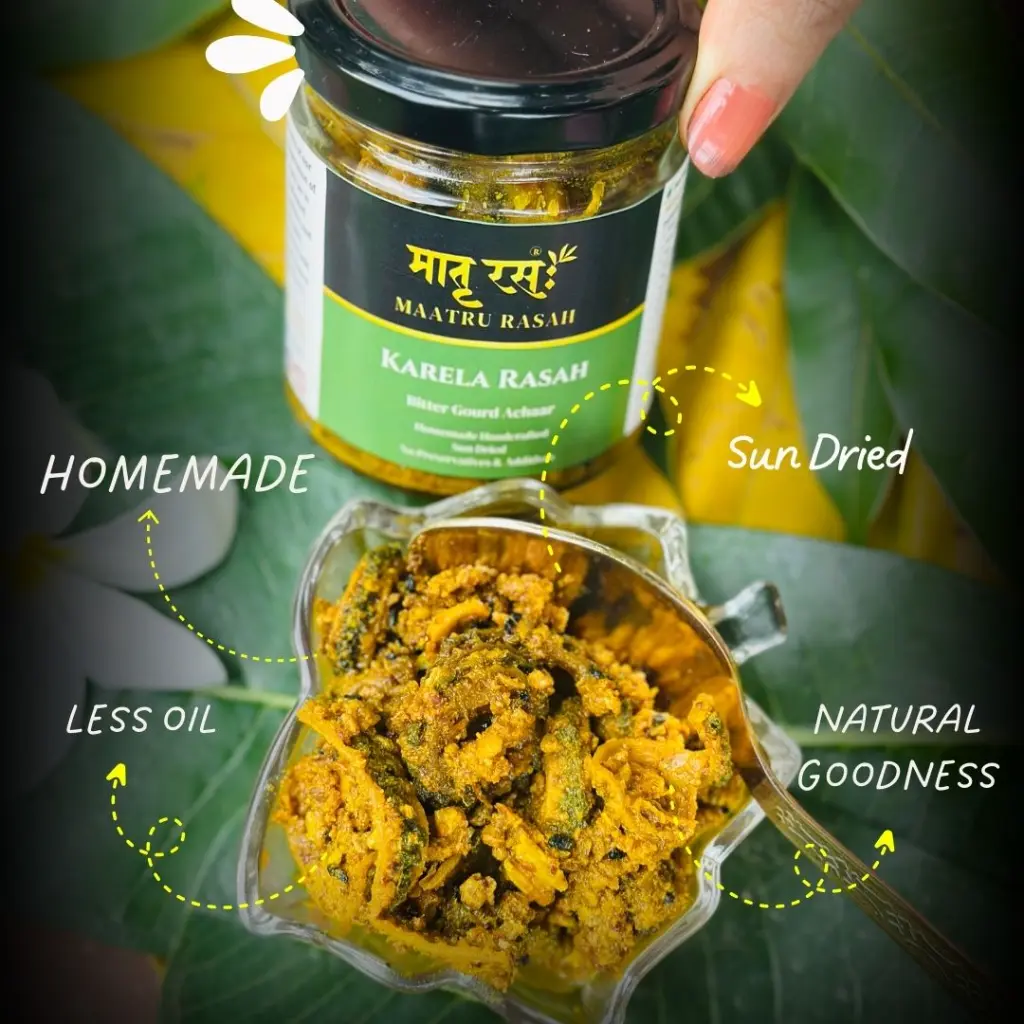
Small young bitter gourd, cut into rounds and cured in just enough wood-pressed mustard oil — mild, about 2 out of 10, the karela achaar the founder's dadi used to make.

Open the jar and it reads mango-bright, not harsh. The karela rounds stay firm with a clean, gentle bitterness that settles into the tartness of raw mango and warm mustard-seed masala — light on the tongue, never an oily coat.

🥒 Small young karela · 🌶️ Bitterness ~2/10 · 🥭 Raw mango for tartness · 🛢️ Wood-pressed mustard oil (kept low) · 🫙 Glass jar

Don't leave the kitchen empty-handed.

A 30 g sample from this month's batch is included with orders above ₹699 — from the same batch as your order, tucked in before we pack.


  • Weight
Price
₹ 369.00 ₹ 369.00
₹ 369.00
(Tax included)
✅ FSSAI Licensed 🤝 Farmers & Women Empowerment 🏺 No Preservatives 🫙 Glass Jar 🔒 Secure Checkout

— CORE FEATURES


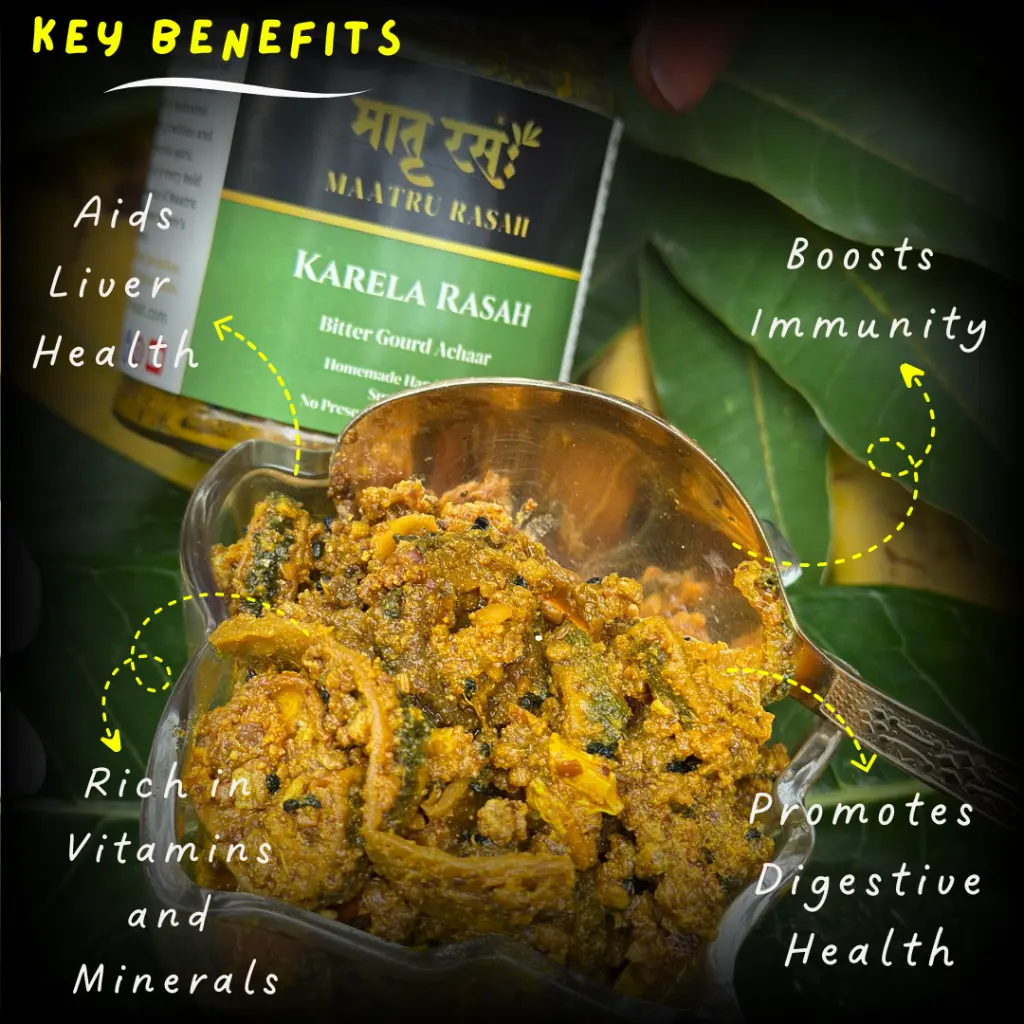
Mild, ~2/10 — Young soft karela, not bitter


Raw Mango Pairing — Kairi for natural tartness


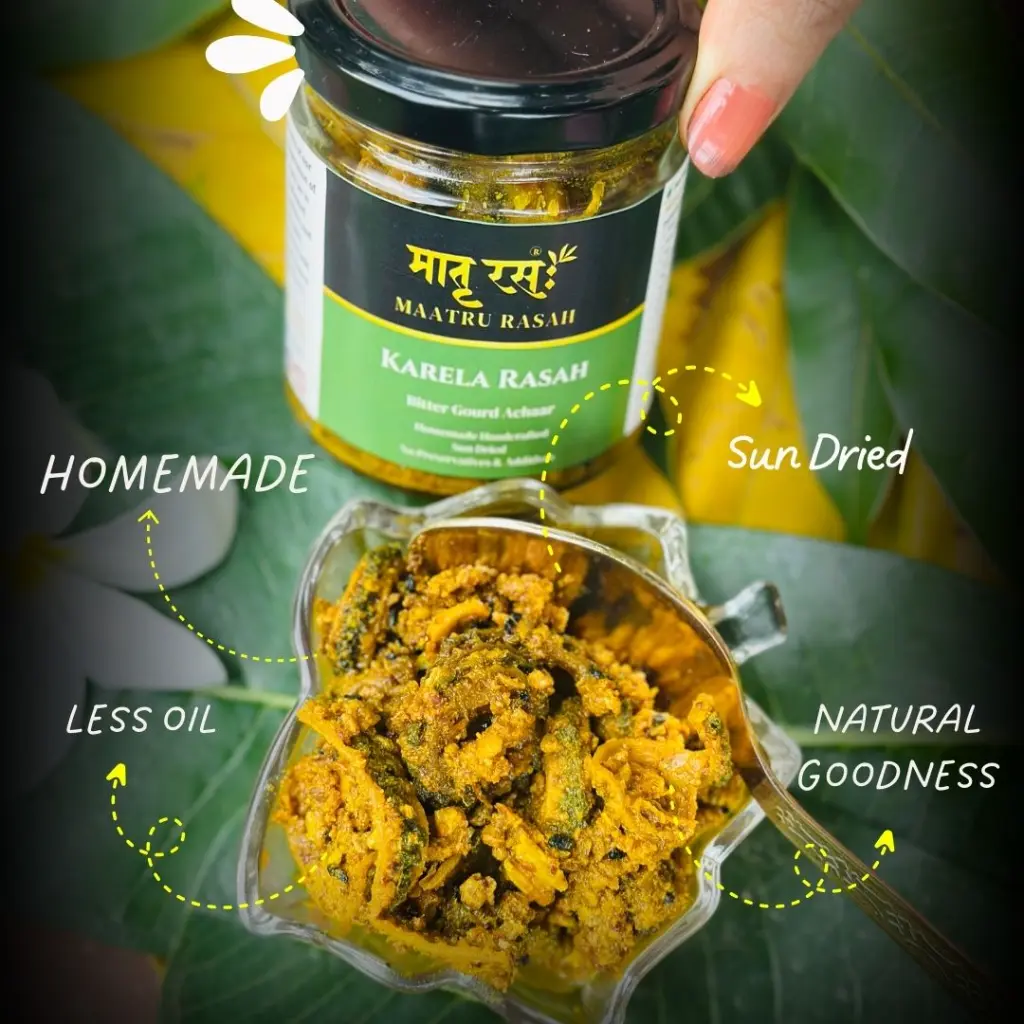
Low on Oil — Measured, never floating


No Artificial Preservatives — Salt, oil, sun, time

Rating

"Karela pickle ordered first time Maatru Rasah Karela Rasah Pickle. Impressed with their quality, packaging. Pure Homemade Taste."  Ayushman Gupta from Gurugram 

Karela achaar carries raw mango, so it's made once a year, in mango season — roughly 2,000 jars for the whole year. When that year's batch sells out, the next one comes next summer, not in a few weeks.

Glass jar, hand-filled to order. If it reaches you damaged, we replace it.

WHAT IT IS

What is Karela Rasah?

करेला BITTER GOURD | रसः TASTE

Karela Rasah is our bitter gourd achaar — karela ka achar — cured in wood-pressed (kachi ghani) mustard oil, kept low. We use the small, soft, young green karela, so the bitterness sits around 2 out of 10, and pair it with raw mango (kairi) for tartness. It's a family recipe: the founder's grandmother made it, her mother Uma learned it, and it carries Lakadong turmeric, Ing Makhir ginger and a hand-ground masala. No artificial preservatives. Ships across India.


Why This Achaar So Special→

OUR STORY BEHIND THIS JAR

This was my grandfather's favourite. 

My dadi made karela achaar all the time for him — she always cut the gourd into neat little rounds, gol-gol, and somehow made a bitter vegetable into the thing he reached for first. My mother, Uma, learned it standing beside her. The trick was never to fight the bitterness with heavy oil or harsh salt — pick young, soft karela, add raw mango, and keep the oil light. We still cut it in rounds, the way dadi did, and it's still the achaar that wins over people who swore they hated karela.


DR. (CS) PUJA SHREE AGARWAL · FOUNDER

— WHY IT’S DIFFERENT

Why Karela Rasah is different 


Wood-pressed mustard oil + Raw Mango in Bitter Gourd Achaar by Maatru Rasah

Raw mango pairing

We pair the karela with raw mango (kairi). It isn't a garnish — it's the choice families who liked karela but found it too bitter alone settled on, long before commercial achaar existed.

High Quality Ingredients of Bitter Gourd Achaar by Maatru rasah

The variety, not the trick

Most karela achaar uses big mature bitter gourd, so bitter it needs heavy salting or blanching to tame. We use small young karela cut into rounds — it never gets bitter enough to need taming. That's where the 2/10 comes from.

GI Tagged Lakadong turmeric + Ing Makhir ginger in Bitter Gourd Achaar by Maatru Rasah

Low on oil

We cure in wood-pressed mustard oil but keep it to what the achaar needs — enough to season and seal, not a jar swimming in oil. You won't find a thick floating layer.

Small batch of Bitter Gourd Achaar by Maatru Rasah

Single-origin spices

Lakadong turmeric (7–12% curcumin) and Ing Makhir ginger, both through Padma Shri Trinity Saioo's organization in the Jaintia Hills. Named, not anonymous.

— WHAT’S INSIDE

What's in the jar


Every ingredient earns its place. As it goes into each jar, in descending order of weight:

THE BASE

  • Small soft young green karela (bitter gourd) — cut into rounds
  • Raw mango (kairi) — for tartness
  • Wood-pressed (kachi ghani) mustard oil — kept low
  • Salt (Namak)
  • Green chilli (restrained, for warmth not heat)

THE SPICES

  • In-house ground Fennel (saunf) powder
  • In-house ground Coriander (dhania) powder
  • In-house ground Fenugreek (methi) powder
  • In-house ground Mustard seed (rai) powder
  • In-house ground Lakadong turmeric (7–12% curcumin) — through Padma Shri Trinity Saioo (haldi) powder
  • In-house ground Cumin (jeera) 
  • In-house ground Ing Makhir ginger — through the same organisation
  • Kalonji (nigella) 
  • In-house ground Asafoetida (hing) powder

WHAT’S NOT IN THIS JAR                                

 ✕ Artificial preservatives · Artificial colour · Refined oil · Vinegar · Anti-caking agent

Why young karela?

Bitterness in karela develops with maturity. Choosing the small, soft, young gourd — and sun-drying it before the cure — keeps the achaar mild, around 2/10, without heavy salting.

Why low oil?

We use only as much wood-pressed mustard oil as the achaar needs — to season the rounds and seal the jar, not to drown them. You taste the karela, mango and masala, not a layer of oil.

Why raw mango?

The kairi carries the tartness; the karela carries the savoury bite; the masala holds them together. One recipe, not two.

— HOW WE MAKE IT

Karela Rasah — Bitter Gourd Achaar


All of this happens once a year, in mango season — this single run is the year's entire supply.

1

Cut in rounds

Only small, soft, young karela is used; over-mature gourd is rejected. It's cut into thin rounds (gol), the way the founder's dadi always cut it.

2

Boil with salt + turmeric

The rounds go into boiling water with rock salt and Lakadong turmeric, then they're lifted straight out — a quick blanch, not a long cook.

3

Sun-dry

The blanched rounds are spread on a cane tray in the sun until the surface moisture is gone and they firm up.

4

Grate in the raw mango

Once dried, fresh raw mango (kairi) is grated straight over the karela and folded through, for the tartness the recipe leans on.

5

Masala, then oil

The ground spice masala is mixed in first; only then is wood-pressed mustard oil worked through — enough to coat and seal, not to flood.

6

Sun, then barni

It takes one to two days of sun, then it's packed into the barni (jar); each glass jar is hand-filled when your order comes in.

Our Legacy

Since 1857

Small Batch

2,000 jars for whole year, by hand

Uma Agarwal preparing Tailam Aamra mango pickle with raw mango and masala in the Maatru Rasah kitchen.

PROVENANCE

Where this recipe comes from

The Agarwal family kitchen in Katra, an old quarter of Prayagraj, has put up achaars for the year ahead since 1857 — and karela was one of the real ones. The founder's grandmother made it constantly because her husband loved it; she cut the gourd into neat rounds and turned a bitter vegetable into a favourite. Uma learned it from her, exactly as it was. We founded Maatru Rasah in 2013 to take recipes like this past the family table, and every jar is still hand-made in our kitchen, in the same proportions. The only modern addition is single-origin Lakadong turmeric and Ing Makhir ginger, through Padma Shri Trinity Saioo's organization in Meghalaya.

Read the full kitchen story

Maatru Rasah karela achaar vs commercial karela pickle


AspectKarela RasahCommercial karela pickle
OilWood-pressed mustard, kept lowRefined / blended
SouringRaw mango (kairi)Vinegar / citric acid
PreservativesNo artificial preservativesOften sodium benzoate / sorbate
SpicesSingle-origin Lakadong + Ing MakhirGeneric
BatchMade once a year (mango season), by handMass line, year-round

Young soft karela (Karela Rasah) vs mature karela achaar


AspectKarela Rasah (young, soft)Mature karela achaar (most brands)
VarietySmall young green, cut in roundsLarge mature, full bitterness
BitternessMild, ~2/10Strong, ~7/10
SuitsPeople who avoid karela for the bitternessPeople who already love bitter karela
Mildness leverYoung variety + sun-dryingHeavy salting / blanching
Best useA teaspoon with most mealsSparingly, with strong flavours

Which achaar is right for me?


You're viewing Karela Rasah — oil-based, mild ~2/10, with raw mango. Prefer garlic, green-chilli heat, or oil-free/vrat? Here are the others.

Your Dynamic Snippet will be displayed here... This message is displayed because you did not provide enough options to retrieve its content.

— STORAGE

Storage & refrigeration


SHELF LIFE

12 months from packing · best within 6 months of opening

UNOPENED

Cool, dry, out of sunlight; no fridge needed

EVERY USE

Dry spoon only; keep the karela and mango under the oil line; wipe the lid

KEEP AWAY FROM

The stove; heat speeds oil oxidation

— GOOD TO KNOW

A note on colour


Our achaar carries no artificial colour, so its shade changes with time. A fresh jar looks brighter; as the spices and oil settle over the months, the colour deepens. The photos here are of a freshly made batch — if your jar arrives a little darker, it's an older, more settled achaar, not a lesser one. With achaar, age is a good thing: the flavours marry and round out. The colour is the calendar, not a defect.

— HOW TO USE

How to use Karela Rasah?


A teaspoon at a time — mild bitterness, concentrated masala.

  • Dal-chawal: a teaspoon sharpens the whole plate.
  • Paratha: the mustard oil cuts the ghee, the karela adds bite.
  • Khichdi / curd rice: the masala lifts something plain.
  • Stuffed paratha: chop the rounds fine into the filling.
  • By-product tip: because we keep the oil low there isn't much to spare — but stir whatever spiced oil there is into dal. Nothing wasted.

Specifications


ProductKarela Rasah — bitter gourd achaar (karela ka achar)
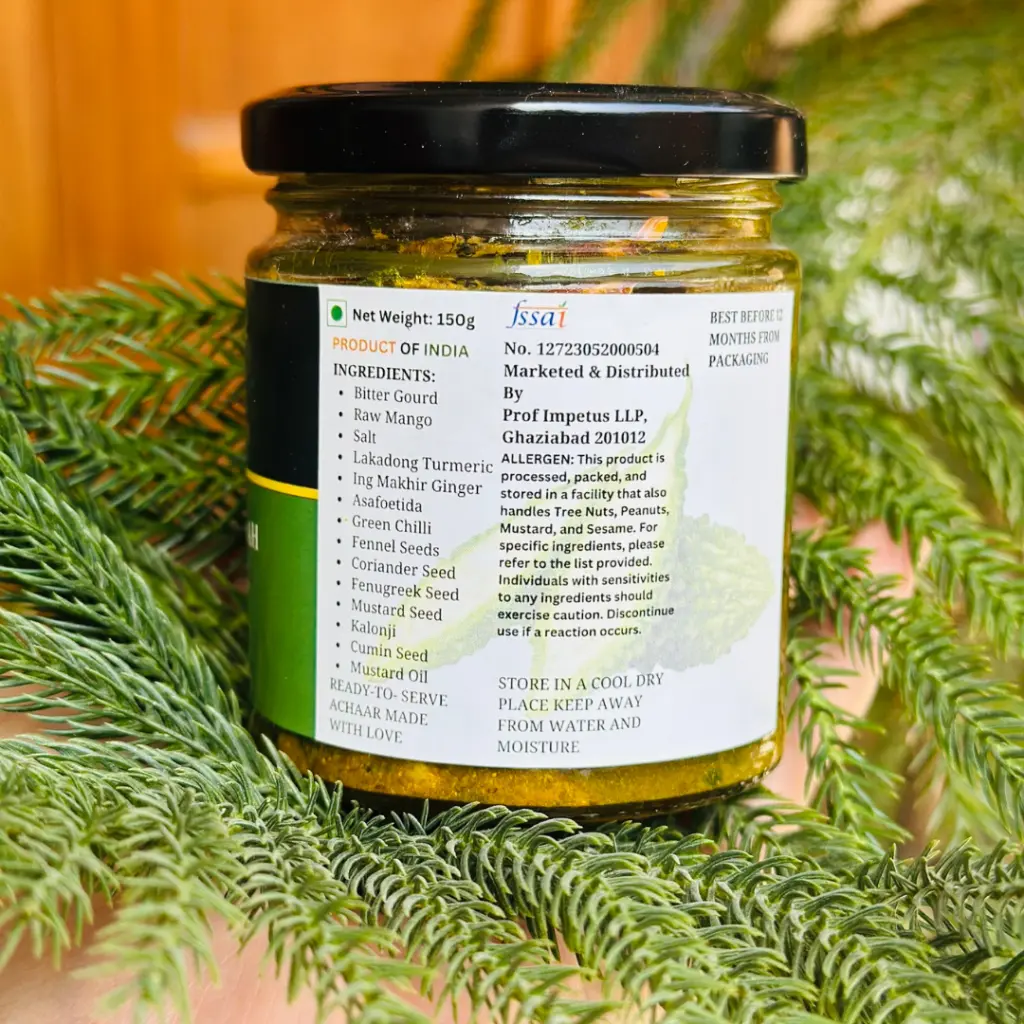
Net weight150 g · 300 g
ContainerGlass jar, metal lid (never plastic)
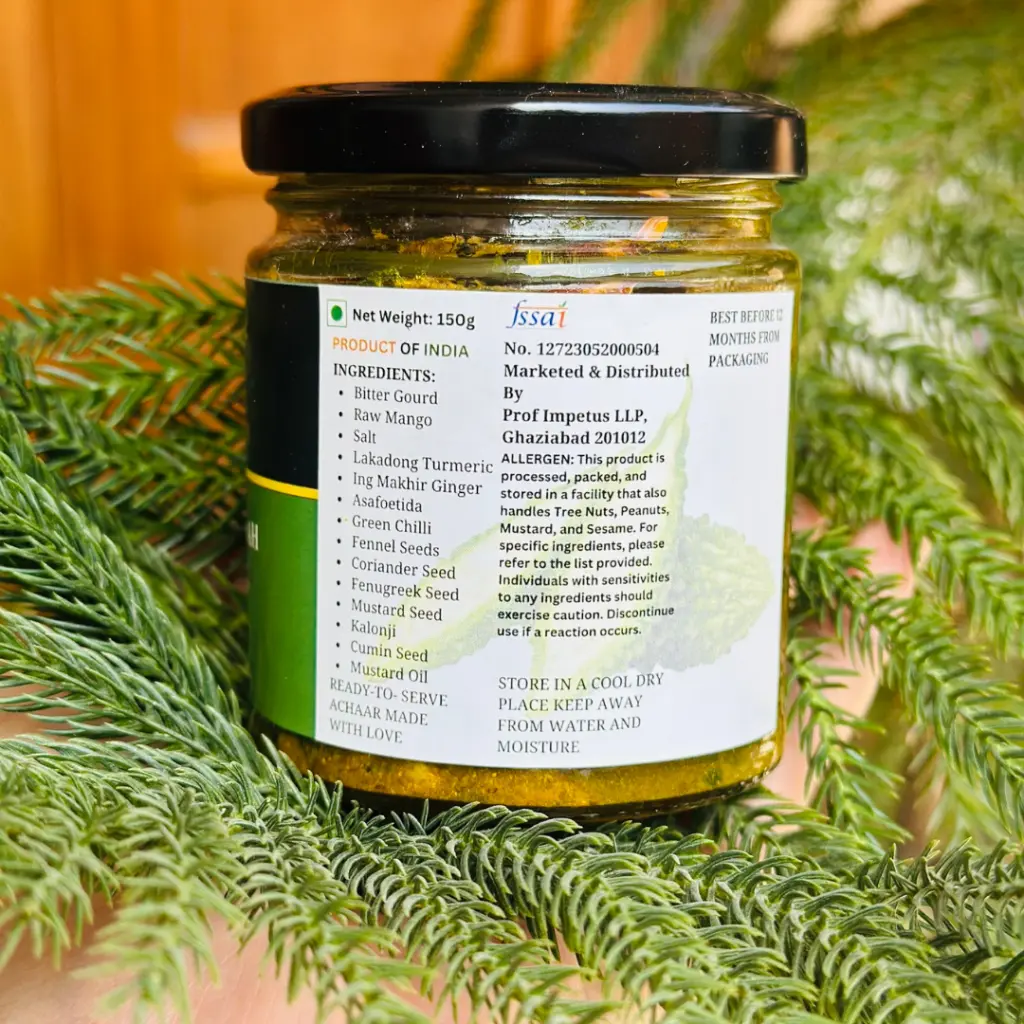
IngredientsYoung karela, raw mango, wood-pressed mustard oil, rock salt, green chilli, Lakadong turmeric, Ing Makhir ginger, fennel, coriander, fenugreek, mustard seed, kalonji, cumin, asafoetida
OilWood-pressed (kachi ghani) mustard oil — kept low
Signature varietySmall soft young green karela, cut in rounds
Bitterness~2/10 (mild)
SouringRaw mango (kairi)
ProcessCut in rounds · salted & sun-dried 24–36 hrs · masala · measured oil · barni-cured 10–15 days · hand-filled to order
Shelf life12 months from packing · best within 6 months of opening
StorageCool, dry, no sun; dry spoon; karela under the oil line
DietVegetarian · contains salt + hing (not for vrat/Jain)
AllergensMustard (seed + oil), fenugreek
Hand-seasoned byUma Agarwal, in our kitchen
Recipe originFamily recipe (founder's grandmother → Uma); 1857 Agarwal kitchen lineage, Prayagraj
CountryIndia
ProductionMade once a year, by hand (raw-mango season)
Turmeric / gingerLakadong (7–12% curcumin) + Ing Makhir, through Padma Shri Trinity Saioo's organization
FSSAI12723052000504
ShippingIndia only · dispatch 2–3 days

— FREQUENTLY ASKED QUESTIONS

FAQ


Here are some common questions about our Karela Rasah — Karela Ka Achar (Bitter Gourd Pickle).

No. We use the small soft young karela and sun-dry it before curing, so bitterness stays around 2/10. The raw mango adds tartness and the wood-pressed mustard oil softens the surface — people who usually avoid karela have finished the jar.

No — it's cured in wood-pressed (kachi ghani) mustard oil, but we keep it low: only enough to season and seal, not a flooded jar. For oil-free options see Nimbu Adrak Mirch or Falahari Aamra.

Our family recipe has always paired bitter gourd with raw mango (kairi). The mango carries the tartness, the karela the savoury bite, the masala holds them together. One recipe, not two.

Young karela is cut into rounds (gol), salted and sun-dried, then cured with raw mango, a hand-ground masala and measured wood-pressed mustard oil in a chini mitti barni for 10–15 days. No refined oil, no artificial preservatives.

We describe traditional Indian uses of karela in cooking, not medical effects. For any health question about bitter gourd, please consult a qualified medical professional. We make no medical claims about any product on this site.

No artificial colour, so the shade shifts with time — a fresh jar is brighter, an older one deeper. A darker jar is more settled, not lesser. The colour is the calendar, not a defect.

No — the tartness comes from raw mango (kairi), not lemon. Some households make a nimbu-karela version; ours is the family recipe with raw mango, which pairs with the bitterness more gently

Karela achaar carries raw mango (kairi), so it's made once a year, in mango season — about 2,000 jars for the year. When that batch is gone, the next is next summer, not a warehouse re-stock in a few weeks.

The karela achaar that wins over people who hate karela

Small young bitter gourd cut in rounds, raw mango for tartness, and just enough wood-pressed mustard oil — mild at about 2/10, the recipe the founder's dadi made for her grandfather. Hand-made in small batches. 

150 g · ₹369 · 300 g · ₹649 · ships in 2–3 days CTA: Order Karela Rasah