Skip to Content

Kuti Haritah Marichika — Green Chili Achaar

(5 reviews)

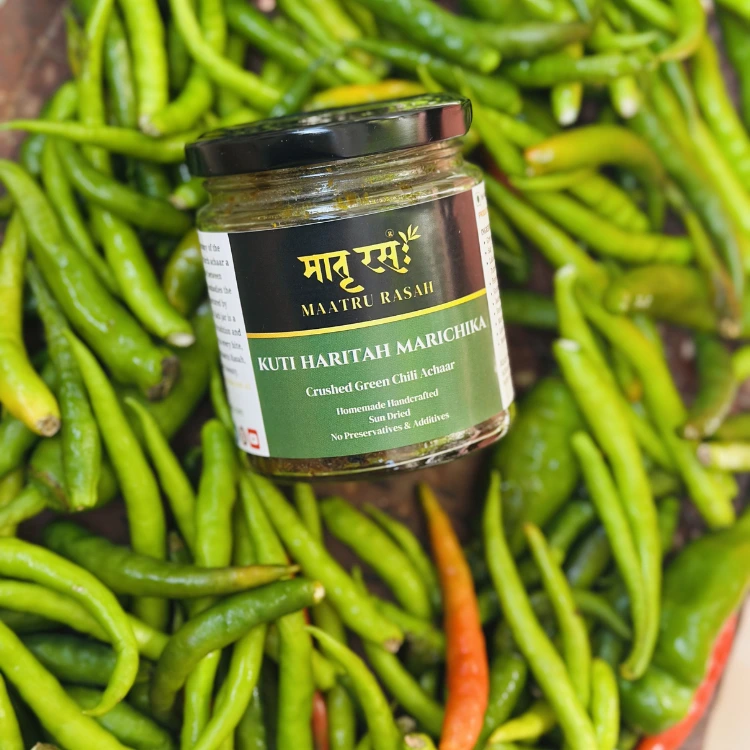
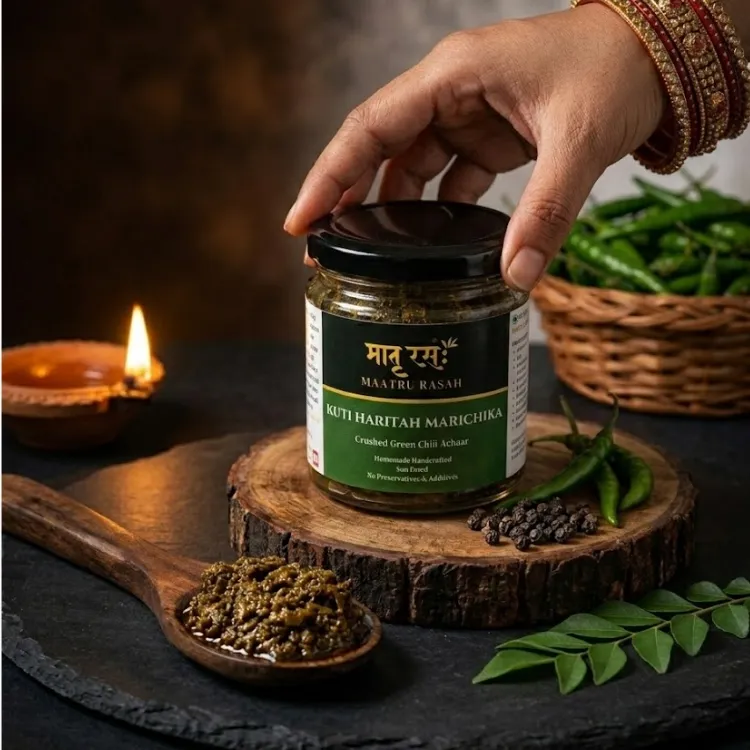
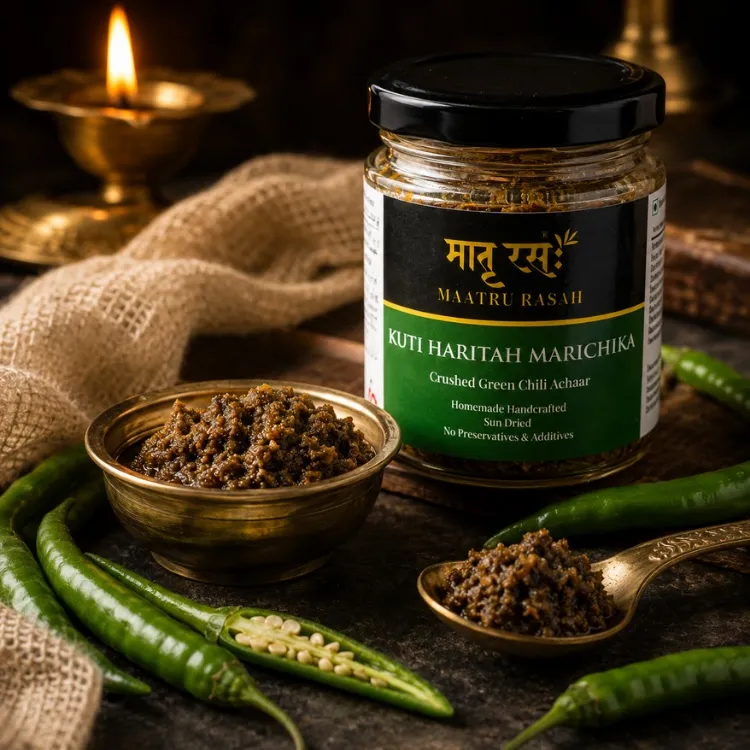
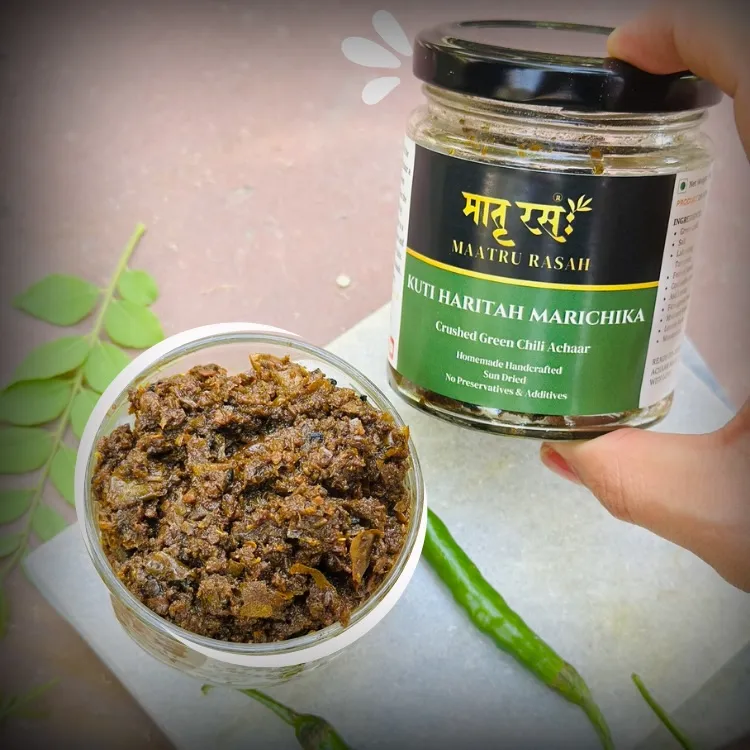
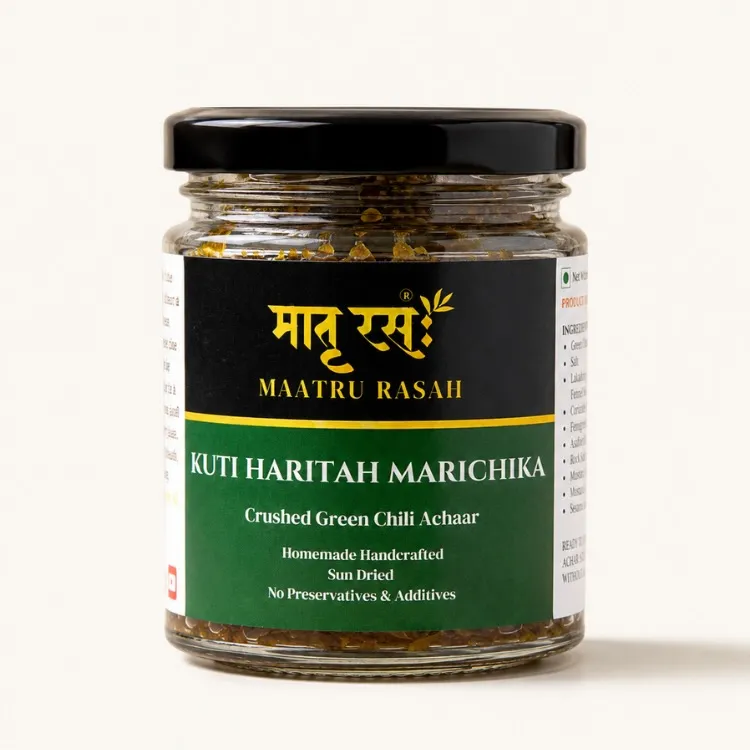
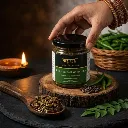
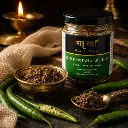
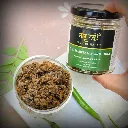
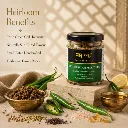
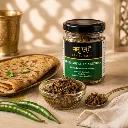
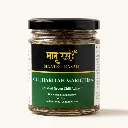
Lift the lid and the mustard oil hits first — sharp, almost nose-tickling — with green chilli and fennel underneath. The achaar is a coarse, deep-khaki paste, flecked with crushed skin and seed, lightly glossed with oil that has gone golden-green from the chilli. On the tongue it is salt and citrus first, then the heat climbs fast and sits — clean, grassy, sinus-clearing, the way a fresh green chilli bites, not the dull burn of dried red. One small spoon beside dal-chawal and the whole plate sharpens.

🌶️ Heat 7/10 · 🪨 Hand-crushed · 🛢️ Wood-pressed mustard oil · 🍋 Lemon-soured · 🫙 Glass ja

Don't leave the kitchen empty-handed.

A 30 g sample from this month's batch is included with orders above ₹699 — from the same batch as your order, tucked in before we pack.

  • Weight
Price
₹ 369.00 ₹ 369.00
₹ 369.00
(Tax included)
Weight: 100g in Glass Jar
✅ FSSAI Licensed 🤝 Farmers & Women Empowerment 🏺 No Preservatives 🫙 Glass Jar 🔒 Secure Checkout

— CORE FEATURES


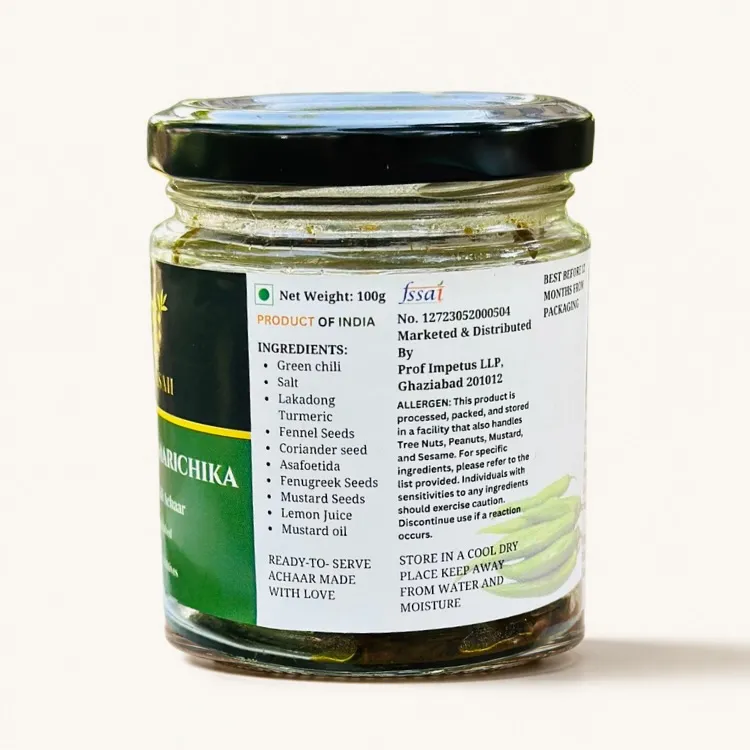
Low-oil crushed green chili achaar, lemon-soured — Maatru Rasah

Low-oil 

Lemon does part of the work


Green chili achaar in wood-pressed kachi ghani mustard oil — Maatru Rasah

Wood-Pressed Mustard Oil

Kachi ghani, no refined oil


Lemon-soured green chili achaar, no vinegar — Maatru Rasah

Lemon-Soured

Fresh lemon, never vinegar


No artificial preservatives green chili achaar — Maatru Rasah

No Artificial Preservatives

Salt, oil, sun, time

"Amazing flavour happy with my order thank you maatru rasah for providing true homemade preservative free achar in a market where its hard to find such a homemade taste🥰" Suprriya Singh from Delhi 

We make 300 to 500 jars a month, by hand. When this batch sells out, the next comes from the next curing cycle.

Glass jar, hand-filled to order. If it reaches you damaged, we replace it.

WHAT IT IS

What is Kuti Haritah Marichika?

कुटि CRUSHED | हरितः GREEN | मरीचिका CHILLI

Kuti means crushed; haritah means green; marichika means chilli. Kuti Haritah Marichika is a crushed green chilli achaar — the Indian word for what English calls pickle — made to the 1857 Katra, Prayagraj family recipe in our own kitchen. Fresh green chillies are pounded by hand in a stone mortar, then cured in wood-pressed (kachi ghani) mustard oil with fresh lemon juice and a seven-spice masala, including Lakadong turmeric. We make it by hand in small batches through the year; when one batch sells out, the next comes from the next curing cycle. No artificial preservatives. Ships across India.


Why This Achaar So Special→

OUR STORY BEHIND THIS JAR

At home, the everyday cooking was plain — simple dal, lightly spiced sabzi. So this jar always lived on the table. 

When a dal came out flat, my mother would stir a spoon of the crushed green chilli straight into it — as much as each person could take — and the whole pot came alive. I still cook that way. Here it isn't only a side; it's the thing that rescues a dull plate. The chillies are still pounded in the same stone mortar her mother used: you hear it before you smell it.


DR. (CS) PUJA SHREE AGARWAL · FOUNDER

— WHY IT’S DIFFERENT

Why Kuti Haritah Marichika Achaar is different 


GI Tagged Lakadong Turmeric used in crushed green chili Achaar by Maatru Rasah

Single-Origin Turmeric

Not generic haldi. GI-tagged Lakadong (7–12% curcumin, this batch 10.68%), brought through Padma Shri Trinity Saioo's organization in the Jaintia Hills.

Crushed Green Chili Achaar by Maatru Rasah

Hand-Crushed, not sliced

 Most green chili achaar is sliced with a knife; ours is pounded. A broken chili takes salt and oil from day one, so the heat and masala run right through the paste instead of sitting on the surface.

Homamade crushed green chili achaar by maatru rasah

300–500 jars a month, by hand.

Factory chili pickle is equalised batch to batch. Ours is judged by smell, jar to jar. The day that requires machinery is the day we stop growing.

Wood-pressed mustard oil + Lemon Juice  in Kuti Hartiah Marichika  by Maatru Rasah

Wood-pressed mustard oil + Lemon Juice 

Commercial pickle leans on refined oil and vinegar or synthetic acid. We cure in kachi ghani mustard oil and sour with fresh lemon juice, so nothing synthetic is doing the keeping.

— WHAT’S INSIDE

What's in the jar


Every ingredient earns its place. As it goes into each jar:

THE BASE

  • Green chilli — hand-pounded in a stone mortar, never sliced
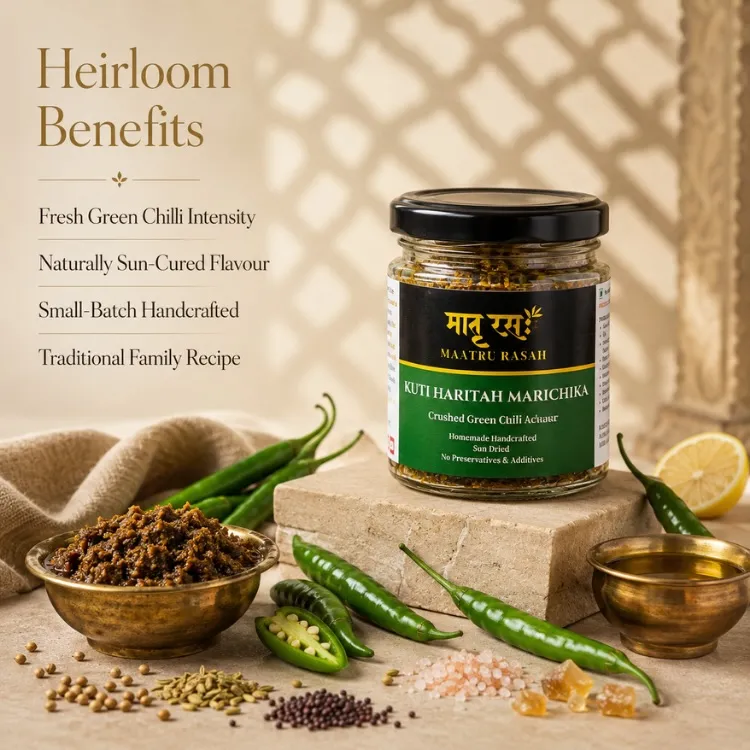
  • Wood-pressed (kachi ghani) mustard oil — cold-pressed in a traditional wooden kohlu
  • Fresh lemon juice — the souring agent, in place of vinegar
  • Salt (Namak)

THE SPICES

  • In-house ground Fennel (saunf) powder
  • In-house ground Coriander (dhania) powder
  • In-house ground Lakadong turmeric (7–12% curcumin) — through Padma Shri Trinity Saioo (Haldi) Powder
  •  In-house groundFenugreek (methi dana) powder
  • In-house ground Mustard seed (rai) powder
  • Nigella seeds (Mangrail or kalaunji)
  • In-house ground Asafoetida (hing) powder

Why crushed?

A pounded chilli breaks its skin, so salt and oil get in from day one. The masala works right through the paste instead of sitting on the surface, and a small spoon carries more heat than a sliced chilli pickle.

Why wood-pressed mustard oil?

Cold-pressed in a wooden kohlu, with no heat and no chemical refining, so the sharp mustard bite stays intact. That pungency carries the North Indian achaar flavour and helps the jar keep without artificial preservatives. Read why wood-pressed mustard oil matters

Why lemon, not vinegar?

We sour it with fresh lemon juice, the way the family recipe always has. No vinegar, no synthetic acid — just citrus doing an honest job.

WHAT’S NOT IN THIS JAR                                     Artificial preservatives    Artifical colour      Vinegar

Why less oil?

The lemon does part of the curing, so this achaar needs less mustard oil than a usual oil achaar. We keep the oil low on purpose — enough to carry the spice and seal the jar, not to drown it.

— HOW WE MAKE IT

How we make Kuti Haritah Marichika


All of this happens once a year, in mango season — this single run is the year's entire supply.

1

Wash and dry

Fresh green chillies are washed, then dried well so no surface moisture is left before crushing.

2

Crush by hand

The chillies are pounded in a stone mortar — texture from the pounding, not a blade.


3

Salt, lemon, and a 2-day rest

We mix in rock salt and fresh lemon juice and let it rest in a wide vessel for at least two days, so the chilli softens in its own juice.


4

Fold in the masala

The ground spices — fennel, coriander, hing, fenugreek, mustard seed and Lakadong turmeric — are folded in with mustard oil, judged by smell.


5

A day in the sun

The mix is set out in the sun for about a day. The exact time depends on how strong the sun is.

6

Oil, then barni

Last, wood-pressed mustard oil is mixed in — the lemon does part of the work, so it needs less oil — and the achaar is filled into a chini mitti (porcelain) barni, then hand-filled into a glass jar when your order comes in

Uma Agarwal preparing Tailam Aamra mango pickle with raw mango and masala in the Maatru Rasah kitchen.

PROVENANCE

Where this recipe comes from

The Agarwal family kitchen in Katra, an old quarter of Prayagraj, has put up achaars for the year ahead since 1857. The crushed green chili version was a household staple long before it was a product. We founded Maatru Rasah in 2013 to take it past the family table. Every jar is still hand-made in our kitchen, in the proportions Uma learned from her elders. The one modern addition is the turmeric — Lakadong, brought through Padma Shri Trinity Saioo's organization in Meghalaya.

Read the full kitchen story

Crushed (Kuti Haritah) vs sliced green chili achaar


AspectKuti Haritah Marichika (crushed)Sliced green chilli achaar
PreparationHand-pounded in a mortarSliced with a knife
Heat releaseImmediate — broken skin takes oil + salt from day oneGradual, over weeks
TextureCoarse paste, masala integratedPieces, masala on surface
Best withDal, khichdi, curd rice (one spoon does it)Paratha, roti (chunks in the bite)

Oil-based (Kuti Haritah) vs oil-free (Nimbu Adrak Mirch)


AspectKuti Haritah MarichikaNimbu Adrak Mirch
OilWood-pressed mustard oil (kept low)None
CureSalt + lemon + mustard oil + sunSalt + lemon + sun (no oil)
HeatMustard-oil-rounded (~7/10)Direct, sharp (~6/10)
Best withParatha, oily breadsKhichdi, dahi-rice, light meals
Pick ifYou want the classic oil achaarYou want it light / no oil

Achaar vs commercial pickle


AspectMaatru Rasah achaarCommercial pickle
SouringFresh lemonVinegar / synthetic acid
PreservativesNone artificialOften added
TurmericSingle-origin LakadongGeneric
Batch300–500 jars/month, by handMass line

Which achaar is right for me?


You're viewing Kuti Haritah Marichika — crushed green chilli, oil-based with wood-pressed mustard oil. Prefer oil-free, milder, or just the single-origin turmeric? Here are the others.

Your Dynamic Snippet will be displayed here... This message is displayed because you did not provide enough options to retrieve its content.

— STORAGE

Storage & refrigeration


UNOPENED 

12 months from packing, cool & dry, out of sun.

AFTER OPENING

Best within 6 months

FRIDGE

Not required. 

EVAERY USE

Dry spoon only; keep chili under the oil line; wipe lid

NORMAL

Oil may thicken/settle in cold — normal

DISCARD IF

Off smell, or moisture/mold from a wet spoon

→ How to store achaar after opening: a practical guide

— GOOD TO KNOW

A note on colour


Our achaar carries no artificial colour, so its shade changes with time. A fresh jar looks brighter; as the spices and oil settle over the months, the colour deepens. The photos here are of a freshly made batch — if your jar arrives a little darker, it's an older, more settled achaar, not a lesser one. With achaar, age is a good thing: the spices marry and the flavour rounds out. The colour is the calendar, not a defect.

— HOW TO USE

How to use Kuti Haritah Marichika?


One small spoon per meal — the crush makes the heat land fast.

  • Rescue a bland dal or sabzi: if a dish comes out flat, stir a little straight in — as much as your taste takes — and the whole pot lifts.
  • Dal-chawal: a teaspoon sharpens the plate.
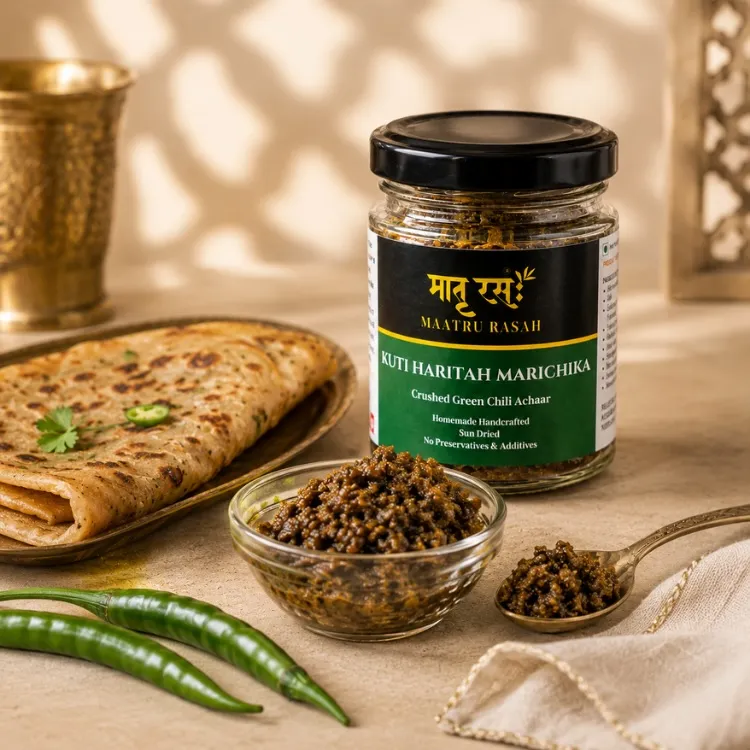
  • Paratha: smear inside before folding.
  • Curd rice (summer): a quarter-spoon cuts the mildness.
  • Khichdi: heat counterpoint to soft grain.
  • Scrambled eggs: a pinch at the end; the lemon lifts it.
  • By-product tip: the leftover spiced mustard oil at the bottom — drizzle it on dal or use it to temper sabzi. Don't waste it.

Specifications


ProductKuti Haritah Marichika (crushed green chilli achaar)
Net weight100 g
ContainerGlass jar, metal lid (never plastic)
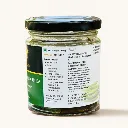
IngredientsGreen chilli, fresh lemon juice, wood-pressed mustard oil (low), rock salt, fennel, coriander, hing, fenugreek, mustard seed, Lakadong turmeric
ProcessHand-crushed · 2-day salt-and-lemon rest · ~1 day in sun · low mustard oil · cured in chini mitti barni
Heat~7/10
Shelf life12 months from packing · 6 months after opening
StorageCool, dry, no sun; dry spoon; keep under the oil line
DietVegetarian · not for vrat (salt + hing)
AllergensMustard (seed + oil), fenugreek
Recipe origin1857, Katra, Prayagraj
Production300–500 jars/month, by hand
FSSAI12723052000504
ShippingIndia only · dispatch 2–3 days

— FREQUENTLY ASKED QUESTIONS

FAQ


Here are some common questions about our Kuti Haritah Marichika Achaar (Green Chili Achaar) 

Yes — around 7/10. Crushing releases more heat than sliced or whole chili achaar. The mustard oil rounds the surface fire a little. Want milder? Karela Rasah sits around 2/10.

Yes — that spiced mustard oil is flavour, not waste. Drizzle it on dal or use it to temper sabzi.

It is pungent by design — that bite is the regional character and part of how the achaar keeps. It mellows into the chili over the first couple of weeks in the jar.

Best within 6 months of opening, kept cool and dry with a dry spoon. Unopened, 12 months from packing.

Oil-based. It's crushed green chilli cured in wood-pressed mustard oil (kept low) — not a dry/sukha chilli pickle and not a Rajasthani-style stuffed red chilli pickle. The crush is what sets it apart from a sliced chilli achaar.

We make 300–500 jars a month by hand. Green chilli isn't seasonal like mango, so we can cure a fresh batch any time of year — the next comes from the next curing cycle, not a warehouse.

Achaar is acidic and can leach BPA/phthalates from plastic over months. Glass doesn't react — we hand-fill to order.

We add no artificial colour, so the shade shifts with time. A fresh jar looks brighter; as the spices and oil settle over the months, it deepens. The photos show a fresh batch — a darker jar is simply older and more settled, not lesser. With achaar, the colour is the calendar, not a defect.

Hari mirch ka achaar Maatru Rasah

The jar that rescues a dull plate

Crushed green chilli, lemon-soured, lightly sealed in wood-pressed mustard oil. Stir one small spoon into a flat dal or sabzi and the whole pot wakes up. Made by hand in small batches — we keep the oil low on purpose.

100 g glass jar · ₹369 · ships in 2–3 days · No delivery charge above ₹999