



Skip to Content

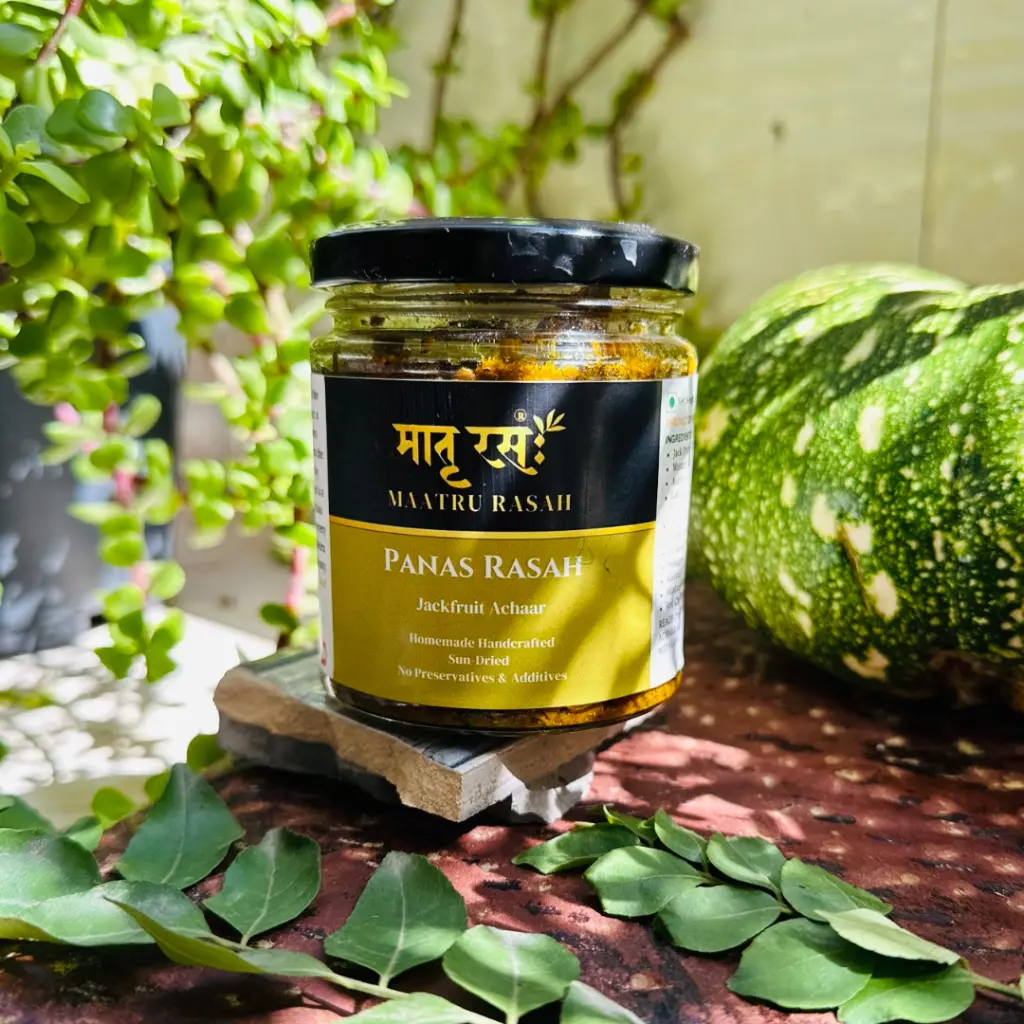
Panas Rasah — Kathal Ka Achar (Jackfruit Achaar)

(6 reviews)

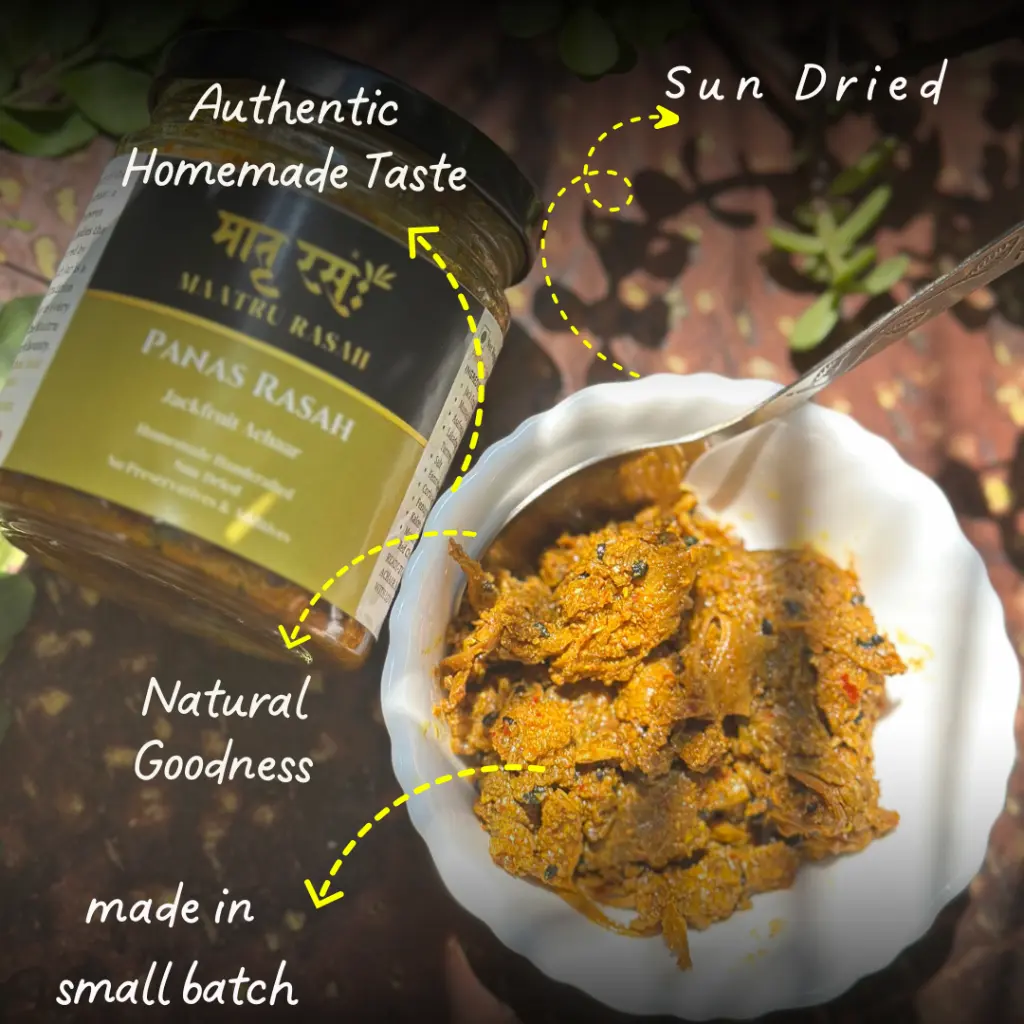
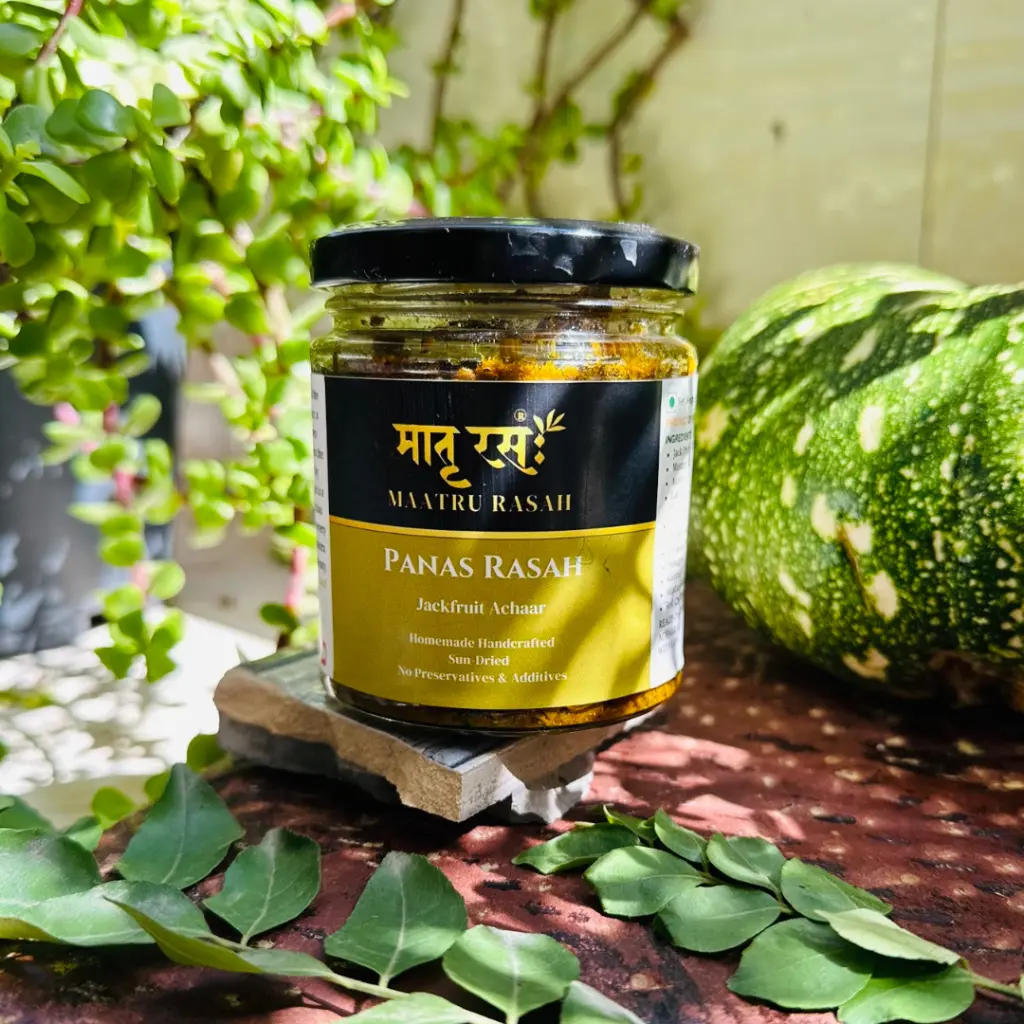
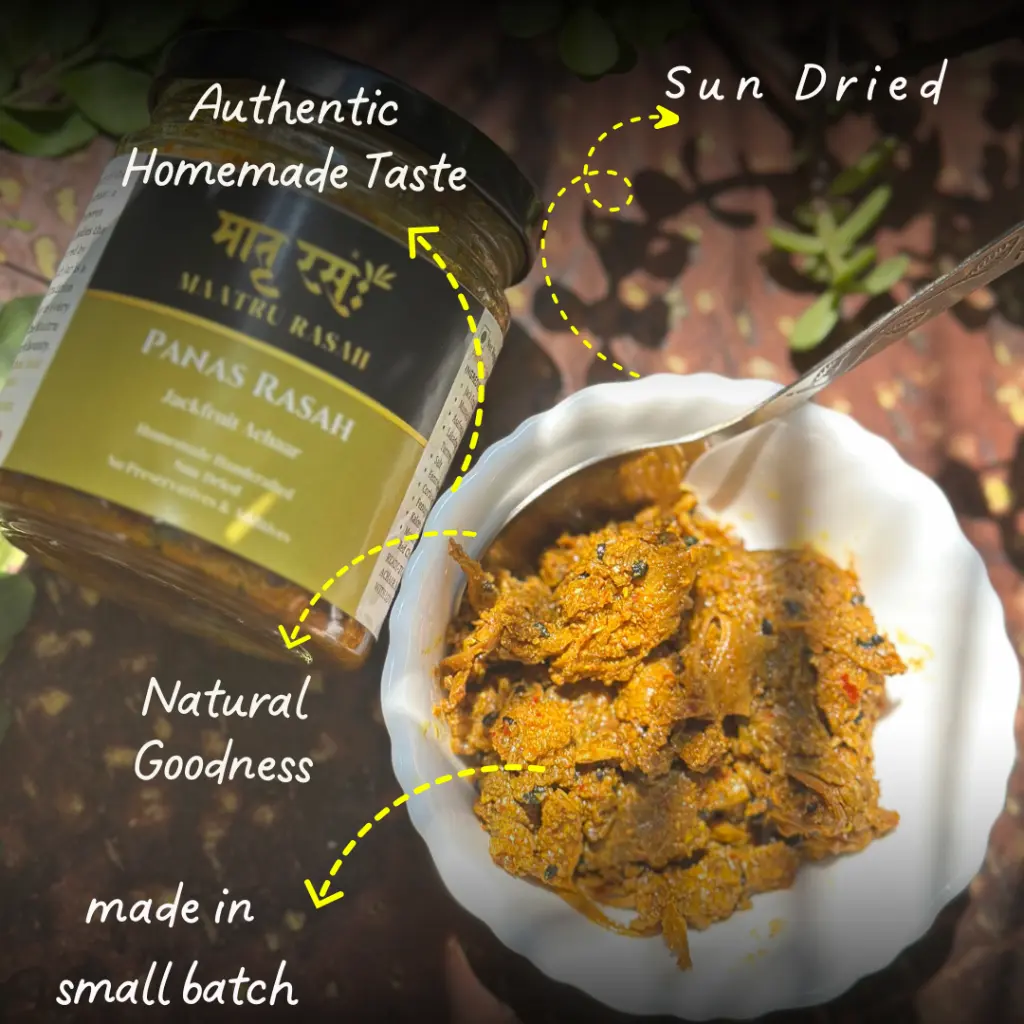
Sun-dried unripe jackfruit (kathal) in just enough wood-pressed mustard oil — salty, tangy and meaty, a Bihari-Banarasi achaar our co-founder eats every single day.

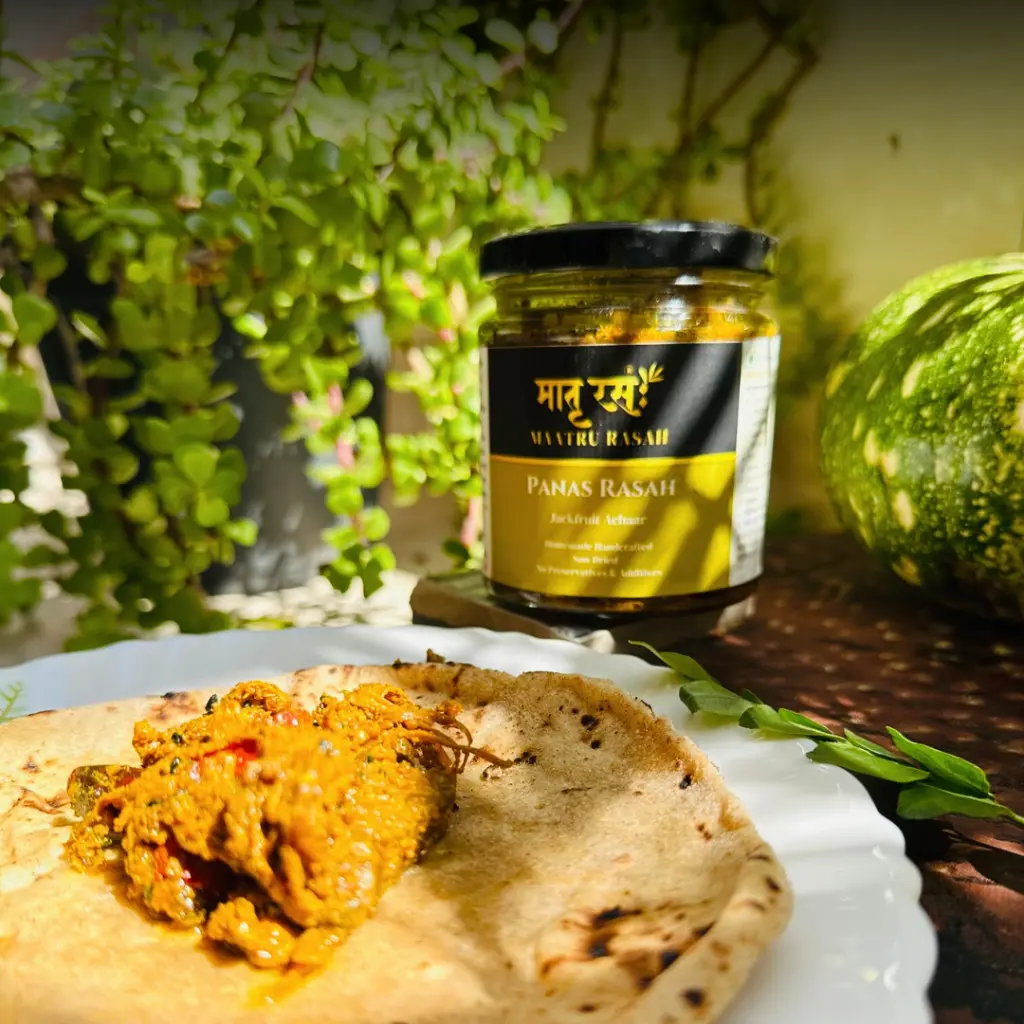
Open the jar and the wood-pressed mustard oil meets you first — sharp and warm — with fennel and fenugreek underneath. The kathal sits in firm, golden-amber chunks, turmeric-stained and lightly slicked with oil, never swimming in it. Bite in and it's salty-tangy up front, then the jackfruit's dense, meaty chew takes over — closer to a piece of food than a sliver of pickle — with the mustard heat and masala trailing behind. One or two pieces beside dal-chawal and the plate feels complete.

🟢 Unripe jackfruit (kathal) · 🛢️ Wood-pressed mustard oil (kept low) · 🌶️ Salty-tangy · ☀️ Sun-dried, barni-cured · 🫙 Glass jar

Don't leave the kitchen empty-handed.

A 30 g sample from this month's batch is included with orders above ₹699 — from the same batch as your order, tucked in before we pack.


  • Weight
Price
₹ 399.00 ₹ 399.00
₹ 399.00
(Tax included)
✅ FSSAI Licensed 🤝 Farmers & Women Empowerment 🏺 No Preservatives 🫙 Glass Jar 🔒 Secure Checkout

— CORE FEATURES


Unripe Jackfruit (Kathal) — Sun-dried, meaty bite


Wood-Pressed Mustard Oil — Kept low, never floating


1857 Heritage Recipe — Bihari/Banarasi tradition


No Artificial Preservatives — Salt, oil, sun, time

"WOW what a homemade taste pickles maatru rasah is offering. I think as they say pure homemade zero artifical flavour thts super true great pickles amazing gys do give it a try to maatru rasah super yummylicious desi achar ❤️😍" Lata Rikhri from Ghaziabad

Raw jackfruit is in season only about March to July, so this achaar is made once a year — roughly 2,000 jars for the whole year. When that batch sells out, the next one comes with the next jackfruit season, not in a few weeks.

Glass jar, hand-filled to order. If it reaches you damaged, we replace it.

WHAT IT IS

What is Panas Rasah?

कटहल · kathal (Hindi) | पनस · jackfruit (Sanskrit) |  रसःTASTE

Panas Rasah is our jackfruit achaar — kathal ka achar, the Indian word for what English calls jackfruit pickle. Unripe (raw) jackfruit is sun-dried and cured in wood-pressed (kachi ghani) mustard oil, kept low, with a hand-ground masala. It's a Bihari-Banarasi style achaar made to the 1857 family recipe in our own kitchen — salty, tangy and satisfyingly meaty. No artificial preservatives. Ships across India.

Also searched as: kathal ka achar · khathal achaar · jackfruit pickle · banarasi kathal achaar


Why This Achaar So Special→

OUR STORY BEHIND THIS JAR

Kathal achaar is the one our co-founder, Nitesh, can't eat a meal without — there has to be kathal pickle on his plate. 

He loved it long before he backed Maatru Rasah; the fact that we make it the old way, in wood-pressed mustard oil with no artificial preservatives, is part of why he joined. It's a Bihar-Banaras favourite — raw jackfruit has a meaty bite no vegetable matches — and Uma makes it exactly as the family always has. 


DR. (CS) PUJA SHREE AGARWAL · FOUNDER

— WHY IT’S DIFFERENT

Why Panas Rasah is different 


Katra 1857 family recipe icon for Tailam Aamra mango achaar. Maatru Rasah.

Real unripe jackfruit, sun-dried

Raw kathal has a dense, meaty bite — closer to a chunk than a sliver. We sun-dry it before curing so it holds its texture instead of going soft and stringy.

Wood-pressed mustard oil icon for Tailam Aamra mango achaar. Maatru Rasah.

Kept low on oil

Cured in wood-pressed mustard oil, but only as much as the achaar needs — not a jar swimming in oil. You won't find a thick floating layer; you taste the kathal and masala.

1857 Bihari-Banarasi recipe

Kathal achaar belongs to the eastern-UP and Bihar table. Ours follows the family recipe, made and tasted jar to jar in our kitchen — not equalised on a line. The day that requires machinery is the day we stop growing.

Single-origin turmeric

The colour and warmth come from Lakadong turmeric (7–12% curcumin), brought through Padma Shri Trinity Saioo's organization in the Jaintia Hills — not generic market haldi. It's the same single-origin spice we sell on its own, not a bulk colour-filler bought by the sack.

— WHAT’S INSIDE

What's in the jar


Every ingredient earns its place. As it goes into each jar

THE BASE

  • Unripe jackfruit (kathal) — sun-dried
  • Wood-pressed (kachi ghani) mustard oil — kept low
  • Salt (Namak)

THE SPICES

  • In-house ground Fennel (saunf) powder
  • In-house ground Coriander (dhania) powder
  • In-house ground Mustard seed (rai) powder
  • In-house ground Red chilli powder
  • In-house ground Lakadong turmeric (7–12% curcumin) — through Padma Shri Trinity Saioo powder
  • In-house ground Fenugreek (methi) powder
  • Kalonji (nigella) 
  • In-house ground Asafoetida (hing) powder

WHAT’S NOT IN THIS JAR                               

Artificial preservatives · Artificial colour · Refined oil · Vinegar

Why wood-pressed mustard oil?

Mustard oil pressed cold in a wooden kohlu keeps the sharp, sinus-clearing note that gives the oil its character. Refined oil, pressed under high heat, comes out milder and flatter. A traditional mango achaar leans on that sharpness to carry the masala into the mango. When you first open the jar, the oil should smell of mustard and sun. Read why wood-pressed mustard oil matters

Why unripe jackfruit?

Raw kathal is firm and meaty; ripe jackfruit is sweet and would fall apart. The achaar needs the dense, savoury bite only the unripe fruit gives.

Why sun-dry the jackfruit? 

Drying the pieces concentrates flavour and firms the texture before the oil goes in, so they hold their bite through the cure.

Why low oil?

We use only as much wood-pressed mustard oil as the achaar needs to season and seal it — not to drown it. You taste the jackfruit and spice, not a layer of oil.

— HOW WE MAKE IT

How we make Panas Rasah


All of this happens once a year, in mango season — this single run is the year's entire supply.

1

Peel and cut

Unripe kathal is peeled and cut into pieces, worked the traditional way with mustard oil in hands since raw jackfruit is sticky.

2

Light boil, then clean

The pieces get a light boil in hot water; the water is drained and thrown away, and the skin around the seeds is taken off by hand.

3

A full day in the sun

The cleaned pieces are spread out and sun-dried for a full day, until they firm up and lose their excess moisture.

4

Masala, then oil

All the ground spices and Lakadong turmeric go in, then wood-pressed mustard oil — only as much as the achaar needs, not a flooded jar.

5

Two days in a wide vessel

Spread in a broad vessel, it sits in the sun for two days so the kathal drinks in the masala and oil.

6

Barni, then sun

It's packed into a chini mitti (porcelain) barni for more sun, then hand-filled into glass jars to order.

Uma Agarwal preparing Tailam Aamra mango pickle with raw mango and masala in the Maatru Rasah kitchen.

PROVENANCE

Where this recipe comes from

Kathal ka achar belongs to the eastern-UP, Banaras and Bihar table — raw jackfruit was pickled there long before it was sold in jars. The Agarwal family kitchen in Katra, Prayagraj, has put up achaars for the year ahead since 1857, and kathal was one of them. We founded Maatru Rasah in 2013 to take these recipes past the family table; every jar is still hand-made in our kitchen, in the same proportions. The turmeric is single-origin Lakadong, through Padma Shri Trinity Saioo's organization in Meghalaya.

Read the full kitchen story

Maatru Rasah kathal achaar vs commercial jackfruit pickle


AspectPanas RasahCommercial jackfruit pickle
JackfruitUnripe, sun-dried, meaty biteOften soft / over-processed
OilWood-pressed mustard, kept lowRefined / blended, often heavy
PreservativesNo artificial preservativesOften sodium benzoate / sorbate
ColourFrom Lakadong turmeric onlyOften artificial colour
Recipe1857 Bihari-Banarasi family recipeModern commercial formula
BatchMade once a year (Mar–Jul), by handMass line, year-round

Which achaar is right for me?


You're viewing Panas Rasah — oil-based, meaty unripe jackfruit (kathal). Prefer garlic, green-chilli heat, or oil-free/vrat? Here are the others.

Your Dynamic Snippet will be displayed here... This message is displayed because you did not provide enough options to retrieve its content.

— STORAGE

Storage & refrigeration


SHELF LIFE

12 months from packing · best within 3–4 months of opening

UNOPENED

Cool, dry, out of sun; no fridge needed

EVERY USE

Dry spoon only — moisture is the main cause of spoilage

KEEP

Jackfruit under the oil line; wipe the lid

— GOOD TO KNOW

A note on colour


Our achaar carries no artificial colour, so its shade changes with time. A fresh jar looks brighter; as the spices and oil settle over the months, the colour deepens. The photos here are of a freshly made batch — if your jar arrives a little darker, it's an older, more settled achaar, not a lesser one. With achaar, age is a good thing: the spices marry and the flavour rounds out. The colour is the calendar, not a defect.

— HOW TO USE

How to use Panas Rasah?


meaty, tangy achaar — a little goes a long way.

  • Dal-chawal / khichdi: a couple of pieces lift the plate.
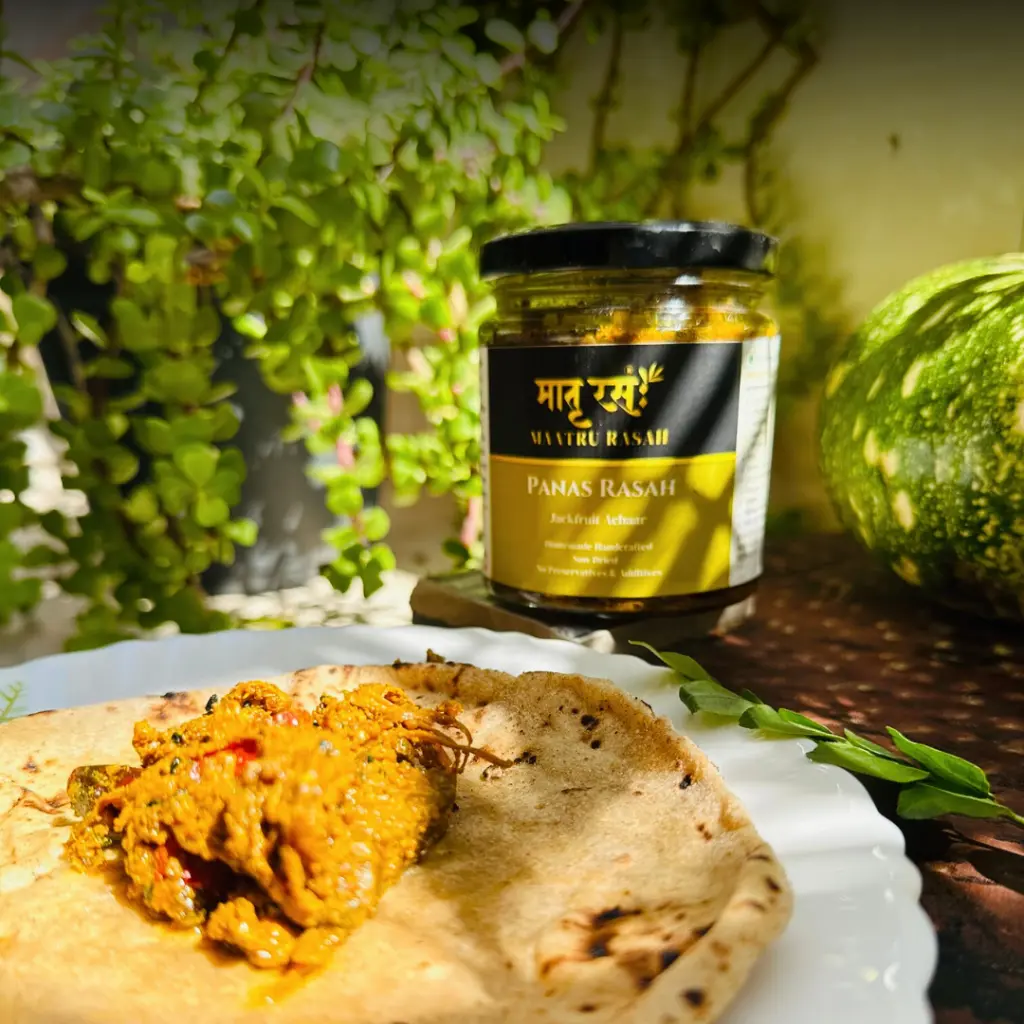
  • Roti / paratha: kathal achaar on the side turns a plain roti into a meal.
  • Curd rice: the tang cuts the cool.
  • Puri-sabzi / travel meals: a classic eastern-UP pairing.
  • By-product tip: because the oil is kept low there isn't much to spare — stir whatever spiced oil there is into dal. Nothing wasted.

Specifications


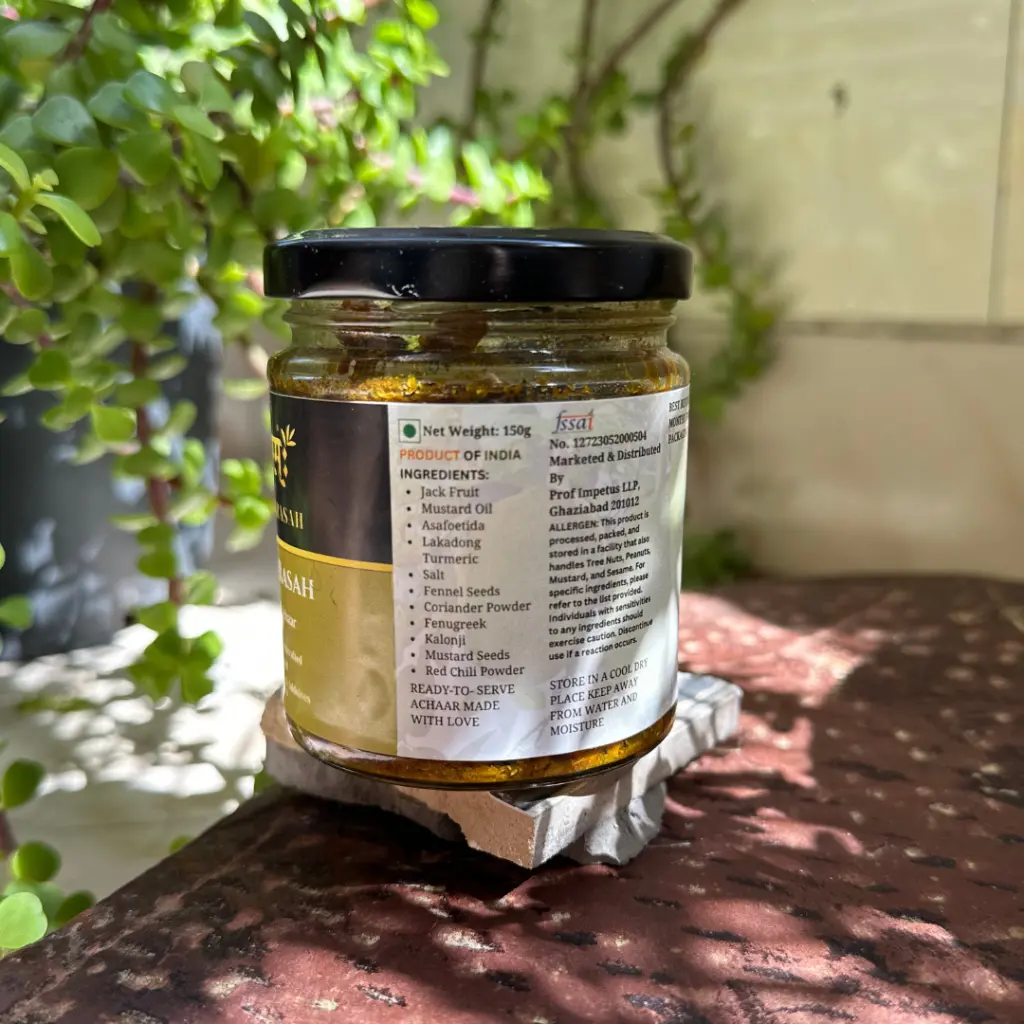
ProductPanas Rasah — jackfruit / kathal achaar
Net weight150 g · 300 g
ContainerGlass jar, metal lid (never plastic)
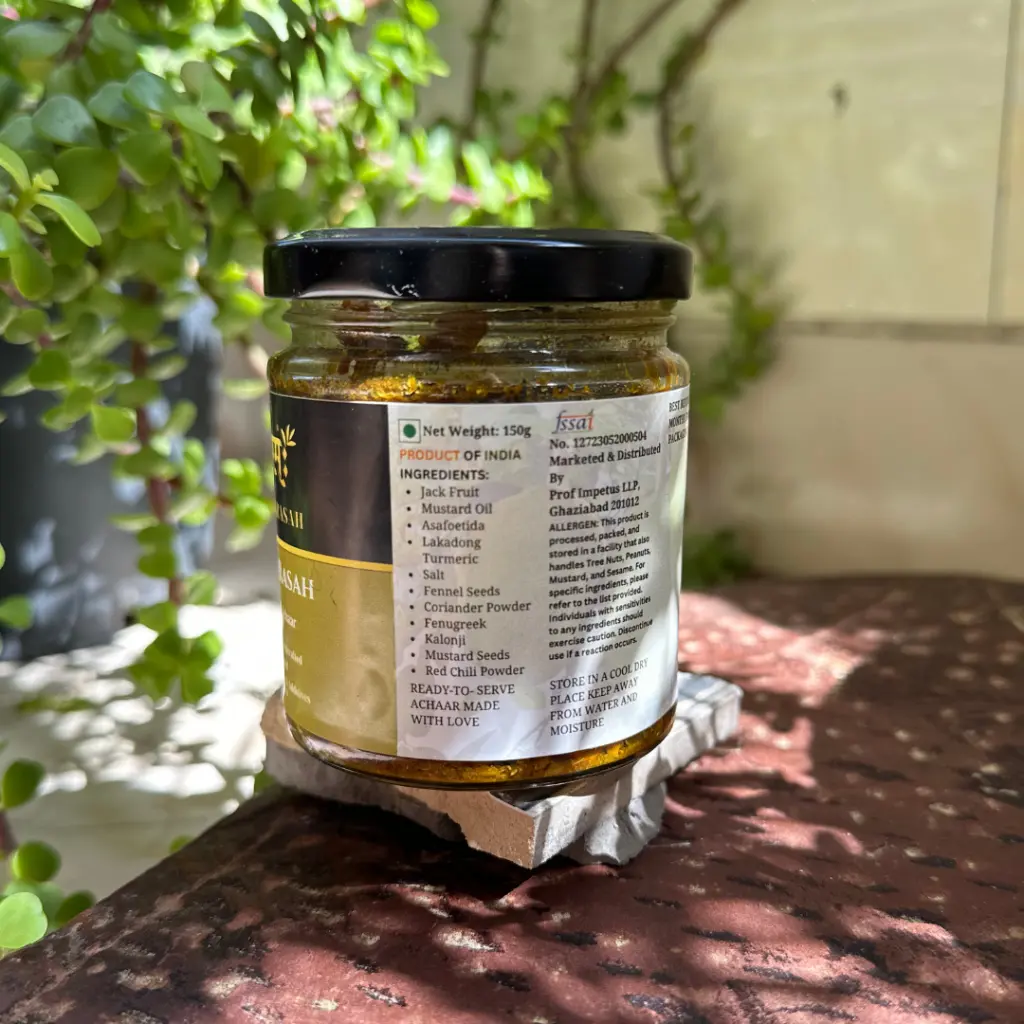
IngredientsUnripe jackfruit (kathal), wood-pressed mustard oil, rock salt, Lakadong turmeric, asafoetida, fennel, coriander, fenugreek, mustard seed, kalonji, red chilli
OilWood-pressed (kachi ghani) mustard oil — kept low
JackfruitUnripe (raw), sun-dried
ProcessCut · salted & sun-dried · masala · measured oil · barni-cured · hand-filled to order
Shelf life12 months from packing · best within 3–4 months of opening
StorageCool, dry, no sun; dry spoon; pieces under the oil line
DietVegetarian · contains hing (Jain: depends on community)
AllergensMustard (seed + oil), fenugreek
Hand-seasoned byUma Agarwal, in our kitchen
Recipe origin1857, Katra, Prayagraj (Bihari-Banarasi kathal tradition)
CountryIndia
ProductionMade once a year, by hand (raw-jackfruit season, Mar–Jul)
TurmericLakadong (7–12% curcumin), through Padma Shri Trinity Saioo's organization
FSSAI12723052000504
ShippingIndia only · dispatch 2–3 days

— FREQUENTLY ASKED QUESTIONS

FAQ


Here are some common questions about our Panas Rasah: Jackfruit Achaar (Indian Jackfruit Pickle).

Kathal ka achar is a pickle made from unripe (raw) jackfruit. The jackfruit is cut, salted, sun-dried and cured in mustard oil with a spice masala. It's a savoury, meaty achaar from the eastern-UP, Banaras and Bihar table.

It's more salty-tangy than fiery — a moderate, savoury heat from the masala and mustard oil rather than sharp chilli burn. The star is the meaty jackfruit, not the heat.

On purpose. We use only as much wood-pressed mustard oil as the achaar needs to season and keep it — not a jar swimming in oil. You taste the kathal and spice, not a layer of oil.

Wood-pressed (kachi ghani) mustard oil — cold-pressed in a wooden kolhu, never refined or blended.

Achaar is acidic and oily; over months acid can pull BPA/phthalates from plastic. Glass doesn't react — we hand-fill into glass only.

We add no artificial colour, so the shade shifts with time. A fresh jar is brighter; an older one deeper and more settled, not lesser. The colour is the calendar, not a defect.

We don't make health claims. Traditionally a little kathal achaar is eaten as a savoury side with a meal — anything beyond that, please ask a qualified professional.

Raw jackfruit is seasonal (about March–July), so kathal achaar is made once a year — about 2,000 jars for the year. When that batch is gone, the next comes with the next jackfruit season, not a warehouse re-stock in a few weeks.

The kathal achaar our co-founder won't skip a meal without

Sun-dried unripe jackfruit in just enough wood-pressed mustard oil — salty, tangy and meaty, an 1857 Bihari-Banarasi recipe with nothing artificial doing the keeping. Hand-made in small batches.

150 g · ₹399 · 300 g · ₹679 · ships in 2–3 days. Order Panas Rasah