



Skip to Content

Nimbu Rasah — Lemon Chutney (Nimbu Ki Chatni)

(5 reviews)

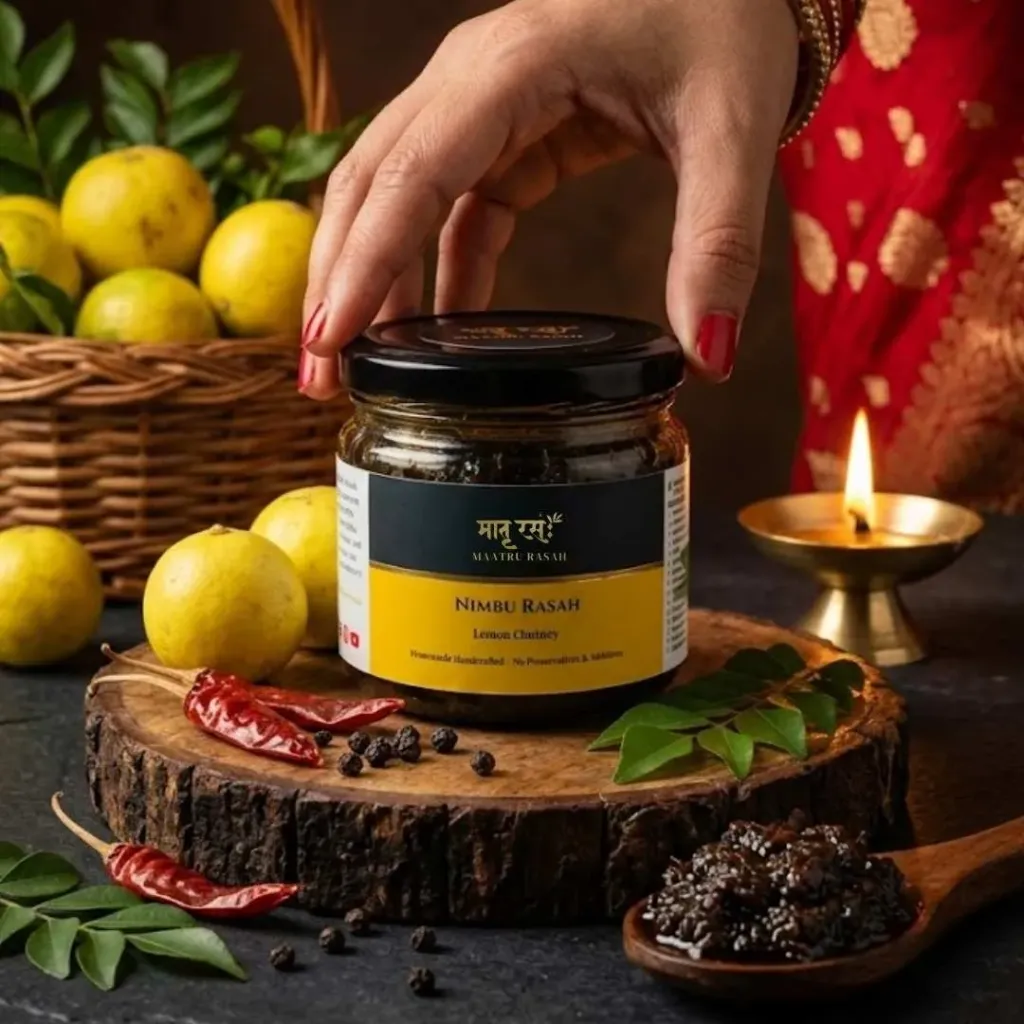
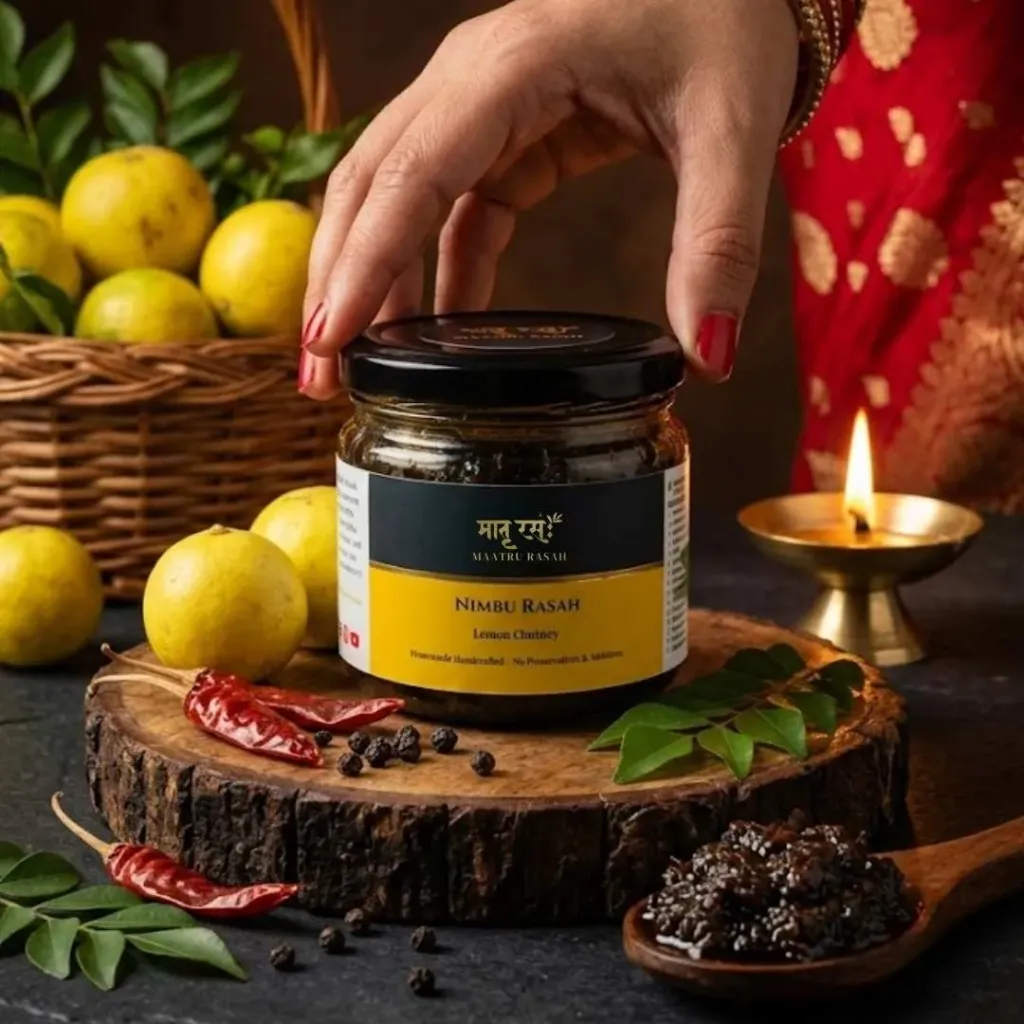
Whole lemons with their peel, slow-cooked with jaggery and fifteen spices into a coarse, sweet-tangy chutney — mild, about 2/10, with soft bits of citrus peel in every spoon.

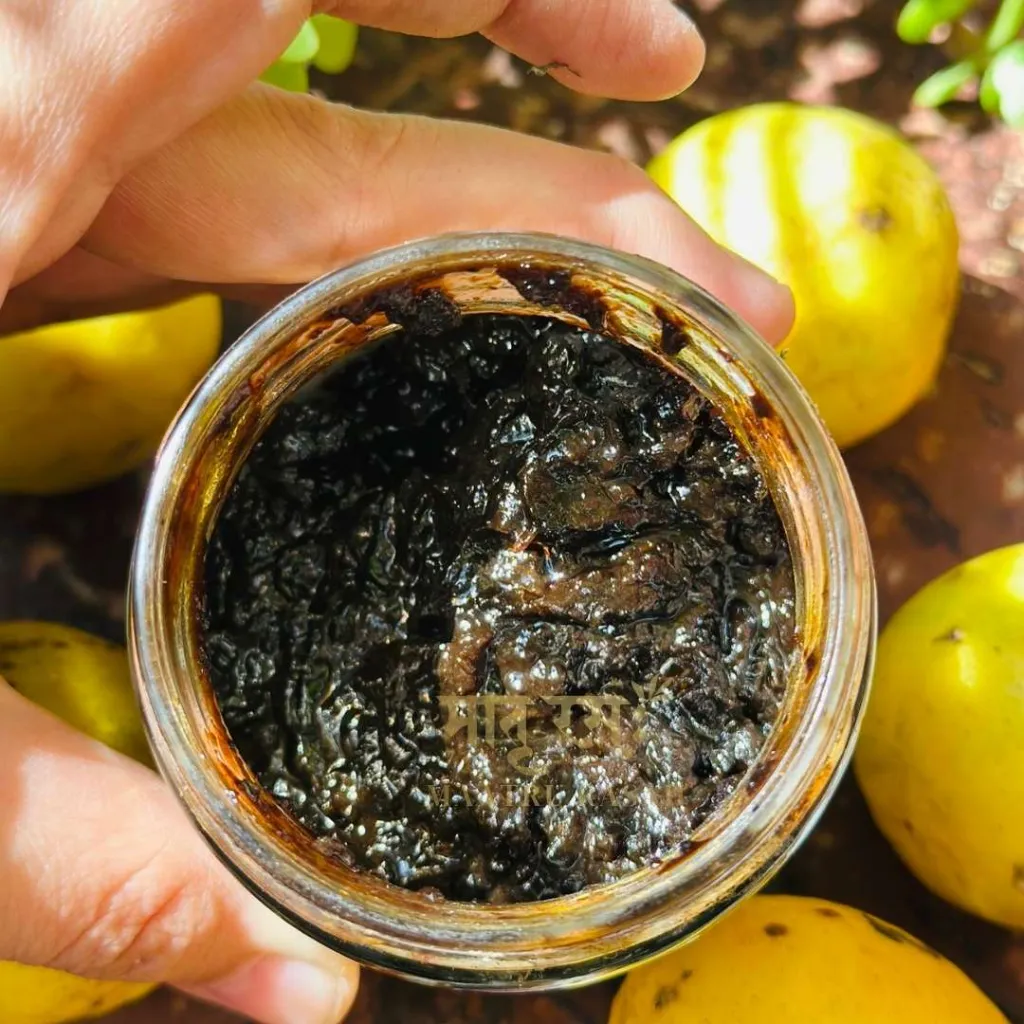
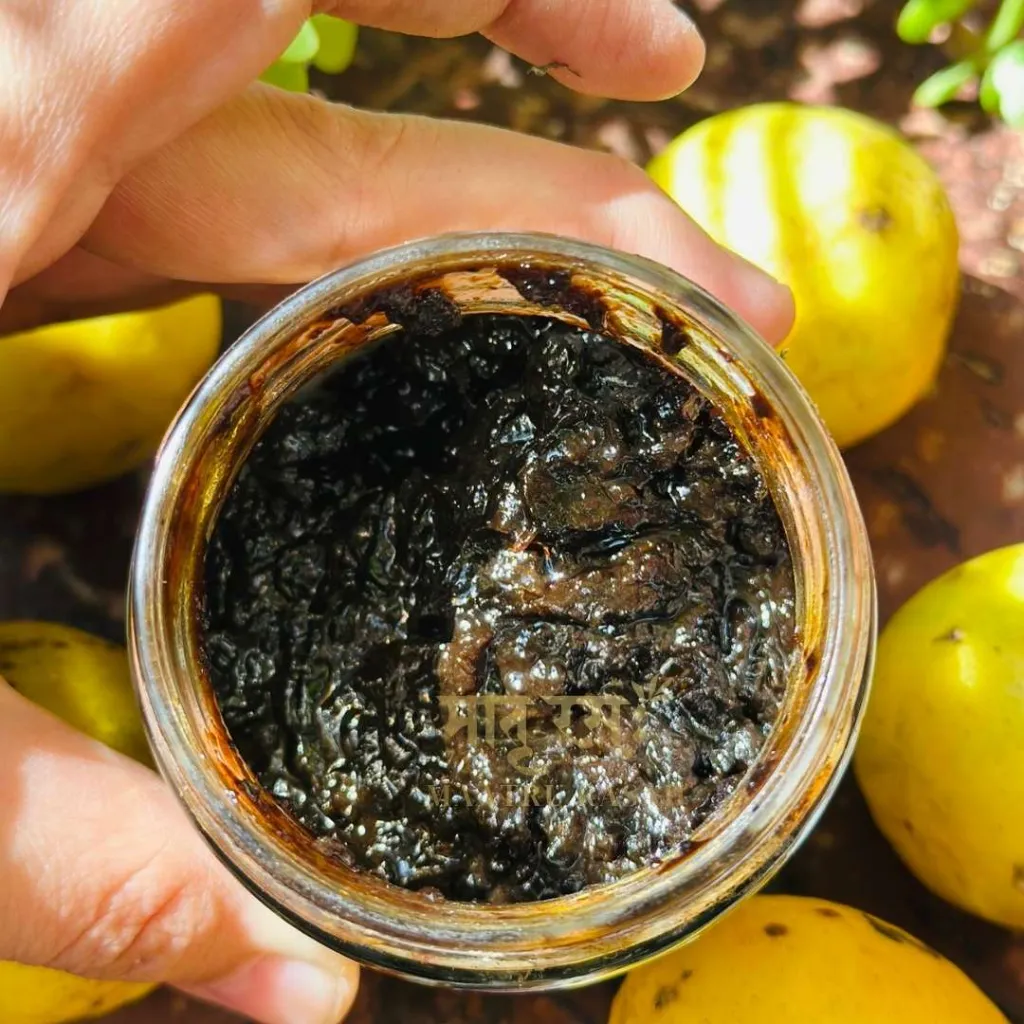
Open the jar and it reads lemon-first and bright, the jaggery sitting just behind. The paste is thick and coarse, flecked with chewable peel; the spice warmth shows up late and stays gentle. Sweet, tangy, a little chewy — not a smooth, sugary jam.

Oil-free · 🔥Cooked, not sun-cured · 🟤 Jaggery-sweetened · Mild 2/10 · 15 ingredients · 🚫No artificial preservatives · Glass jar · 🍋Made year-round

Don't leave the kitchen empty-handed.

A 30 g sample from this month's batch is included with orders above ₹699 — from the same batch as your order, tucked in before we pack.

  • Weight
Price
₹ 369.00 ₹ 369.00
₹ 369.00
(Tax included)
✅ FSSAI Licensed 🤝 Farmers & Women Empowerment 🏺 No Preservatives 🫙 Glass Jar 🔒 Secure Checkout

— CORE FEATURES


Sweet-tangy lemon chutney with whole lemon peel bits — Maatru Rasah

Whole lemon, peel kept — coarse, chewable bits


Lemon chutney sweetened with jaggery, not refined sugar — Maatru Rasah

Jaggery, not refined sugar — lemon stays loudest


No oil, no artificial preservatives lemon chutney — Maatru Rasah

No oil, no artificial preservatives — cooking preserves it


Mild sweet-tangy lemon chutney, 2 on 10 heat — Maatru Rasah

Mild 2/10 — sweet-tangy, not hot

"Oh God! THE BEST

This was my first purchase and I’m in loveeeeeee with this nimbu chutney.. the taste the texture, the tangy flavour, everything!!! Go for it guys." Atharva Sharma from Pune 

We make 300 to 500 jars a month by hand, across every product we sell. This chutney can be cooked any time of year — but it's still made in small batches, so a sold-out jar waits for the next batch, not a warehouse.

Jar arrives damaged? Send a photo of the jar and outer box within 24 hours and we replace it from the next batch, courier covered both ways. Because the food is perishable and made to order, opened jars can't be returned.

WHAT IT IS

What is Nimbu Rasah?

निम्बू  LEMON  |  रसः  TASTE

Nimbu Rasah is Maatru Rasah's lemon chutney — a sweet-tangy nimbu ki chatni, cooked in our own kitchen. Whole lemons, peel and all, are ground coarse with green chilli and slow-cooked on a low flame with jaggery and a blend of fifteen spices until the paste holds together as one. It takes two to four hours of cooking per batch. There is no oil, no refined sugar, and no artificial preservative; the lemon's own acidity, the jaggery, and the long cooking do the keeping.

The name is plain: nimbu is lemon, rasah is the taste or essence or juice of a thing. It's eaten the way a North Indian table keeps a chutney close — a spoon beside the meal, or a small bite on its own.


Why This Achaar So Special→

— WHY IT’S DIFFERENT

Why Nimbu Rasah is different 


Nimbu Rasah lemon chutney slow cooked in an iron kadai

Cooked in an iron kadai, not sun-cured

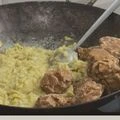
Most lemon preserves are sun-cured for weeks in oil. This one is slow-cooked on a low flame in an iron kadai. The lemons, jaggery and masala reduce together until the chutney sets as a single paste — the cooking does the preserving, so no oil and no artificial preservative are needed. The long contact with iron is also what gives the chutney its deep, dark colour.

Coarsely ground lemons with peel left intact in Nimbu Rasah chutney

The peel stays in

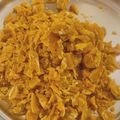
We grind the lemons coarse, not smooth, so little pieces of peel remain in every jar. The peel holds most of the lemon's oils, and catching one and crushing it between your teeth is half the fun — a small burst of citrus with the bite. It's the part most chutneys strain out, and the part we keep on purpose.

Jaggery used instead of refined sugar in Nimbu Rasah lemon chutney

Jaggery, not refined sugar

The sweet comes from gur, used in restraint. No white sugar, no corn syrup, no fruit-syrup thickener. The jaggery sits behind the citrus and lifts the spice depth, so the lemon stays the loudest voice in the jar instead of being buried under sweetness.

Fifteen-spice blend used in Nimbu Rasah homemade lemon chutney

Fifteen spices, one balance

Cumin, cinnamon, black pepper, cloves, bay leaf, two cardamoms, mace, nutmeg and more are ground fresh and folded in late, judged by smell. It's a fuller masala than the five-or-six most lemon chutneys use, and it's why the flavour reads as warm, not flat.

OUR STORY BEHIND THIS JAR

This is the chutney my bhabhi could not put down.

She had always liked it, but during her pregnancy it became the one jar she kept reaching for — a spoon with lunch, a spoon with dinner, sometimes a spoon on its own. What made the family happy about that wasn't the chutney alone; it was that this is a ghar ka product, cooked in our own kitchen with nothing artificial in it. No colour, no synthetic preservative, nothing she had to think twice about. She just loved how it tasted, and we loved that there was nothing hidden in it.

That's still the whole idea. Lemons, jaggery, real spices, cooked slow. The recipe goes back to the family kitchen, but the reason it's in a jar today is simpler than heritage — somebody we love couldn't stop eating it, and it was clean enough that nobody wanted them to.


DR. (CS) PUJA SHREE AGARWAL · FOUNDER

— WHAT’S INSIDE

What's in the jar


Every ingredient earns its place. As it goes into each jar, in roughly descending order of weight:

THE BASE & SPICES

  • Whole lemons, with peel — ground coarse
  • Jaggery (gur) — restrained, for the sweet
  • Green chilli — fresh, for warmth not heat
  • Salt
  • In-house ground Red chilli powder 
  • In-house ground Cumin (jeera) 
  • In-house ground Garam Masala powder
  • Asafoetida (hing)

Why keep the peel? 

The peel holds most of the lemon's essential oils. Strain it out and the chutney loses its character. Grinding coarse keeps it visible and chewable.

Why jaggery?

Gur sweetens without taking over. Refined sugar would flatten the tang; jaggery rounds it and leaves the lemon in front.

Why no oil?

It doesn't need any. Cooking, jaggery and lemon acidity preserve the chutney, so there's no oil for texture or shelf life — which keeps it lighter than an oil-based achaar.

WHAT’S NOT IN THIS JAR                           

Oil  Refined sugar  Artificial preservatives  Artificial colour  Vinegar

— HOW WE MAKE IT

How we make Nimbu Rasah


1

Wash, Cut & Seed

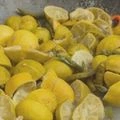
Wash the lemons, cut them into pieces, remove the seeds by hand, and keep the peel intact.


2

Add Green Chilli & Grind Coarse

Add fresh green chilli and grind it together with the lemons into a coarse paste, never smooth, so the peel pieces stay visible.


3

Slow Cook in an Iron Kadai

ransfer the coarse paste to an iron kadai and cook on a low flame until the lemon's water cooks off slowly, the flavour concentrates, and the iron deepens the colour.


4

Melt in the Jaggery

Once the paste has reduced enough, add jaggery and cook until it integrates completely rather than sitting on top.


5

Fold in the Masala

Add the ground spices last and cook until they bloom into the lemon-jaggery base. Doneness is judged by colour and smell.

6

Cool & Hand-Fill into Glass Jars

Allow the chutney to cool in the iron kadai, then hand-fill it into glass jars. Never plastic.

Our Legacy

Since 1857

Small Batch

300 to 500 jars a month, by hand

Uma Agarwal preparing Tailam Aamra mango pickle with raw mango and masala in the Maatru Rasah kitchen.

PROVENANCE

Where this recipe comes from

The Agarwal family kitchen in Katra, an old quarter of Prayagraj, has cooked chutneys since 1857. Lemon chutney was a year-round fixture — the way many North Indian homes keep one on the table all the time. Most home cooks pushed the sugar up to tame the lemon's sharpness. This kitchen didn't. The ratio was settled at a point where the lemon stays in front and the jaggery sits behind it, deepening the spice without softening the citrus.

The method here is cooking, not sun-curing: the paste is reduced slowly over a low flame in an iron kadai until the lemons give up their water and the jaggery melts in. Time and heat do the work that salt and sun do for our oil achaars. Maatru Rasah was founded in 2013 by Dr. (CS) Puja Shree Agarwal, and every jar is still cooked in our kitchen by Uma Agarwal, in the proportions she learned from her elders.

Read the full kitchen story

Maatru Rasah Nimbu Rasah vs commercial lemon chutney


AspectNimbu RasahCommercial lemon chutney
SweetenerJaggery (gur), restrainedRefined white sugar / corn syrup
SournessLemon stays dominantOften masked by sugar
PreservationSlow cooking + jaggery + lemon aciditySodium benzoate, citric acid, vinegar
OilNone (oil-free)Often added for texture
TextureCoarse, visible chewable peelSmooth, pureed, no peel
Spice count15 ingredientsUsually 5–7
Best buyerWants lemon + spice to leadWants sweet-forward

Cooked chutney (Nimbu Rasah) vs sun-cured lemon achaar


AspectNimbu RasahCommercial lemon chutney
SweetenerJaggery (gur), restrainedRefined white sugar / corn syrup
SournessLemon stays dominantOften masked by sugar
PreservationSlow cooking + jaggery + lemon aciditySodium benzoate, citric acid, vinegar
OilNone (oil-free)Often added for texture
TextureCoarse, visible chewable peelSmooth, pureed, no peel
Spice count15 ingredientsUsually 5–7
Best buyerWants lemon + spice to leadWants sweet-forward

Which is right for me?


You're viewing Nimbu Rasah — oil-free, cooked, sweet-tangy with jaggery. Prefer oil-based lemon, spicy, vrat, or another chutney? Here are the others.

Your Dynamic Snippet will be displayed here... This message is displayed because you did not provide enough options to retrieve its content.

— STORAGE

Storage & refrigeration


SHELF LIFE

12 months from packing · best within 6 months of opening

UNOPENED

Cool, dry, out of sunlight

INDIAN SUMMER

Refrigerate if your kitchen runs hot — cooked chutney is more heat-sensitive than oil achaar

EVERY USE

Dry spoon only; wipe the lid before closing

— GOOD TO KNOW

A note on colour


No artificial colour. The deep, dark shade comes from cooking the chutney long in an iron kadai, and it deepens further as the jar settles — the older and more settled the jar, the darker it looks. A darker jar is more settled, not lesser. The colour is the method, not a defect.

— HOW TO USE

How to use Nimbu Rasah?


A small spoon at a time — the chutney is concentrated, so a teaspoon does the work of a tablespoon.

  • Paratha / roti: a sweet-tangy side that holds against rich breads.
  • Snacks: with samosa, pakora or mathri, the lemon cuts the fried weight.
  • Dal-chawal: a teaspoon adds depth without taking over the plate.
  • Toast / sandwich: a brighter spread than ketchup or mayo.
  • Marinades: the lemon-jaggery-spice mix caramelises well on paneer or vegetables.

Specifications


ProductNimbu Rasah — lemon chutney (nimbu ki chatni)
CategoryChutneys & Rasah · oil-free
Net weight150 g (SKU ONR150G, ₹369) · 300 g (SKU ONR300G, ₹649)
ContainerGlass jar, metal lid (never plastic)
Ingredients (15)Lemon (with peel), jaggery, green chilli, salt, red chilli powder, cumin, black pepper, cinnamon, cloves, bay leaf, green cardamom, black cardamom, mace (javitri), nutmeg (jaiphal), asafoetida (hing)
OilNone — oil-free
SweetenerJaggery (gur), restrained — no refined sugar, no syrup
SouringWhole lemons with peel
MethodSlow-cooked on a low flame in an iron kadai, 2–4 hrs/batch · ground coarse · hand-filled on order
TextureCoarse paste with visible chewable peel
Heat~2/10 (mild)
PreservationSlow cooking + jaggery + lemon acidity + glass jar · no artificial preservatives
Shelf life12 months from packing · best within 6 months of opening
StorageCool, dry, no sun; dry spoon; refrigerate in hot weather
DietVegetarian · contains normal salt + hing → not for vrat (see Falahari Aamra); Jain: verify hing
AllergensNone known — no mustard, nuts, sesame, gluten or dairy
Hand-cooked byUma Agarwal, in our kitchen
Recipe origin1857, Katra, Prayagraj (Agarwal family kitchen)
CountryIndia
Production300–500 jars/month, total across all SKUs, by hand · made year-round. The day that requires machinery is the day we stop growing.
FSSAI12723052000504
ShippingIndia only · dispatch 2–3 days

— FREQUENTLY ASKED QUESTIONS

FAQ


Here are some common questions about our Nimbu Rasah — Lemon Chutney.

No. This is a cooked, oil-free chutney — a sweet-tangy paste with jaggery and visible peel. Lemon pickle (achaar) is sun-cured in oil with whole or sliced lemon. If you want the oil-based one, see Nimbu Adrak Mirch.

Green chilli, red chilli and black pepper are there, but the jaggery and lemon keep the heat in the background. The chutney reads sweet-tangy, not hot.

No artificial preservatives, no artificial colour, no vinegar, no MSG. The slow cooking, the jaggery and the lemon's own acidity keep it.

Yes — there's no oil at all. The cooking does the work oil and curing do in an achaar.

No. It uses normal salt and asafoetida (hing). For a vrat option made with sendha namak, see Falahari Aamra.

We cook this year-round in small batches, 300–500 jars a month by hand across all products. A sold-out jar waits for the next batch, not a warehouse.

Send a photo of the jar and outer box within 24 hours of delivery and we replace it from the next batch, courier covered both ways. Opened jars can't be returned (perishable, made to order).

lemon chutney homemade by maatru rasah

Sweet, tangy, and nothing artificial in it. 

Order Nimbu Rasah — 150 g or 300 g, hand-cooked in our kitchen. Order Nimbu Rasah