Skip to Content

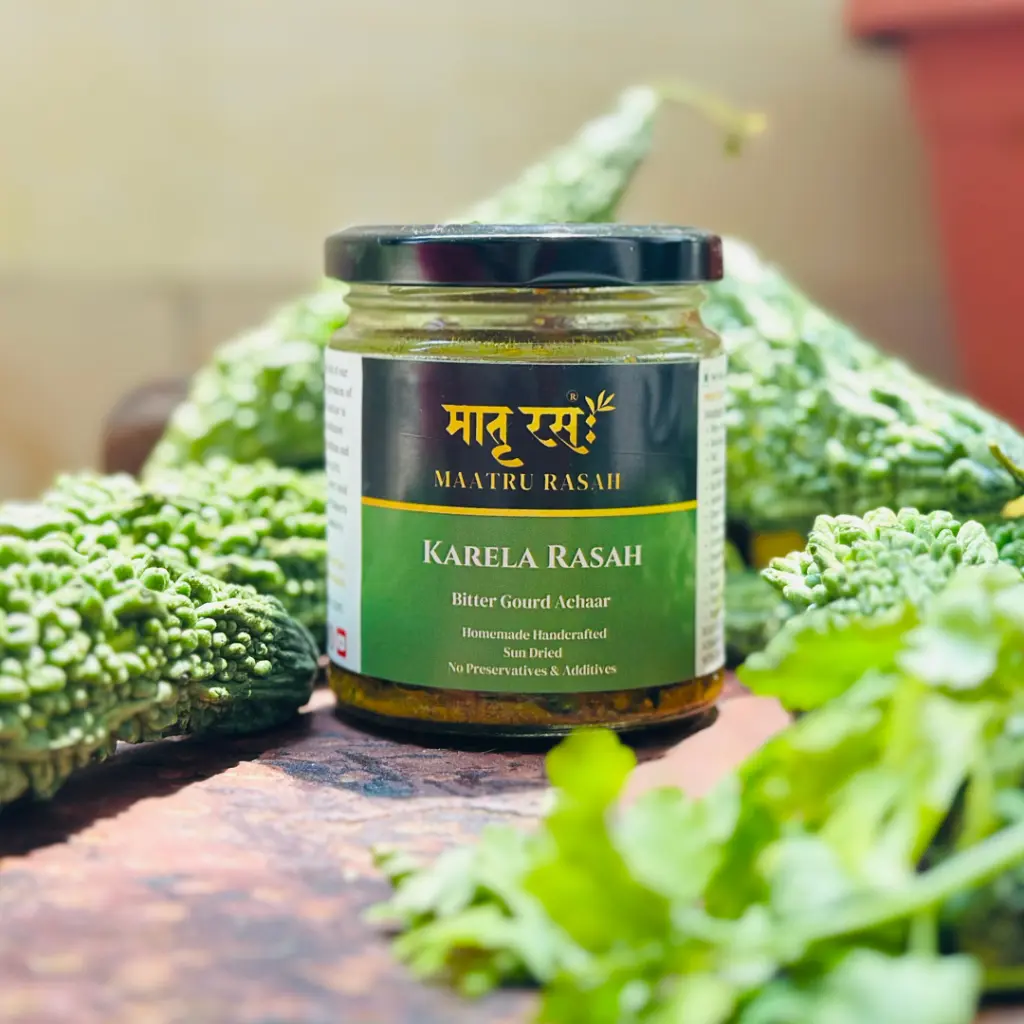
Karela Rasah— Bitter Gourd Achaar

(4 reviews)

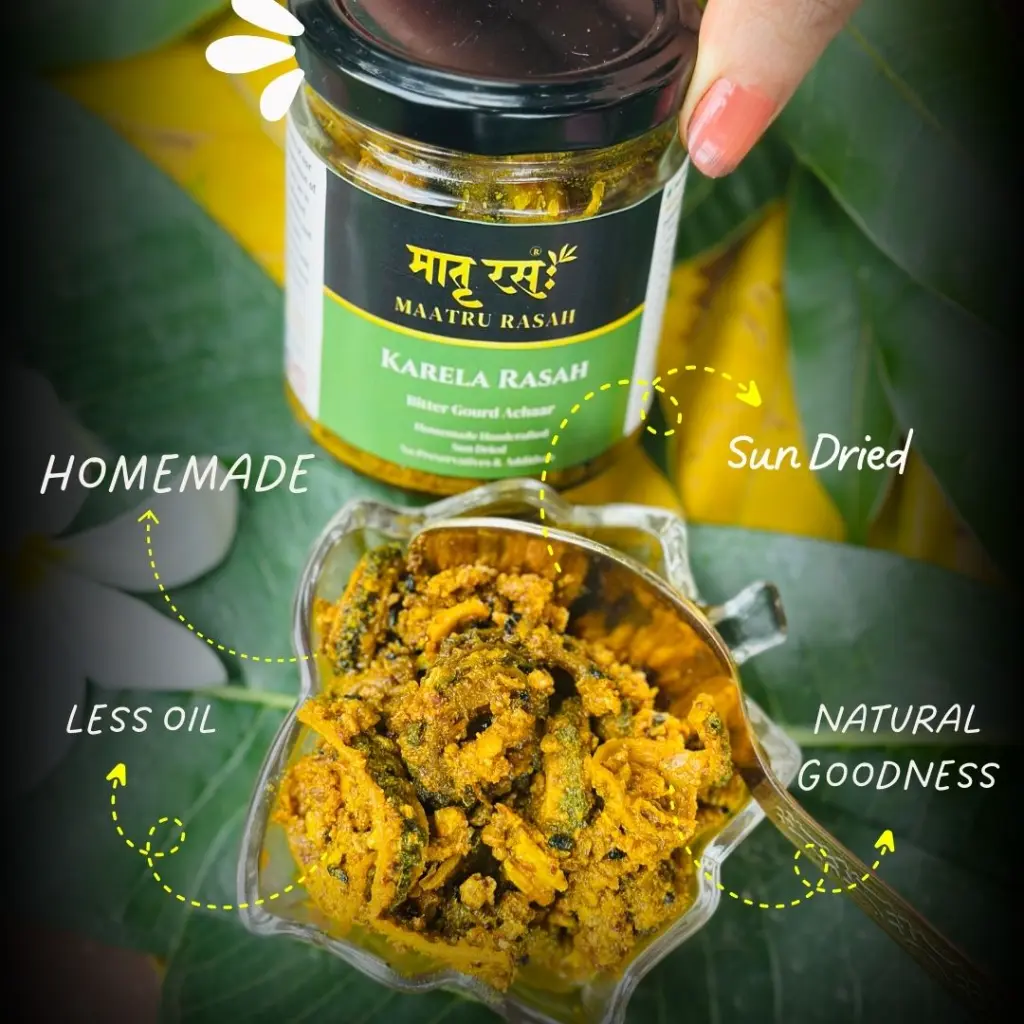
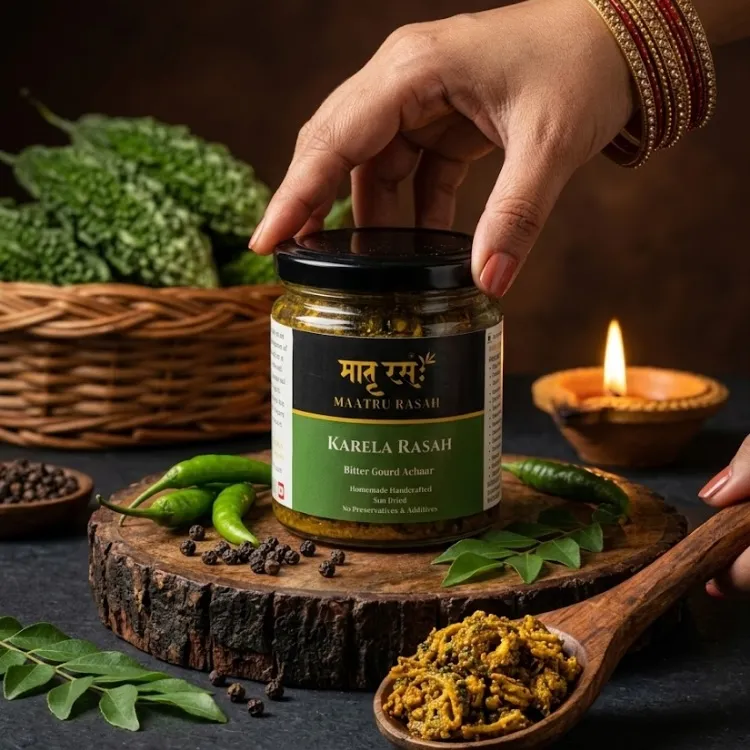
Cured in wood-pressed mustard oil with raw mango for tartness. We use the small soft seedless green karela variety, so the bitterness sits around 2 out of 10. Made in our Delhi NCR kitchen from a family recipe unchanged since 1857, Katra, Prayagraj.

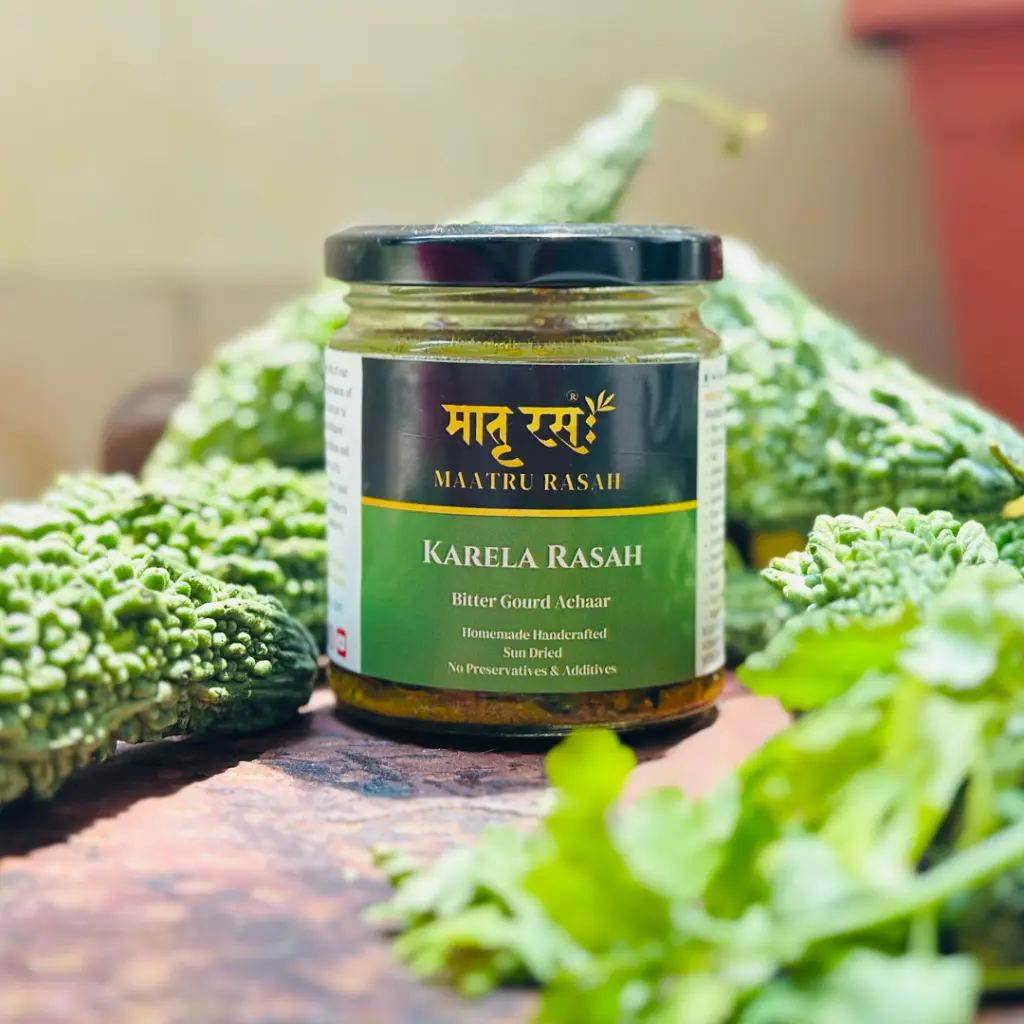
Bitter Gourd Achaar fssai licenced by Maatru Rasah
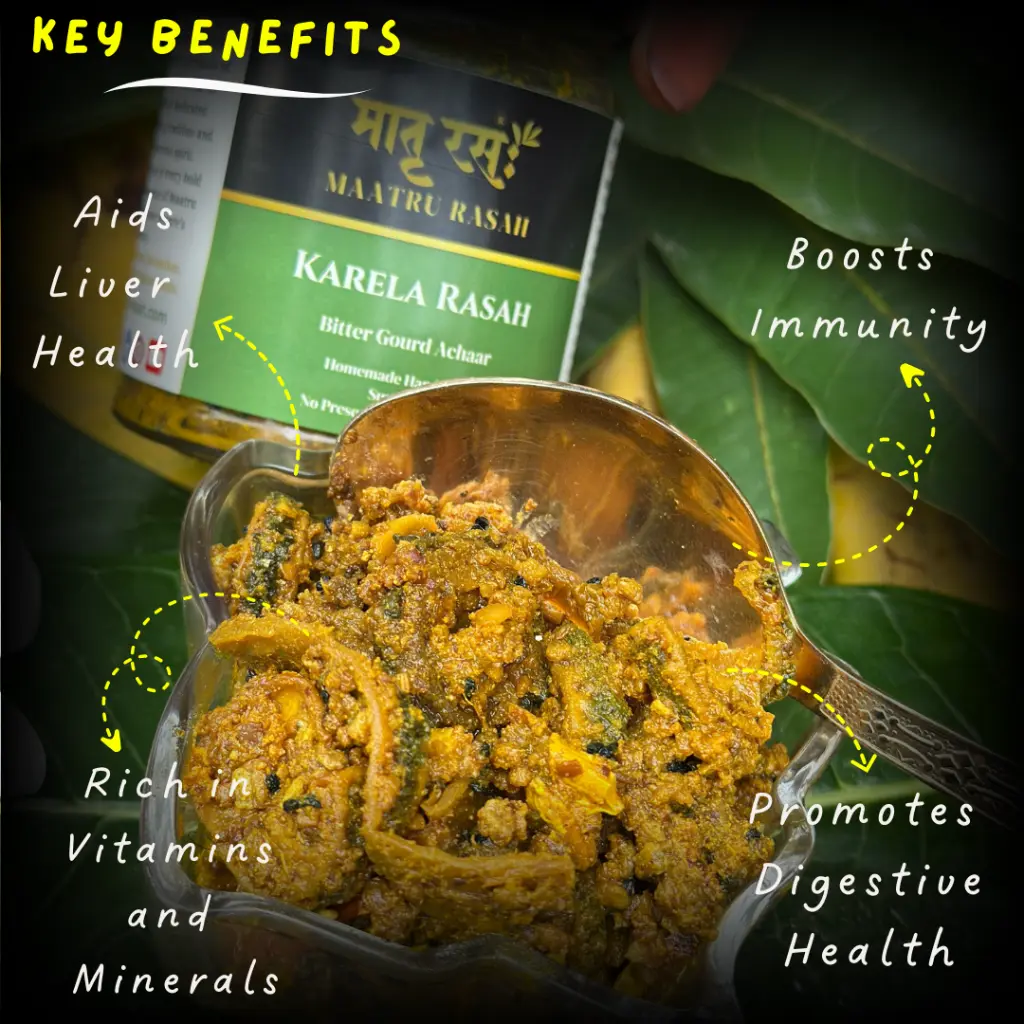
Natural Ingredients of Bitter Gourd Achaar by Maatru Rasah
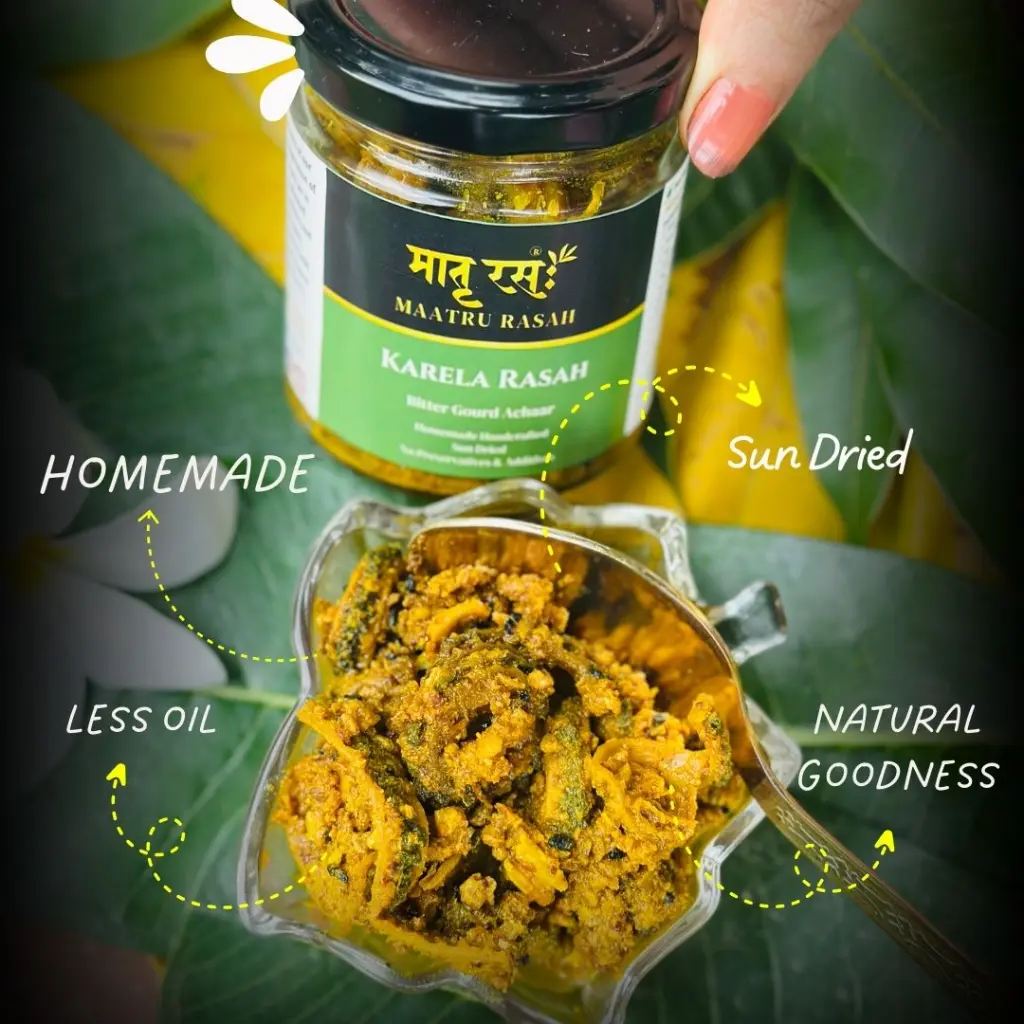
Small Batch Bitter Gourd Achaar by Maatru Rasah
Bitter Gourd Achaar in Glass Jar Only by Maatru Rasah
  • Weight
Price
₹ 369.00 ₹ 369.00
₹ 369.00
(Tax included)
Rating

"Cured in wood-pressed mustard oil with raw mango for tartness. We use the small soft seedless green karela variety, so the bitterness sits around 2 out of 10. Made in our Delhi NCR kitchen from a family recipe unchanged since 1857, Katra, Prayagraj."  Ayushman Gupta from Gurugram 

Why Karela Rasah is different 

Wood-pressed mustard oil + Raw Mango in Bitter Gourd Achaar by Maatru Rasah

Wood-pressed mustard oil + Raw Mango

Cured in cold-pressed (kachi ghani) mustard oil with raw kairi (mango) for tartness. The oil softens what bitterness remains.

High Quality Ingredients of Bitter Gourd Achaar by Maatru rasah

Small soft young green karela

We choose the small young green variety, soft to the touch. Bitterness in karela builds with maturity. Staying small and young means staying mild — that is where the 2/10 comes from.

GI Tagged Lakadong turmeric + Ing Makhir ginger in Bitter Gourd Achaar by Maatru Rasah

Single-Origin Spices

Lakadong turmeric + Ing Makhir ginger. Both sourced through Padma Shri Trinity Saioo's farmer cooperative in Mulieh village, Jaintia Hills, Meghalaya. GI-tagged, named, documented.

Small batch of Bitter Gourd Achaar by Maatru Rasah

500 Jars a Month, Total

Across every achaar, chutney, and sweet we make. The cap is permanent. FSSAI Licence No. 12723052000504.

Crushed vs Sliced · Oil-based vs Oil-Free

Young soft karela (Karela Rasah) vs Mature karela achaar (most brands)

Aspect

Karela Rasah (small soft young variety)

Mature karela achaar (most brands)

Variety

Small green soft young variety

Mature large karela, fully developed bitterness

Bitterness

Mild — about 2 out of 10

Strong — about 7 out of 10

Suitable for

Buyers who avoid karela for the bitterness

Buyers who already love karela's bitter character

Lever for mildness

Variety selection (young + small) + sun-drying before cure

Salt-rubbing, sometimes blanching the mature gourd

Best use

One teaspoon with most meals — a daily side

Sparingly, paired with strong flavours

Wood-pressed mustard oil (Karela Rasah) vs refined oil karela achaar (commercial)

Aspect

Karela Rasah (wood-pressed)

Refined oil karela achaar

Oil extraction

Cold-pressed in a wooden kohlu — no heat, no chemical solvents

High-heat extraction with hexane solvent + chemical refining

Pungent compound

Allyl isothiocyanate intact — the sharp bite

Stripped in refining — flat

Flavour

Builds, then settles. Karela bitterness is softened by the oil.

Flat. Karela bitterness is unmasked.

Shelf-life mechanism

Salt + oil pungency + sun-cure + slow fermentation

Vinegar, sodium benzoate, citric acid, or artificial colour

What you taste

The chili of the masala, the mango's tartness, the karela's mild bite

The bitter karela alone

What is Karela Rasah?


Karela Rasah is Maatru Rasah's bitter gourd achaar, cured in wood-pressed (kachi ghani) mustard oil. We use the small, soft, seedless green karela variety for a mild taste. The recipe carries raw mango for tartness, Lakadong turmeric, Ing Makhir ginger, and the masala the family kitchen has used since 1857.

What goes in the jar


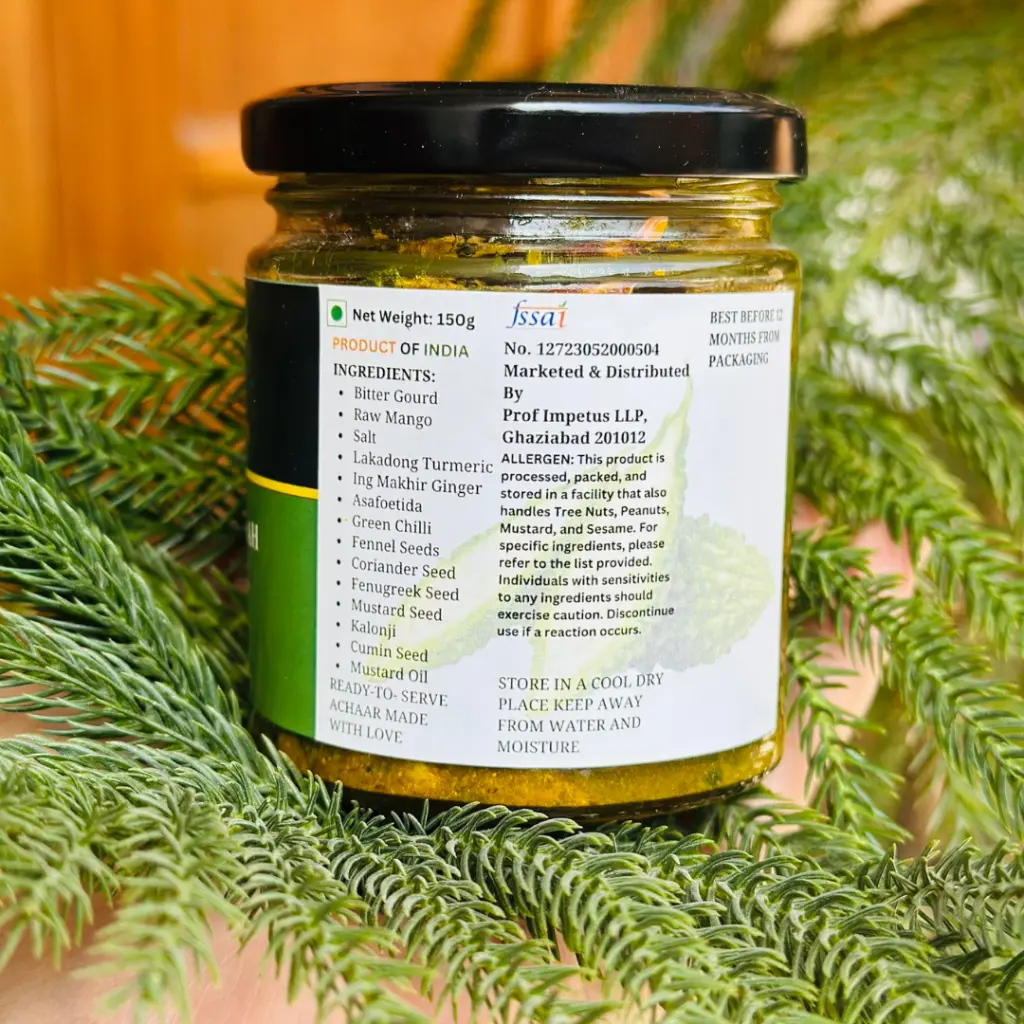
Karela Rasah is Maatru Rasah's bitter gourd achaar, cured in wood-pressed mustard oil. Two crops anchor it: small soft young green karela and raw mango. The masala and spices come from a single named cooperative in Meghalaya and from the family kitchen the recipe was built in. The full ingredient list is printed below in descending order of weight, FSSAI-compliant.

Ingredients, in descending order of weight:

  • Small soft young green karela (bitter gourd)
  • Raw mango (kairi)
  • Wood-pressed (kachi ghani) mustard oil
  • Salt
  • Lakadong turmeric (7–12% curcumin, sourced through Padma Shri Trinity Saioo's farmer cooperative → in Mulieh village, Jaintia Hills, Meghalaya)
  • Ing Makhir ginger (GI-tagged, from the same Meghalaya cooperative)
  • Green chili
  • Fennel seeds
  • Coriander seeds
  • Fenugreek seeds
  • Mustard seeds
  • Kalonji (nigella)
  • Cumin seeds
  • Asafoetida (hing)

What this jar does not contain

Sodium benzoate. Potassium sorbate. EDTA. MSG. Artificial colour. Anti-caking agent. Citric acid as a preservative. Refined oil. Any synthetic compound that did not exist in an Indian kitchen before 1950.

Why Karela Rasah is different


Karela Rasah differs from most bitter gourd achaar in five specific choices: the karela variety, the recipe pairing, the cooperative we source spices from, the time we give the cure, and the production cap we will not move beyond. None of these are marketing decisions. Each one is what the family kitchen has done since 1857.

The variety. Most karela achaars use the wrong karela. The big mature bitter gourd is easier to source and yields more per batch. Its bitterness is hard to soften without heavy salting or blanching. We use the small soft young variety. Bitterness in karela develops with maturity. Our karela never gets old enough to need heavy intervention.

The recipe pairing. Karela Rasah pairs bitter gourd with raw mango (kairi). The mango is not a decorative touch. It is the choice households who liked karela but found it too bitter on its own settled on, decades before commercial achaar existed.

The sourcing. Our spices come from one farmer cooperative in Meghalaya, not the spice market. Single sourcing means we know the soil. We know who grew the turmeric and ginger. Read the Trinity Saioo sourcing story →

The time. We cure each batch for 10 to 15 days in a chini mitti barni. Most commercial pickles skip this. They reach for vinegar or sodium benzoate to deliver shelf life without time. We choose time.

The cap. Maatru Rasah makes 300 to 500 jars a month, total across every achaar, chutney, and sweet we cook. We chose this cap. We will not move beyond it. The recipe has not changed since 1857.

Where this recipe comes from


The Agarwal family kitchen in Katra, an old quarter of Prayagraj, has cooked achaars for the year ahead since 1857. The karela recipe was a staple long before it was a product.

Two crops anchor it: bitter gourd and raw mango. The combination is not modern fusion. It is what households who liked karela but found it too bitter on its own settled on, decades before commercial achaar existed.

The Maatru Rasah brand was incorporated in 2013 by Dr. (CS) Puja Shree Agarwal to take the kitchen past the family table. Every jar today is made in our Delhi NCR kitchen in the same proportions Uma learned from her elders. The only modern provenance addition is Lakadong turmeric, sourced now directly from Meghalaya through Padma Shri Trinity Saioo's cooperative.

Read the full kitchen story →

How we make Karela Rasah


  1. Small soft young karela is selected and washed on the morning of curing. Larger or over-mature karela is rejected. Bitterness in karela develops with maturity; we work only with the young soft variety.
  2. The karela is sliced and salted, then sun-dried on a cane tray for 24 to 36 hours. Salt draws moisture out. Sun does the rest.
  3. Raw mango (kairi) is sliced separately. The mango carries the tartness this recipe relies on.
  4. The masala (fennel, coriander, fenugreek, mustard seed, cumin, kalonji, asafoetida, Lakadong turmeric, Ing Makhir ginger) is ground separately. Uma adds it in the proportions she adjusts by smell.
  5. Green chili is added in restrained quantity — for warmth, not heat.
  6. Wood-pressed (kachi ghani) mustard oil is gently warmed and poured over to cover. The karela, the mango, and the masala sit below the oil line.
  7. The mixture is sealed inside a chini mitti (porcelain) barni and sun-cured for 10 to 15 days in our Delhi NCR kitchen. When your order arrives, the achaar is hand-transferred from the barni into a glass jar.

How to enjoy Karela Rasah


A teaspoon at a time. The bitterness is mild but the masala is concentrated. A small spoonful does more work than a tablespoon would.

  • With plain dal-chawal, one teaspoon sharpens the whole plate.
  • On parantha, the mustard oil cuts the ghee and the karela adds bite.
  • Beside khichdi, the masala lifts the soft grain.
  • With curd rice in summer, a quarter-teaspoon adds heat and tartness without breaking the cool.
  • Inside stuffed paratha — chop the karela pieces fine, mix into the filling.
  • Alongside dosa or idli, as an alternative to coconut chutney.

Storage and shelf life


Best before 12 months from the date of packaging. Best before 6 months after opening. Cool, dry place, away from direct sunlight. Refrigeration is not required.

Use a dry spoon every time. Wipe the lid before closing. Keep the karela and mango submerged under the oil line. The mustard oil floating on top is part of the preservation; do not drain it.

Properly stored, oil-based achaar in mustard oil can preserve longer than the label window. The number on the jar is a consumer-care recommendation, not the chemistry of preservation.
Our Legacy

Made with love

Small Batch

Homemade Handcrafted

Frequently asked questions

Here are some common questions about our premium Karela Rasah - Bitter Gourd Achaar

Bitter Gourd Achaar by Maatru Rasah

No. We use the small soft young green karela variety, and we sun-dry it before curing to draw out what bitterness remains. Bitterness in karela develops with maturity; staying with the young variety means staying mild. On a 1-to-10 bitterness scale, this achaar sits around 2. The raw mango adds tartness, the wood-pressed mustard oil softens the surface, and people who have avoided karela have finished the jar.

No. Karela Rasah is cured in wood-pressed (kachi ghani) mustard oil. The oil is central to both the flavour and the preservation. For oil-free options, see Nimbu Adrak Mirch → (oil-free lemon-ginger-chili) or Falahari Aamra → (oil-free vrat achaar).

The Karela recipe in our family kitchen has always paired bitter gourd with raw mango (kairi). The mango carries the tartness; the karela carries the savoury bite; the masala holds them together. It is one recipe, not two.

Best before 12 months from the date of packaging. Best before 6 months after opening, with a dry spoon and storage in a cool, dry place. Properly stored, oil-based achaar in mustard oil can preserve longer than the printed window; the label is consumer-care discipline.

The Lakadong turmeric and Ing Makhir ginger in this achaar are sourced through Padma Shri Trinity Saioo's farmer cooperative in Mulieh village, Jaintia Hills, Meghalaya. Curcumin content in the turmeric is independently tested per batch, between 7 and 12 percent. Read more on Lakadong sourcing →

Kachi ghani is the traditional cold-pressing of mustard seed in a wooden kohlu — no heat, no chemical refining. The compound that gives North Indian achaar its bite (allyl isothiocyanate) stays intact. Refined mustard oil loses it.

We describe traditional Indian uses of karela in cooking, not medical effects. For health-related questions about bitter gourd, please consult a qualified medical professional. We make no medical claims about any product on this site.

Send a photograph of the jar and outer packaging within 48 hours of delivery to care@maatrurasah.com. We replace from the next batch with courier covered both ways. Because the food is perishable and made to order, opened jars are not returnable.

Specifications

Field

Detail

Product name

Karela Rasah

English gloss

Bitter Gourd Achaar

Category

Speciality Achaar · Wood-pressed cluster

Variants

150g · Glass Jar (SKU KR150G, ₹369) · 300g · Glass Jar (SKU KR300G, ₹649)

Price

₹369 (150g) · ₹649 (300g) · Inclusive of all taxes

Oil base

Wood-pressed (kachi ghani) mustard oil

Souring agent

Raw mango (kairi)

Signature variety

Small soft young green karela

Bitterness level

2 / 10 (mild)

Spice count

9 traditional ingredients (fennel, coriander, fenugreek, mustard seed, cumin, kalonji, asafoetida, Lakadong turmeric, Ing Makhir ginger) + salt + green chili

Cure time

10–15 days, sun-cured in chini mitti (porcelain) barni

Manufacturing

1857 Katra, Prayagraj family recipe. Made in our Delhi NCR kitchen. Hand-filled into glass jars on order.

Production cap

300 to 500 jars per month, total across all SKUs. Hard ceiling.

Shelf life

Best before 12 months from packaging. Best before 6 months after opening.

Storage

Cool, dry place. Away from direct sunlight. Refrigeration not required. Use a dry spoon. Keep karela and mango under oil line.

Packaging

Glass jar with metal lid. Never plastic.

Vegetarian

Yes

Vrat / fasting

No (contains regular salt and hing — for vrat, see Falahari Aamra →)

Jain-compliant

Depends on community — contains asafoetida (hing)

Allergens disclosed

Mustard (seed + oil)

FSSAI Licence

12723052000504

Delivery zone

India only · Free delivery above ₹999 · Ships in 2–3 days

Returns

Per /returns-cancellation-policy

Karela Rasah Wood-pressed bitter gourd achaar — mild, 2/10 bitterness, young soft variety | 150g or 300g Glass Jar

✅ In Stock · Ships in 2–3 days | ₹369 (150g) · ₹649 (300g) Inclusive of all taxes  | Free delivery above ₹999


Specifications

Weight 150g in Glass Jar, 300g in Glass Jar