Skip to Content

Khatta Meetha Aamra — Sweet-Tangy Mango Achaar, No Refined Sugar

(6 reviews)

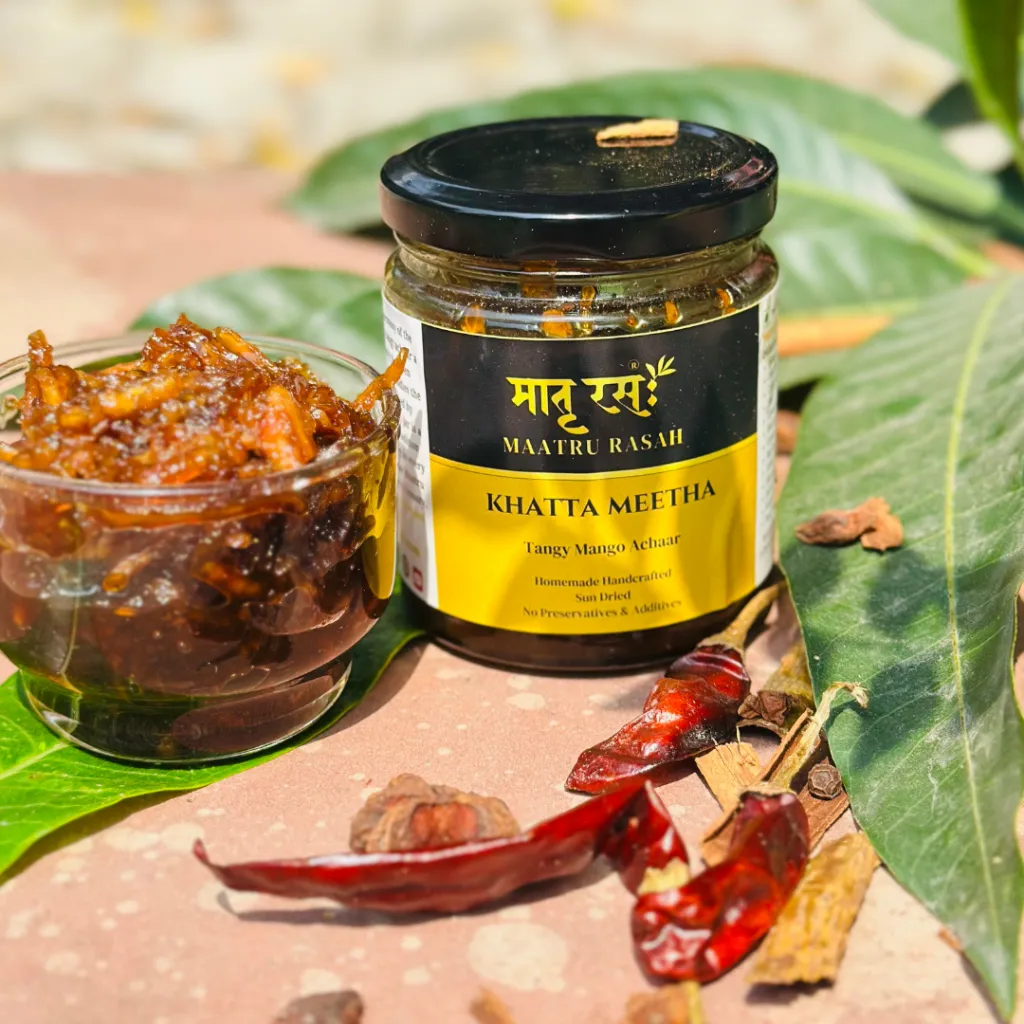
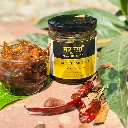
Open the jar and the warm spices come first — cardamom, clove, cinnamon — before the sweet or the sour. Then the bite: a piece of raw Ramkela kairi, soft but still holding its shape, wrapped in a thick amber syrup the mango made itself. Sharp, then sweet, then a long spiced finish. No mustard oil, no refined sugar — just kairi cured in Desi Khand with thirteen whole spices. A Katra, Prayagraj recipe, unchanged since 1857. Made by hand, once a year, when the kairi arrives in summer.

Don't leave the kitchen empty-handed.

A 30 g sample from this month's batch is included with orders above ₹699 — from the same batch as your order, tucked in before we pack.


  • Weight
Price
₹ 369.00 ₹ 369.00
₹ 369.00
(Tax included)
✅ FSSAI Licensed 🤝 Farmers & Women Empowerment 🏺 No Preservatives 🫙 Glass Jar 🔒 Secure Checkout

— CORE FEATURES


Cured in Desi Khand 

— unrefined cane sugar, never refined white sugar


No oil 

— oil-free, sun-cured (not fried, not cooked)


13 whole spices 

— incl. cardamom, mace, nutmeg, cinnamon, clove


No artificial preservatives 

— the Desi Khand syrup does the keeping

"i love this. meri mami aisa banati thi" Story Teller Neetu from Ghaziabad 

WHAT IT IS

What is Khatta Meetha?

Khatta meetha aamra — also called kairi chundu or mango chundu — is a sweet-and-sour mango achaar, a different category from the spicy mustard-oil pickle most people know. There is no oil and no cooking. Raw Ramkela kairi is cured in Desi Khand (unrefined cane sugar) with thirteen whole spices; over several days the sugar draws moisture from the mango and forms a thick spiced syrup, and the fruit softens inside it while holding its shape. The result sits between a pickle and a preserve — sharp, sweet and warm at once. Made to the 1857 Katra, Prayagraj family recipe, in our own kitchen. Made once a year, when the kairi is in season. Ships across India.

What is mango chundu, and how is it different from mango achar


Why This Achaar So Special

OUR STORY

“This was the jar we were allowed to eat freely as children — the sweet one, the one that wasn't too sharp. My mother makes it the way her elders did: raw kairi packed with Desi Khand and whole spices, then left in the sun to do its work. No frying, no shortcut. She tastes the syrup before a batch is sealed. When she says it's ready, it's ready. — Dr. (CS) Puja Shree Agarwal, Founder”


DR. (CS) PUJA SHREE AGARWAL · FOUNDER

— WHY IT’S DIFFERENT

Why Khatta Meetha is different 


Desi Khand, not refined sugar

Most sweet mango pickles are made with refined white sugar — sweetness and nothing else. This uses Desi Khand: unrefined cane sugar that keeps its minerals and colour, and gives the syrup its amber tone and a mild caramel depth white sugar can't reach.

Thirteen spices, not three

A typical sweet pickle leans on three or four spices. This carries thirteen — including cardamom, mace, nutmeg, cinnamon and clove, the aromatic spices most chundu recipes skip because they add cost. They're why the jar smells warm the moment you open it, before the sweet and the sour arrive.

Sun-cured, no fire

No cooking and no frying. The kairi is packed with Desi Khand and spices and left in the sun; the sugar draws moisture from the fruit and forms the syrup itself. Shelf-stable sweet pickles are usually cooked and then rely on added preservatives — this is kept by the Desi Khand alone.

Made once a year, the way it has been since 1857

Raw kairi has one short season. Just as the Agarwal family did in 1857, this is made in a single summer run, by hand — that one batch is the whole year's supply. The recipe has never bent to scale, and it never will.

— WHAT’S INSIDE

What's in the jar


Every ingredient earns its place. As it goes into each jar:


THE BASE & SPICES

  • Raw mango — Ramkela kairi, chosen for tartness and firmness
  • Desi Khand (unrefined cane sugar) — the sweetener and the preservative both
  • Cumin, fenugreek, coriander, fennel
  • Red chilli (mild)
  • Cinnamon, black pepper, cloves, bay leaf
  • Green cardamom, black cardamom
  • Javitri (mace), jaiphal (nutmeg)
  • Salt


WHAT’S NOT IN THIS JAR

 Refined Sugar   Mustard Oil   Artificial preservatives    Synthetic colour      Vinegar  MSG

Why no oil?

This is a chundu, not an oil achaar. The sweetness and the spices carry the flavour, and the Desi Khand syrup does the keeping — so there is no mustard oil and no cooking oil at any stage. It suits anyone who finds oil-based pickles too sharp or too heavy.

Why Desi Khand, not refined sugar?

Desi Khand is unrefined cane sugar, pressed from cane juice and dried without chemical bleaching. Refined white sugar gives sweetness alone. Desi Khand gives sweetness with a mild caramel depth and natural colour — it is what turns the syrup amber and adds the second layer of flavour a refined-sugar version doesn't have. It is also doing the preserving: a high concentration of sugar draws moisture out of the mango and forms a syrup that keeps the achaar without any added chemicals — the same principle behind murabba and traditional preserves.

PROVENANCE

Where this recipe comes from

The Agarwal family kitchen in Katra, an old quarter of Prayagraj, has cured the year's achaar since 1857. Khatta meetha — kairi in Desi Khand syrup — was the gentle one in the family's range, made for children and for anyone who wanted sweet over sharp. We founded Maatru Rasah in 2013 to take these recipes past the family table. Today every jar is made in our own kitchen, in the same proportions Uma learned from her elders.

Read the full kitchen story

— HOW WE MAKE IT

How we make Khatta Meetha


All of this happens once a year, in mango season — this single run is the year's entire supply.

Why mango chundu is sun-cured, not cooked — the science

1

Grate the kairi

Kalmi raw mango is grated by hand at peak season.

2

Salt and sun

The grated mango is mixed with salt and set out in the sun; over the next days it releases its water.

3

Add Desi Khand

Once the mango has given up its moisture, unrefined cane sugar is mixed in.

4

Cook in the sun

The mango and Desi Khand are left in the sun until the mixture cooks down on its own into a thick syrup — no fire, no stove.

5

Add the masala

The thirteen-spice masala is mixed through, measured by hand against the family recipe.

6

One more sun day, then fill

The achaar rests a further day in the sun, then is hand-filled into barni (glass jars). Uma tastes the syrup before a batch is sealed.

Our Legacy

Since 1857

Small Batch

300 to 500 jars a month, by hand

Khatta Meetha (Chundu) vs A Regular Oil Mango Achaar

Aspect Khatta Meetha Aamra Regular Aam Ka Achar
Base Desi Khand syrup Mustard oil
Taste Sweet-tangy, warm spice, mild heat Sharp, salty, spicy
Oil None — oil-free Oil-based
Made by Sun-curing, no fire Sun-cured or oil-cured
Suits Children, milder palates, oil-avoiders Those who like a sharp, spicy pickle

Prayagraj Khatta Meetha vs Gujarati Chunda

Aspect Khatta Meetha Aamra (Prayagraj) Gujarati chunda
Mango Sliced pieces, kept intact Usually grated
Spices 13, including aromatic (cardamom, mace, nutmeg) Fewer; often 3–4
Sweetener Desi Khand (unrefined) Often refined sugar
Flavour More complex, less purely sweet Sweeter, simpler

Which mango achaar is right for me?


You're viewing Khatta Meetha Aamra — sweet-tangy, oil-free, mild. Prefer oil-based, spicy, or vrat? Here are the others.

Shop all                                       Pickles of India — our shelf of traditional achaars
Your Dynamic Snippet will be displayed here... This message is displayed because you did not provide enough options to retrieve its content.

— STORAGE

Storage & refrigeration


UNOPENED 

12 months from the batch date. Cool, dry, out of direct sun. No refrigeration needed.

AFTER OPENING

Consume within 6 months. Refrigerate during warm months.

THE ONE RULE

Always use a completely dry spoon. A single drop of water thins the syrup, breaks the preservation balance, and starts fermentation.

NORMAL SIGNS

The syrup thickens and deepens in colour over time — that's the Desi Khand, not spoilage.

→ How to store achaar after opening: a practical guide

— GOOD TO KNOW

A note on colour


Our achaar carries no artificial colour, so its shade changes with time. A fresh jar looks brighter; as the spices and oil settle over the months, the colour deepens. The photos here are of a freshly made batch — if your jar arrives a little darker, it's an older, more settled achaar, not a lesser one. With achaar, age is a good thing: the spices marry and the flavour rounds out. The colour is the calendar, not a defect.

— HOW TO USE

How to use Khatta Meetha?


One small spoonful carries a meal — the syrup is concentrated. Spread it on roti or paratha, stir it through plain rice, or serve it with dahi-chawal. It also works the way some households serve murabba: a spoonful on its own after food. Mild enough to put on a child's plate next to the dal.

Specifications


Net weight150 g · 300 g (glass jar)
ContainerGlass jar with metal lid
IngredientsRaw mango (Ramkela kairi), Desi Khand (unrefined cane sugar), cumin, fenugreek, coriander, fennel, red chilli, cinnamon, black pepper, cloves, bay leaf, green cardamom, black cardamom, mace (javitri), nutmeg (jaiphal), salt
OilNone — oil-free
SweetenerDesi Khand (unrefined cane sugar) — no refined sugar
StyleSweet-tangy (khatta meetha / kairi chundu)
ProcessSun-cured in Desi Khand syrup — no cooking, no oil
Shelf life12 months unopened · 3 months after opening
StorageCool, dry place. Refrigerate after opening in warm months. Dry spoon only.
DietVegetarian
AllergensMade in a kitchen that also handles mustard, wheat, sesame and tree nuts.
Hand-made byUma Agarwal
Recipe originKatra, Prayagraj — family recipe since 1857
Country of originIndia
Production300 to 500 jars a month, by hand
FSSAI License12723052000504
SeasonMade once a year, in summer (mango/kairi season). One annual batch.
ShippingAcross India, 2–3 days. When the year's batch sells out, next is the next mango season.

— FREQUENTLY ASKED QUESTIONS

FAQ


Here are some common questions about our Khatta Meetha Aam ka  Achaar (Sweet-Tangy Mango Pickle).

Sweet-tangy, with mild heat. Raw-mango sourness comes first, then the warmth of whole spices, then a long sweet finish from the Desi Khand. It is far milder than an oil-based aam ka achar — the spices are aromatic rather than fiery.

Desi Khand is unrefined cane sugar — pressed from cane juice and dried without chemical bleaching. It keeps the natural minerals and colour that refined white sugar loses, which gives the syrup its amber tone and mild caramel depth. It also does the preserving: a high sugar concentration keeps the achaar without added chemicals.

No refined sugar, and no artificial preservatives. It is sweetened and preserved entirely by Desi Khand. The full list: raw mango, Desi Khand, cumin, fenugreek, coriander, fennel, red chilli, cinnamon, black pepper, cloves, bay leaf, green cardamom, black cardamom, mace, nutmeg, salt.

Yes. There is no mustard oil and no cooking oil at any stage — it is cured in Desi Khand syrup and salt. It suits anyone who avoids oil-based pickles.

It is the mildest mango achaar we make — sweet, gently spiced, not fiery — so it tends to be the one children reach for. As with any achaar, a small spoonful alongside a meal is plenty.

Similar idea, different recipe. Gujarati chunda is usually made with grated mango, fewer spices, and often refined sugar. This Prayagraj recipe uses sliced pieces that stay intact, thirteen spices including aromatic ones like cardamom and mace, and Desi Khand — so it tastes more complex and less purely sweet.

12 months unopened, stored cool and dry; after opening, 3 months, refrigerated in warm months. Use a completely dry spoon every time — one drop of water thins the syrup and starts fermentation.

Yes, we ship across India in 2–3 days. Like all our mango achaar it is made only once a year, in summer when the kairi is in season — that one batch is the whole year's supply. When it sells out, the next is the next mango season; join the waitlist and we'll tell you when it returns.

Because we add no artificial colour. A fresh batch is brighter; with months in the jar the masala and oil settle and the shade deepens. Our photos show a just-made batch, so an older jar may look darker — that's a more matured achaar, and many people prefer it. The colour shifts naturally; the recipe doesn't.

Take home this year's Khatta Meetha Aamra.

Sweet-tangy mango achaar cured in Desi Khand — no refined sugar, no oil, mild and gently spiced. 

Made once a year. ₹369 (150g) · ₹649 (300g).